Organizational culture: from routines to normsModule 07 · Organizational culture
IGNITE EXTENDED / LESSON 35
Organizational culture: from routines to norms
When does a repeated action become an internalized expectation?
A culture diagnosis with an intervention hypothesis.
1
35 / OpeningOrganizational culture: from routines to norms
The decision and the learning goals
Distinguish a routine from a norm
Diagnose culture beyond stated values
Explain how behavior can persist beyond explicit monitoring
90-minute workshopOpening 5 minConcepts and original examples 35 minPractice 25 minDebrief 15 minReview 10 min
2
35 / Module caseOrganizational culture: from routines to norms
Boeing, 2024: a stated safety culture versus the norms employees described
On January 5, 2024, a door plug blew out of Alaska Airlines Flight 1282, a Boeing 737-9 MAX, in flight. On February 26, 2024, the FAA released the final report of an expert panel required by the Aircraft Certification, Safety and Accountability Act of 2020, passed after the two fatal 737 MAX crashes. Drawing on more than 4,000 pages of documents, seven surveys and over 250 interviews, the panel issued 27 findings and 53 recommendations. It described a disconnect between senior management and the rest of the organization on safety culture, 'inadequate and confusing implementation' of the components of a positive safety culture, and employees who questioned whether the Speak Up reporting system would protect them from retaliation. Boeing's safety management system procedures were formally sound but complex and frequently changing, and awareness of safety metrics was low at every level. Two days later the FAA Administrator gave Boeing 90 days to produce a comprehensive action plan covering quality control and its safety management system. The panel did not investigate the door plug event itself.
Boeing had written safety procedures and a reporting channel. Using the routine-versus-norm distinction, what would you need to observe to know whether employees now expect peers to stop the line and report a problem, and which management levers would have to change for that expectation to form?
3
35 / TheoryOrganizational culture: from routines to norms
A routine describes a sequence of actions. A norm describes behavior members regard as appropriate and expected. A manager can establish a routine through instruction and monitoring, while a norm can guide action even when the manager is absent.
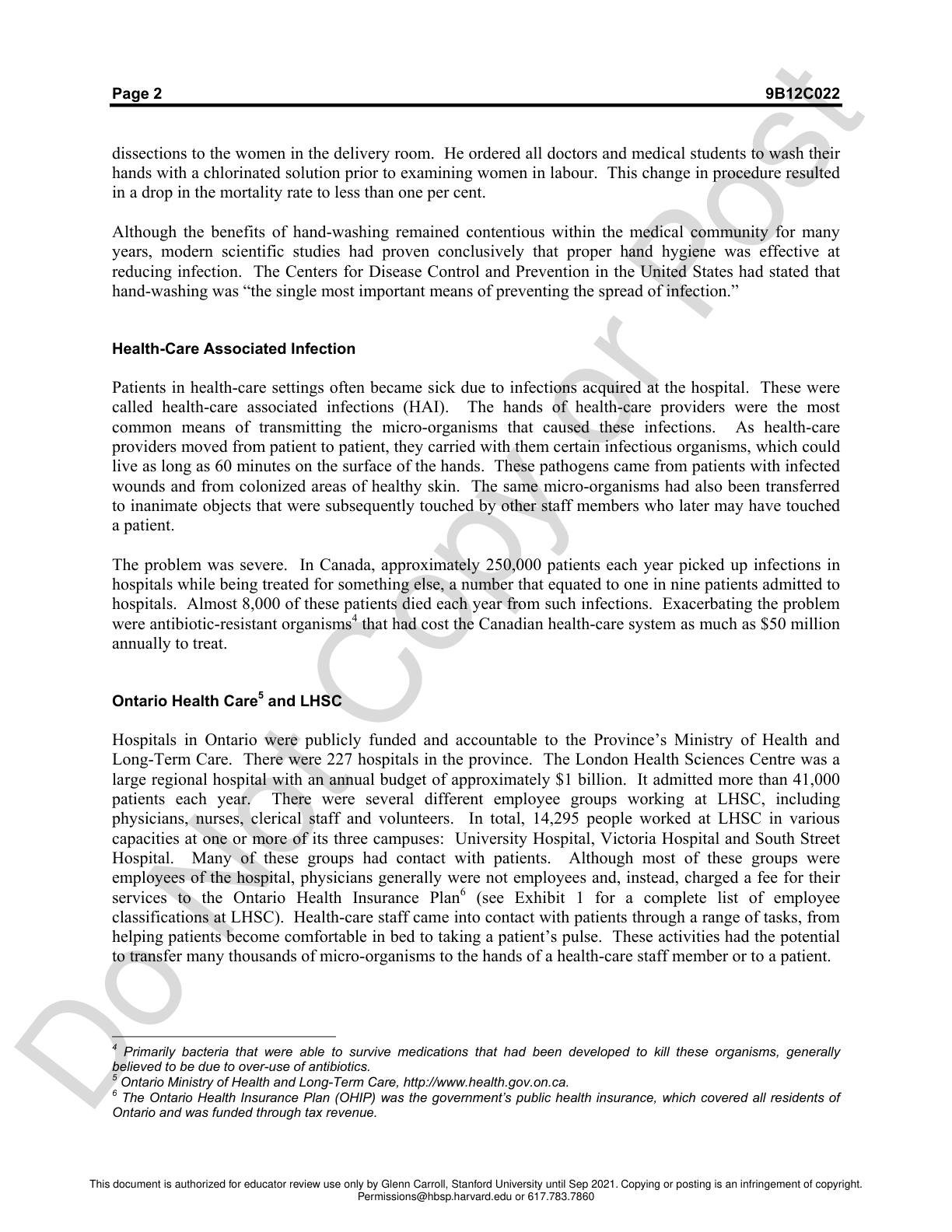
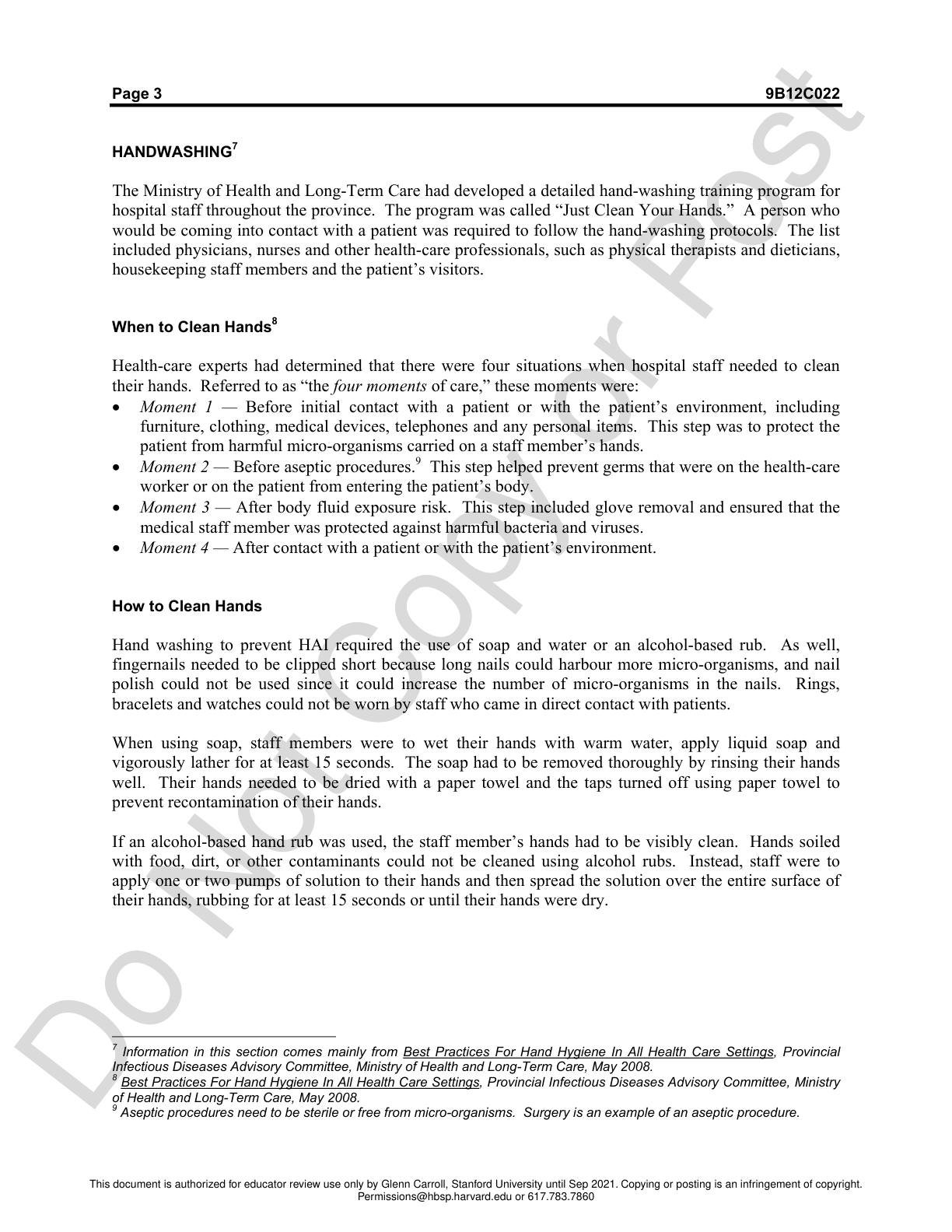
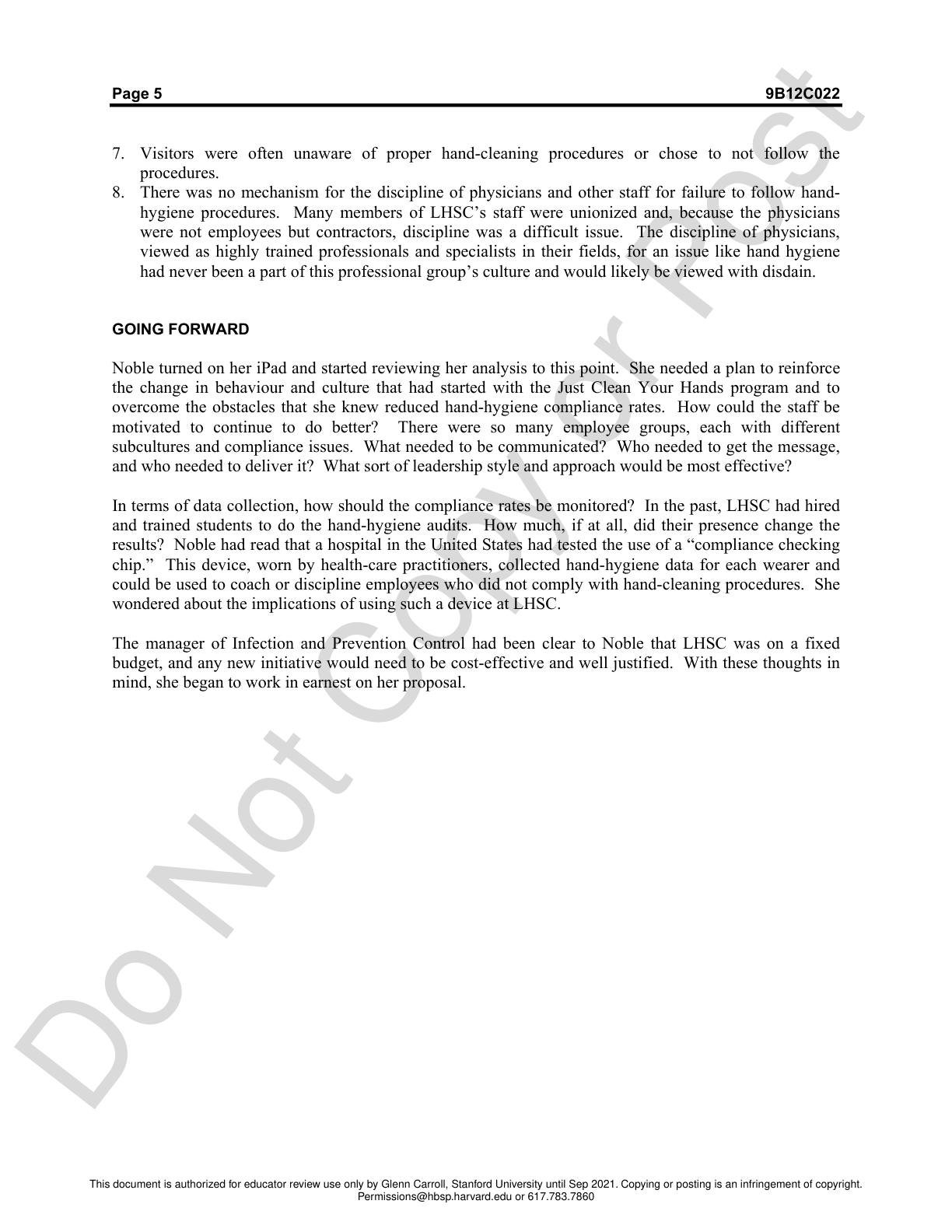
The culture material uses hand hygiene as a historical organizational case. Its purpose here is to understand management systems and shared expectations, rather than to provide clinical instructions. The case asks why people fail to perform a known action and how an organization can change the pattern.
4
35 / TheoryOrganizational culture: from routines to norms
A behavior problem can have several mechanisms
Failure to follow a routine can reflect missing supplies, an impractical process, lack of knowledge, conflicting incentives or a weak social expectation. A campaign aimed at the wrong mechanism can create activity without lasting change.
The source compares actions such as access to supplies, training, observation, feedback and accountability. These interventions perform different functions. Diagnose the conditions surrounding the behavior and test a plausible explanation before assuming that employees need more motivation.
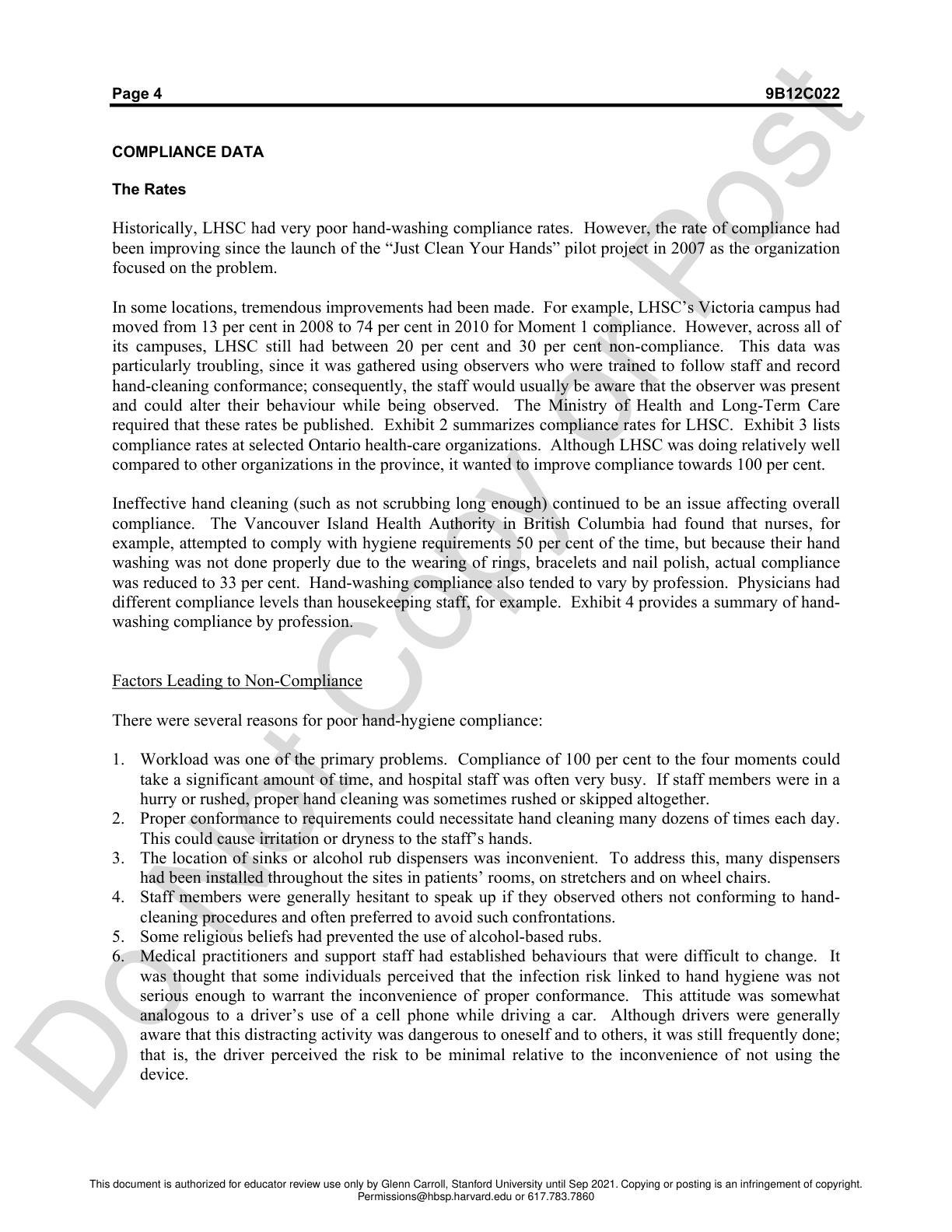
5
35 / TheoryOrganizational culture: from routines to norms
A routine and a norm
A routine is a repeated pattern of activity. A norm is a shared expectation about how members should behave, often supported by social reactions.
Routine
A specified sequence of actions, often explicit, trained and monitored.
Norm
An expectation about appropriate behavior that can become internalized and reinforced by peers.
Worked application
Illustrative application: attending the weekly customer review is a routine. Expecting colleagues to disclose bad news early, and challenging concealment even when a manager is absent, indicates a norm. The meeting may exist without that expectation if people learn to present only favorable results.
Observe peer expectations and consequences as well as the scheduled activity.
6
35 / TheoryOrganizational culture: from routines to norms
From a managed routine to a shared norm
A routine becomes cultural when people share an expectation about the behavior and reinforce it with one another. A checklist alone does not establish that transition.
01
Introduce a routine
Management asks teams to review customer failures weekly. Initially the behavior may occur only because a meeting is scheduled and a manager asks for the report.
02
Experience consequences
People observe what happens when they raise a problem. If managers reward early reporting and act on it, the routine gains a different meaning than if they punish the messenger.
03
Form an expectation
Members come to expect that peers will surface a failure and help investigate it. The behavior becomes part of how a responsible colleague is understood to act.
04
Reinforce with peers
Colleagues notice and respond when the expectation is met or violated. Look for behavior when the manager is absent to distinguish a shared norm from compliance alone.
Norm strength describes how widely and intensely the expectation is held. Whether the norm helps performance depends on its content and the work the organization must do.
7
35 / TheoryOrganizational culture: from routines to norms
Culture includes more than stated values
Shared beliefs and assumptions.
Norms about acceptable behavior.
Language, stories and interpretations.
Observable practices that reveal what is rewarded or tolerated.
8
35 / TheoryOrganizational culture: from routines to norms
Agreement and intensity
Content is a separate question: a strong shared expectation can still be harmful or misaligned.
9
35 / Source pageOrganizational culture: from routines to norms
From managed routine to norm: who does the monitoring
10
35 / Source pageOrganizational culture: from routines to norms
LHSC compliance data and the obstacles behind it
11
35 / Source pageOrganizational culture: from routines to norms
Vanderbilt: the program actions
12
35 / Source pageOrganizational culture: from routines to norms
Vanderbilt's tiered accountability pyramid
13
35 / Source pageOrganizational culture: from routines to norms
Vanderbilt outcomes: adherence and infection ratio
14
35 / Source pageOrganizational culture: from routines to norms
Vanderbilt: what they did culturally
15
35 / Source pageOrganizational culture: from routines to norms
Routines versus norms: the full contrast
16
35 / Source pageOrganizational culture: from routines to norms
Routines: strengths and costs
17
35 / TheoryOrganizational culture: from routines to norms
Agreement and intensity describe cultural strength
Content describes what people believe and expect. Agreement describes how widely those expectations are shared. Intensity describes how strongly members hold them. A culture can have high intensity within competing subgroups while lacking organization-wide agreement.
Strong culture therefore does not mean good culture. Members can share harmful expectations strongly. Evaluate the content, its consequences and its alignment with the strategy separately from its strength. The original matrix makes these dimensions visible.
18
35 / TheoryOrganizational culture: from routines to norms
Peer accountability can reduce dependence on monitoring
The Vanderbilt discussion describes a set of mutually supporting actions, including leader modeling, transparent goals, peer observation and consistent accountability. The source interprets these through shared agreement and intensity around the behavior.
The mechanism concerns what members believe is right and what they expect others to do. It can reduce the need for continuous managerial supervision, but it can also create conformity or exclusion. Examine whether the change persists after special attention ends and whether people can challenge a harmful norm.
19
35 / TheoryOrganizational culture: from routines to norms
Two ways culture can affect performance
Culture can influence how people coordinate and how they direct effort. Explain the behavior connecting a shared expectation to an operating result.
Content alignment
People behave in ways that support the strategy’s requirements.
Commitment and coordination
Shared meaning and expectations can support effort and compatible action with less explicit direction.
Worked application
Illustrative application: an early-escalation norm may reduce repeated clarification about when to raise a release risk. It may also make people willing to spend effort documenting a problem. A norm that discourages dissent can coordinate action quickly while suppressing information the decision needs.
Strength does not establish usefulness. Evaluate the norm’s content, the task and the consequences it produces.
20
35 / TheoryOrganizational culture: from routines to norms
Strength is not the same as goodness
People can agree intensely on an unhelpful norm.
An effective norm in one setting may become rigid in another.
Subgroups can hold conflicting expectations.
A culture analysis must examine content, consequences and context.
21
35 / TheoryOrganizational culture: from routines to norms
A behavior-change diagnosis
Possible issue
Question
Knowledge
Do people understand the action?
Practical friction
Can the action be performed in the workflow?
Meaning
Do people regard it as important?
Expectations
What do peers and leaders actually tolerate?
Accountability
Is the response consistent across status and roles?
22
35 / TheoryOrganizational culture: from routines to norms
Observe behavior before celebrating a campaign
An announcement can change attention temporarily.
Visible monitoring can change behavior while present.
Ask what happens when supervision decreases.
Look for peer expectations and consistent leader behavior as well as measured outcomes.
23
35 / Source pageOrganizational culture: from routines to norms
Hawthorne effects in compliance measurement
24
35 / Source pageOrganizational culture: from routines to norms
Cultural strength: the agreement-intensity matrix
25
35 / Original readingOrganizational culture: from routines to norms
Carroll - Just Clean Your Hands
PDF page 2
PDF page 3
Click either page to read it at full size. In the reader, use ← → to switch between these two pages.
26
35 / Reading debriefOrganizational culture: from routines to norms
Just Clean Your Hands: behavior in context / summary
Selected reading: PDF pages 2, 3, 4
The selected pages describe a setting with explicit hygiene protocols and several barriers to consistent behavior. The organizational question is how knowledge, work design and peer expectations interact in everyday practice.
A specified behavior
The historical case describes situations in which staff are expected to clean their hands. The desired behavior is more precise than a general statement about safety.
Many groups participate
People with different roles and employment relationships share the care environment. A consistent expectation must cross those boundaries.
Practical friction persists
Workload, physical inconvenience and established habits can interfere with following a known rule. Equipment availability addresses only part of that difficulty.
Speaking up is consequential
Reluctance to challenge another person can let nonconformance continue. Peer response is part of the behavior system.
27
35 / Reading debriefOrganizational culture: from routines to norms
Just Clean Your Hands: behavior in context / discussion
Selected reading: PDF pages 2, 3, 4
Critical points
Knowledge and action
Awareness of a protocol does not establish that it happens reliably. Diagnose when behavior breaks down and which constraint explains the gap.
A norm and compliance
A shared norm involves expectations and social reinforcement. Following a rule only during observation can have a different mechanism.
The teaching boundary
This course uses the historical case for organizational analysis. Its clinical details and dated statistics are not instructions for current clinical practice.
28
35 / ApplicationOrganizational culture: from routines to norms
Just Clean Your Hands: beyond instructions
The organizational case asks why a well-understood desired behavior can remain inconsistent. Carroll’s discussion contrasts training, monitoring, practical barriers, meaning and shared accountability. The lesson concerns organizational behavior, not a clinical protocol.
What would distinguish a stronger routine from an internalized norm?
29
35 / Current practiceOrganizational culture: from routines to norms
Current practice: norms for AI tools at work
Adoption runs ahead of policy
Microsoft and LinkedIn's 2024 Work Trend Index, a survey of 31,000 people in 31 countries, reported that 75% of knowledge workers use generative AI at work and 78% of those users bring their own tools. When usage spreads bottom-up, the operative rules are peer norms, not the written policy.
A policy alone is a routine
In April 2023 Samsung engineers pasted internal source code into ChatGPT; the company responded in May 2023 by banning generative AI tools on work devices. A ban is a fast routine with monitoring costs. Whether people stop pasting sensitive data into consumer tools when no one checks depends on friction (is an approved tool available?) and on what peers expect.
Relay's version of the problem
At Relay, pasting a clinic's schedule into a consumer chatbot to debug a template is the same mechanism as the staging near-miss: a fast path that moves PHI outside agreements. The durable fix pairs an approved, BAA-covered tool with a team expectation that anyone can question an unsafe paste, and the application of HIPAA to a given tool needs legal review.
35 / PracticeOrganizational culture: from routines to norms
Diagnose a recurring behavior
Fictional team: everyone is trained to record a handoff, but records are often missing. The tool is slow; managers sometimes skip it; a campaign improves compliance only while a supervisor watches.
Your task
Identify routine, friction, norms and leadership issues. Propose an intervention and evidence that would distinguish a temporary monitoring effect from a more durable change.
31
35 / DebriefOrganizational culture: from routines to norms
Worked answer and reasoning
Repair practical friction and clarify the expected routine; do not assume all non-compliance is a values problem.
Leaders skipping the process communicate an exception that can undermine the stated norm.
Check whether peers reinforce the behavior and whether it persists when visible supervision decreases.
32
35 / Venture stepOrganizational culture: from routines to norms
Venture step: Diagnose the PHI near-miss
Relay · venture step 35
Month 11, team of 9 (illustrative: 3 remote). Relay's engineering culture prizes shipping fast. While testing a new reminder template, an engineer sends a message containing a patient's full name and appointment time to a wrong number; the staging environment had been seeded with a copy of real clinic records because synthetic test data did not exist. A HIPAA training module and a written policy against using real PHI in testing were already in place. Daniel himself has hot-fixed production templates on Friday nights. Nobody raised the practice before the incident.
Your task
Write a one-page culture diagnosis: classify each failure by mechanism (knowledge, friction, meaning, expectations, accountability), state whether 'no real PHI outside production' is a routine or a norm today, propose an intervention hypothesis, and name evidence that would distinguish durable change from a monitoring effect.
33
35 / Venture stepOrganizational culture: from routines to norms
Venture step: worked reasoning
Mechanism, not motivation: knowledge was present (training done, policy written). The failure combined friction (no synthetic data, so copying real records was the fastest path), meaning ('ship fast' was the rewarded value), expectations (peers saw the shortcut and said nothing) and accountability (the CTO's own Friday hot-fixes signaled that the rule bends for speed).
Today it is at best a routine: a written rule followed when convenient and enforced by nobody. A norm would show up as a junior engineer questioning Daniel's hot-fix in the team channel, and being thanked for it.
Intervention as a system: remove friction (synthetic fixtures, an outbound-number allowlist and PHI scanner in non-production); have Daniel publish a blameless review that names his own practice and ends it; add a PHI check to code review that any reviewer can block on; recognize the first person who reports a near-miss.
Evidence: near-miss self-reports should rise at first (reporting, not risk, is increasing); unannounced audits of staging data and merged pull requests should stay clean three months after the review, when attention has moved on. A drop in reports with no audit is not evidence of success.
Separately, a message with a patient's name sent to the wrong number may be a reportable breach; counsel must run the HIPAA breach risk assessment now, under current rules and the actual facts.
34
35 / DebriefOrganizational culture: from routines to norms
Reasoning traps
Treating a training gap as the default diagnosis
When people already know the rule, more training adds activity without change. Check friction, incentives and what leaders tolerate before building another course.
Measuring a norm while everyone knows they are watched
Announced audits and visible observers inflate compliance; the McLaws and Kwok wards show gaps of 25 to 66 points. Evidence of a norm comes from unannounced or automated observation after the campaign has ended.
Exempting senior people to keep the peace
One visible exception for a senior physician or a founder tells everyone the rule is negotiable by status. Vanderbilt's 'no exceptions for top MDs' was a design choice, not a slogan.
35
35 / ReviewOrganizational culture: from routines to norms
What you can now explain
A culture diagnosis of Relay's PHI near-miss: mechanism classification, routine-versus-norm verdict, an intervention hypothesis led by friction removal and leader modeling, and an evidence plan based on unannounced audits.
A routine is enforced by monitoring and specific rewards; a norm is enforced by peers and internalized as the right thing to do, so it persists when the manager is absent.
Behavior failures have distinct mechanisms (knowledge, friction, meaning, expectations, accountability), and an intervention must target the one that binds.
Cultural strength (agreement times intensity) is separate from content: a strong culture can be harmful, and only unobserved behavior shows whether a norm exists.
Next lesson: Culture design & management levers
36
Check your understanding
When does a repeated action become an internalized expectation?
Score
Question 1
After a hospital campaign, observed compliance with a safety step rises from 60% to 92% during announced audits. Unannounced electronic monitoring in the same month shows 58%. What is the best interpretation?
Unobserved behavior barely moved (58% vs 60%), so the audited gain is a Hawthorne effect. The tempting answer treats measured compliance as the behavior itself; a norm is the behavior that persists when nobody is watching.
Question 2
At Relay, the written policy says no real PHI may be used outside production, and every engineer has completed HIPAA training. Staging still contains copied clinic records. Which mechanism should be addressed first?
Training is complete, so knowledge is not the binding constraint. As long as real records are the easiest test data, even well-intentioned engineers will copy them. Remove the friction first, then work on expectations and accountability.
Question 3
Which observation is the strongest evidence that 'report near-misses early' has become a norm at a 20-person software company?
A norm is enforced by peers, across status, without a manager present. Signatures show the routine exists, a rise under CEO attention may be monitoring, and zero incidents can mean concealment as easily as safety.
Question 4
A sales team strongly and unanimously believes 'never tell a client about a product defect until the contract is signed.' On the agreement-intensity matrix, what is this?
High agreement and high intensity define strength, so this is a strong culture. Its content conflicts with honest dealing and long-run retention. Treating strength as goodness is the misconception the matrix is designed to correct.
Question 5
Vanderbilt tied department chairs' discretionary funds to unit results, but staff themselves received no bonus for compliance. Why does that design make sense?
The program wanted staff to see the behavior as the right thing to do, enforced by peers. Paying for each observed act turns it back into a monitored routine. Leaders got consequences because they control resources, modeling and exceptions.
Question 6
Relay's CTO says: 'We have a privacy culture: it is in our values deck.' Engineers say privacy reviews are skipped whenever a customer demo is close. Which statement is most accurate?
Culture is what people expect, and what is rewarded or tolerated, when values conflict. A rule that gives way whenever a demo is close tells everyone which value wins. The values deck is evidence of what leaders intend, not of the norm.
Workbook
When does a repeated action become an internalized expectation?
Module output: A culture diagnosis and a consistent set of management levers.
Library
Every original page used in this lesson
10 appear in the slides with notes; the rest are kept here for reference.
Managerial problem solving through experimentsA flow from an identified problem to three candidate solutions, each tested in an experimental condition, ending with choosing the best one, building routines and training employees. This is the conventional managerial path that culture work extends; the next page shows where it stops short.Carroll - From Routines to Norms Slides (Session 1) · PDF page 3
1
From managed routine to norm: who does the monitoringThree stages: the manager develops routines, trains, monitors and rewards; the manager refines and evaluates routines; finally employees themselves monitor, reward and refine the routines. The shift is in who enforces the behavior. A routine still depends on managerial monitoring at stage two; it becomes a norm only when peers take over that role at stage three, which is also what makes it cheaper to sustain.Carroll - From Routines to Norms Slides (Session 1) · PDF page 4 · in the slides
2
Routines differ from norms (first pass)A two-column contrast: routines are specified, explicit, deliberate actions; norms are appropriate and expected behavior that is implicit, tacit and automatic. Superseded by the fuller version of the same contrast later in the deck.Carroll - From Routines to Norms Slides (Session 1) · PDF page 5
3
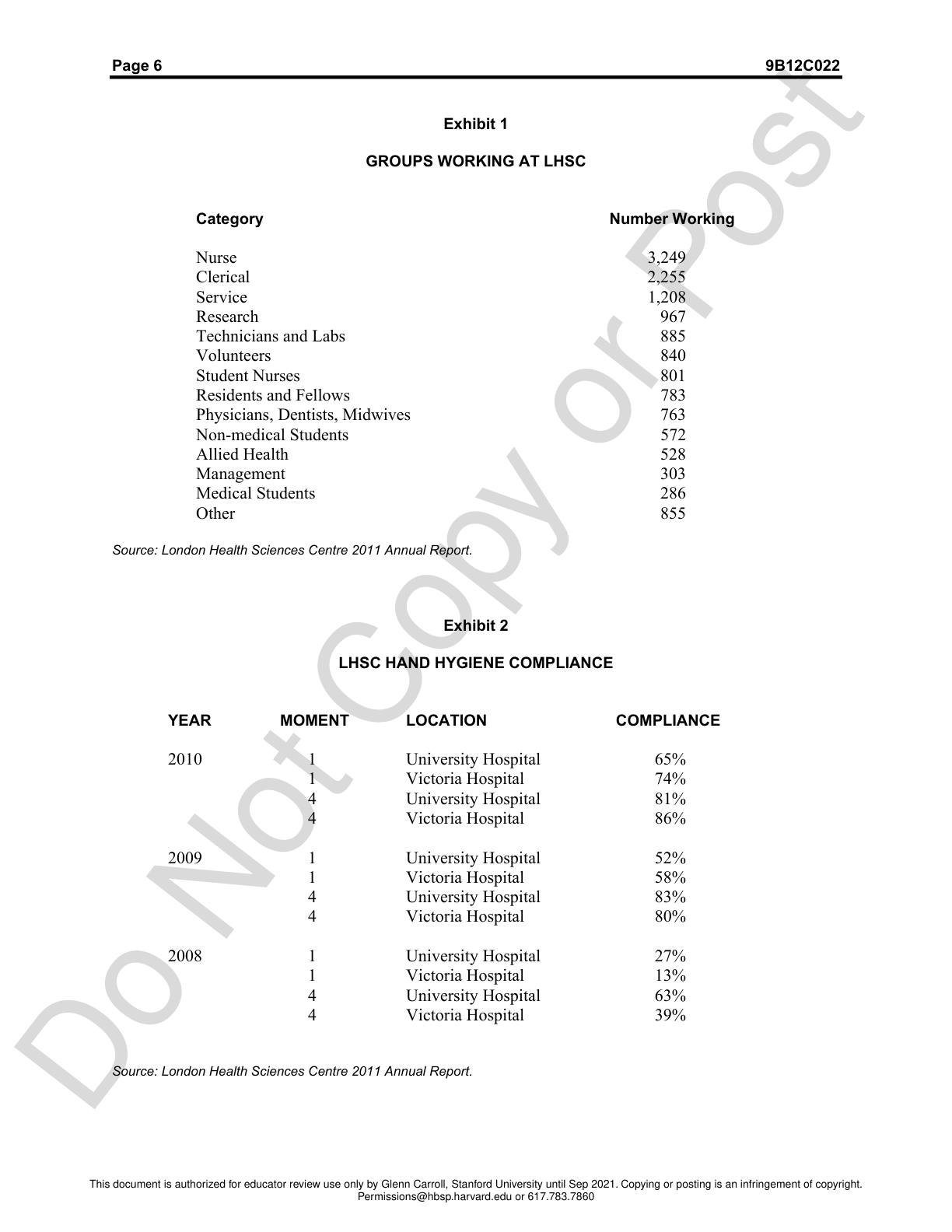
The LHSC problem: known rule, low complianceLondon Health Sciences Centre (Ontario) ran a 'Just Clean Your Hands' campaign; compliance improved then plateaued, with non-compliance still around 20-30%. Sets up the case question: the rule was known and the campaign worked partly, so the remaining gap is not a knowledge problem.Carroll - From Routines to Norms Slides (Session 1) · PDF page 7
4
Hand-rub and hand-wash procedure postersReproductions of standard procedure posters and the 'five moments' diagram for hand hygiene. Clinical detail only; the course uses the case for organizational analysis, not as clinical instruction.Carroll - From Routines to Norms Slides (Session 1) · PDF page 8
5
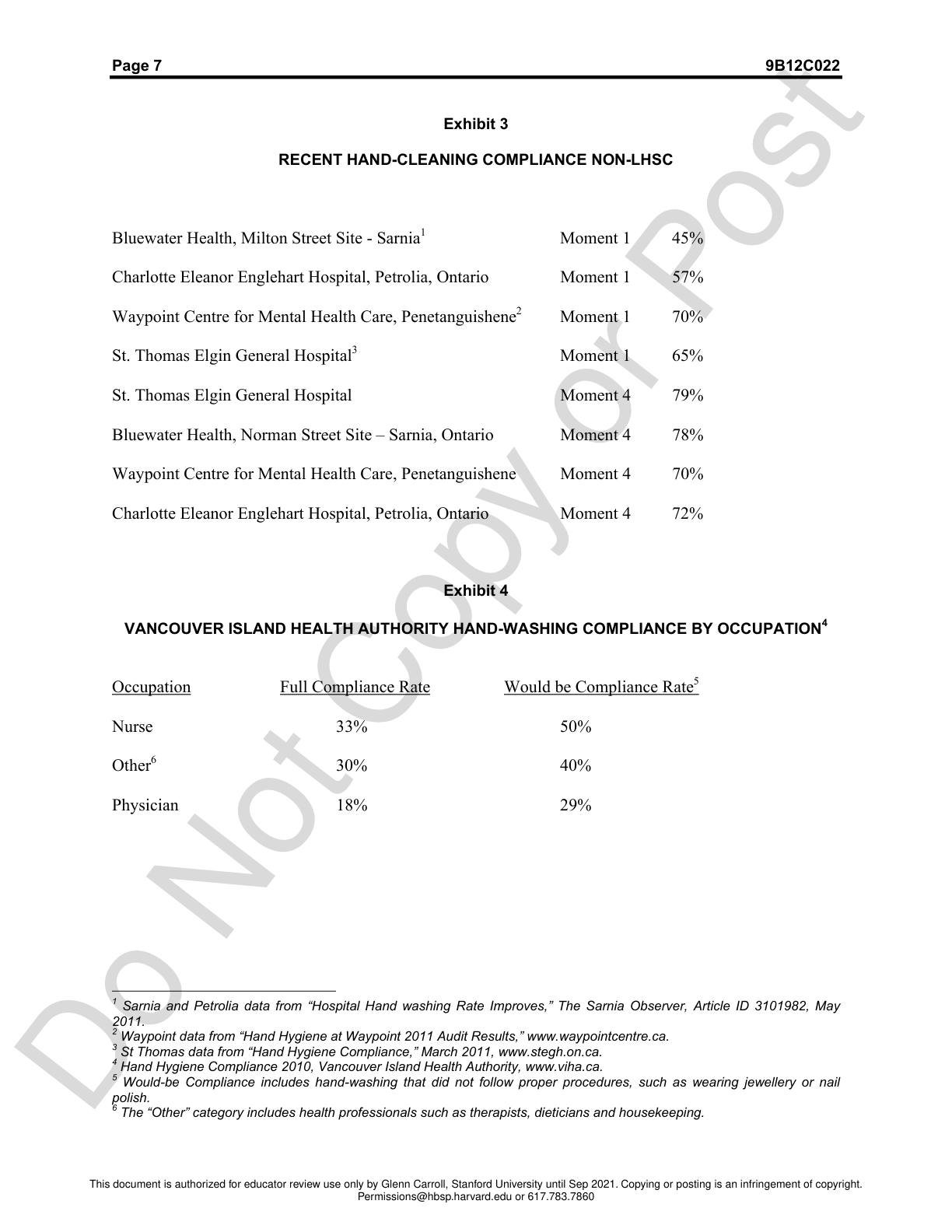
LHSC compliance data and the obstacles behind itA table of compliance rates by campus and moment for 2008-2010 (Victoria campus Moment 1 rose from 13% to 74%; University Moment 4 rose from 63% to 83% and then slipped to 81%) next to a list of obstacles: workload, skin irritation, sink and dispenser location, reluctance to speak up, religious beliefs about alcohol rubs, and staff habits. Read the obstacle list as a set of different mechanisms: friction (location, workload, irritation), belief, and social expectation (hesitation to speak up). One campaign cannot address all of them, which is why gains stalled.Carroll - From Routines to Norms Slides (Session 1) · PDF page 11 · in the slides
6
Discussion prompt: what should the manager propose?Actions under consideration (targeted messages, leadership approach, measurement by human auditors or RFID) against obstacles such as campaign fatigue, multiple occupational groups and budget. A class prompt; its useful contrast is between monitoring technologies and changes in shared expectations.Carroll - From Routines to Norms Slides (Session 1) · PDF page 12
7
Vanderbilt: the program actionsVanderbilt University Medical Center's program list: more sanitizer, training for all employees, everyone acting as an observer about 20 times a month, a hand-hygiene app, public unit targets and report cards, an accountability pyramid, no exceptions for senior physicians, top-management buy-in, and department chairs whose discretionary funds were tied to results. The actions form a system rather than a campaign: friction removal, measurement, transparency, leader participation and consequences that apply regardless of status. 'No exceptions for top MDs' is the item most organizations skip.Carroll - From Routines to Norms Slides (Session 1) · PDF page 15 · in the slides
8
Vanderbilt's tiered accountability pyramidA pyramid of escalating responses: most staff comply; an individual miss triggers an informal peer 'cup of coffee' conversation; an apparent pattern triggers an awareness intervention; a persisting pattern triggers an authority intervention; no change leads to discipline. Most enforcement is designed to happen at the bottom, between peers and informally. Formal authority is reserved for repeated patterns, which keeps monitoring cheap and preserves professional respect.Carroll - From Routines to Norms Slides (Session 1) · PDF page 16 · in the slides
9
Vanderbilt outcomes: adherence and infection ratioLeft: monthly adherence drifted down from about 0.55 toward 0.45 at baseline (2007-2009), jumped and climbed toward 0.8 after program launch, and held near 0.9 in the active-accountability phase to 2012. Right: the standardized infection ratio fell sharply as adherence rose above roughly 0.8. The second jump comes with active accountability, not with the launch campaign. The right panel is an association across periods, not proof that hand hygiene alone caused the decline.Carroll - From Routines to Norms Slides (Session 1) · PDF page 17 · in the slides
10
Vanderbilt: what they did culturallyLeaders explained, took questions and modeled the behavior; messages were personalized ('what if it was your child?'); enforcement was peer-to-peer, immediate and civil; goals and unit comparisons were transparent; rules applied to everyone. The page asks why strong incentives were not used. The answer to 'why not strong incentives?' is the lesson: pay for compliance can crowd out the professional meaning the program was trying to build, and it keeps the behavior dependent on measurement.Carroll - From Routines to Norms Slides (Session 1) · PDF page 18 · in the slides
11
Vanderbilt's cultural theory: agreement and intensityBehavioral goals (every staff member believes it is right, behavior infused with meaning, internalized, accountable to peers) mapped to cultural impact: greater agreement and intensity around the norm. States the mechanism behind the Vanderbilt results in terms of the two strength dimensions defined later in the deck.Carroll - From Routines to Norms Slides (Session 1) · PDF page 19
12
Routines versus norms: the full contrastRoutines: a sequence of specified actions; explicit and detailed; deliberate; specific rewards and punishments; extrinsic; understood as the expected thing to do. Norms: appropriate and expected behavior; implicit and general; automatic; generalized approval or disapproval; intrinsic; internalized as the right thing to do. The bottom row is the test. 'Expected thing to do' describes compliance with a rule; 'right thing to do' describes an internalized norm that persists when nobody is checking.Carroll - From Routines to Norms Slides (Session 1) · PDF page 20 · in the slides
13
Routines: strengths and costsPros: simple, decomposable, testable by experiment, easy to learn, effective. Cons: require observation and monitoring, rigid and not adaptable without re-analysis, can crowd out motivation, and relapse once the Hawthorne effect fades. Routines are not the enemy; they are the right tool when the task is stable and measurable. The costs grow when monitoring is expensive or the situation changes faster than the rulebook.Carroll - From Routines to Norms Slides (Session 1) · PDF page 21 · in the slides
14
Hawthorne effects in compliance measurementTwo charts from McLaws and Kwok (American Journal of Infection Control, 2018): on a medical and a surgical ward, compliance recorded by human auditors ran far above compliance recorded by automated surveillance in every quarter of 2014-2015, a gap of roughly 25 to 66 percentage points. When people know they are watched, measured compliance overstates normal behavior. Any claim that a routine has become a norm must use evidence collected when people are not aware of observation.Carroll - From Routines to Norms Slides (Session 1) · PDF page 22 · in the slides
15
Norms: strengths and costsPros: low monitoring and overhead costs because peers enforce, and the ability to handle unexpected situations. Cons: can be inflexible and can be discriminatory. The mirror of the routines page; the 'discriminatory' risk returns in lesson 36 on diversity.Carroll - From Routines to Norms Slides (Session 1) · PDF page 23
16
Every organization has a cultureCulture develops naturally, as personality does; managing it is optional but neglect can amount to negligence. Includes Lou Gerstner's line that culture is not one aspect of the game but the game. Framing page for the culture definition that follows.Carroll - From Routines to Norms Slides (Session 1) · PDF page 24
17
What culture consists ofCulture makes sense of the organization, distinguishes it and guides action; elements range from deep beliefs and mental maps to norms and special language, from abstract to concrete. Norms sit at the concrete, observable end, which is why they are the practical point of intervention.Carroll - From Routines to Norms Slides (Session 1) · PDF page 25
18
Three dimensions: content, intensity, agreementContent (what is believed and expected), intensity (how strongly) and agreement (how widely shared). Introduces the dimensions used in the strength matrix.Carroll - From Routines to Norms Slides (Session 1) · PDF page 26
19
Cultural strength: the agreement-intensity matrixA 2x2: high agreement and high intensity is a strong unified culture; high agreement with low intensity is vacuous beliefs; low agreement with high intensity is multiple cultures, possibly in conflict; low on both leaves behavior to external control. Two cells are easy to misread: 'vacuous beliefs' looks like consensus on paper but does not change behavior, and 'external control' means the organization is running on rules and monitoring rather than culture.Carroll - From Routines to Norms Slides (Session 1) · PDF page 27 · in the slides
20
Strong culture can have any contentA list of high-agreement, high-intensity groups ranging from start-ups and non-profits to military units, cults and terrorist cells. Strength says nothing about whether the content is good.Carroll - From Routines to Norms Slides (Session 1) · PDF page 28
21
What is a 'good' culture?Title page with a photo of a team meeting, opening the discussion of what makes culture good. Transition page; no content of its own.Carroll - From Routines to Norms Slides (Session 1) · PDF page 29
22
Two ways culture affects performanceCulture affects performance through content alignment with strategy and through enhanced commitment and coordination. The native slide on the same two routes covers this page.Carroll - From Routines to Norms Slides (Session 1) · PDF page 30
23
Content alignment: Walmart and AmazonWalmart's 'always low prices' supports cost-cutting and thrift; Amazon's customer-centric, inventive stance supports building new products. Each culture fits its own strategy; neither content would suit the other company.Carroll - From Routines to Norms Slides (Session 1) · PDF page 31
24
Increased commitmentSolidarity (identification, relationships, loyalty) and intrinsic motivation, described as more powerful than extrinsic motivation. The commitment route, illustrated with a rugby scrum.Carroll - From Routines to Norms Slides (Session 1) · PDF page 32
25
Enhanced coordinationCommon focus and tacit understanding, reduced debate and conflict, and pervasive, immediate peer monitoring and advice. The coordination route, illustrated with synchronized swimmers.Carroll - From Routines to Norms Slides (Session 1) · PDF page 33
26
Case page: LHSC compliance data and causes of non-complianceCase text reporting campus compliance gains (Victoria Moment 1 from 13% to 74%), overall non-compliance of 20-30% measured by visible observers, profession-level differences, and six causes of non-compliance. Notice the case's own caution: observers were visible, so even the reported rates were likely inflated.Carroll - Just Clean Your Hands · PDF page 4