Positioning & the value propositionModule 02 · Customers, innovation & market focus
IGNITE EXTENDED / LESSON 08
Positioning & the value proposition
How should the chosen customer understand your offer relative to alternatives?
A positioning statement with an evidence checklist.
1
08 / OpeningPositioning & the value proposition
The decision and the learning goals
Write an internally useful positioning statement
Distinguish a feature from a compelling difference
Identify evidence needed to validate the intended position
90-minute workshopOpening 5 minConcepts and original examples 35 minPractice 25 minDebrief 15 minReview 10 min
2
08 / TheoryPositioning & the value proposition
A frame of reference changes the comparison
A positioning statement helps a team decide how a target customer should understand the offering. The frame of reference identifies the category or alternative against which the customer evaluates it. That frame determines which attributes seem essential.
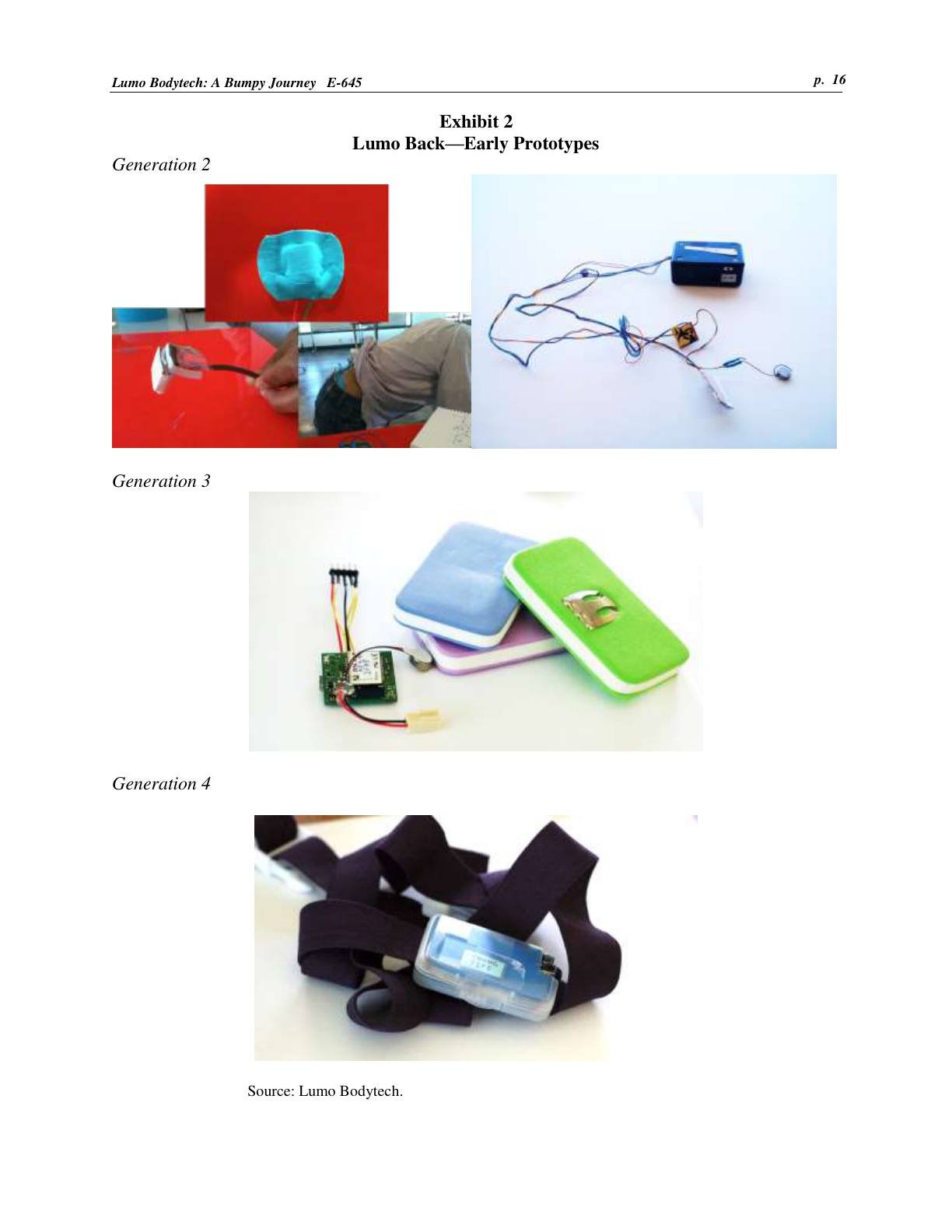
A posture device framed as an aid for a painful workday invites different expectations from one framed as a lifestyle accessory. The Lumo case examines how learning about customers changes the intended meaning and the work needed to support it. Positioning therefore affects product decisions, evidence and communication.
3
08 / TheoryPositioning & the value proposition
Points of parity establish membership in the category
A point of parity is an attribute customers expect before treating an offering as a credible option in a category. A point of difference gives them a reason to prefer it. A striking difference may have little effect if the offering fails a basic category requirement.
The positioning analysis should identify both. Customers can regard reliability, convenience or compatibility as minimum conditions even when these are not the featured benefit. The team needs evidence that it meets those conditions and evidence that the proposed difference matters.
4
08 / TheoryPositioning & the value proposition
Positioning is a choice about meaning
Name the target customer and their situation.
Set a frame of reference: what kind of offer is this?
Identify a compelling difference relative to a real alternative.
Check whether the intended meaning is understood by the customer.
5
08 / TheoryPositioning & the value proposition
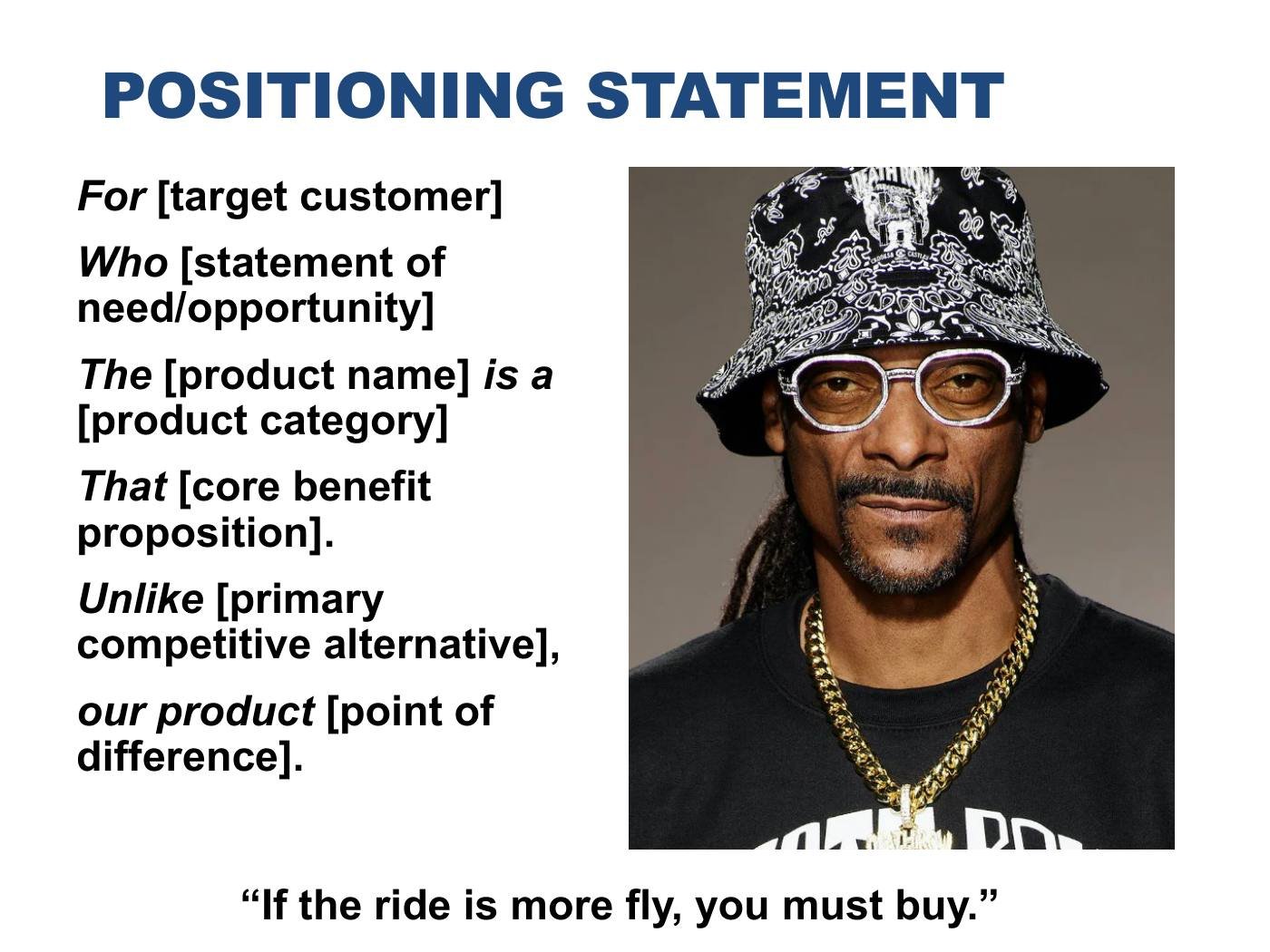
The elements of a positioning statement
WHO + NEED + CATEGORY + BENEFIT + DIFFERENCE
Who / need
A chosen customer and a specific problem.
Category / benefit
A frame of reference and the resulting value.
Difference
Why this offer is compelling relative to alternatives.
6
08 / TheoryPositioning & the value proposition
Points of parity and difference
Customers need enough familiar attributes to consider an offer credible, plus a reason to choose it over a relevant alternative.
Parity
Attributes needed to be considered a credible member of a category.
Difference
An attribute or benefit that gives the chosen customer a reason to prefer this offer.
Worked application
Illustrative application: a new booking service may need dependable confirmation and payment to qualify as usable. A distinctive workflow for coordinating several locations may then matter to a chosen buyer. A difference adds little if basic reliability is missing or if the buyer does not value coordination.
Identify the category’s necessary expectations first, then investigate whether the proposed difference matters in the target situation.
7
08 / TheoryPositioning & the value proposition
Positioning choices imply different work
Frame
What the customer expects
What evidence is needed
A serious posture aid
Reliability and relevance to a meaningful posture problem.
Evidence about the actual user task and benefit.
An everyday wearable
Comfort, discretion and ease of use.
Evidence that casual users will wear it repeatedly.
Lumo is a historical teaching case; this slide makes no claim about clinical effectiveness.
8
08 / Source pagePositioning & the value proposition
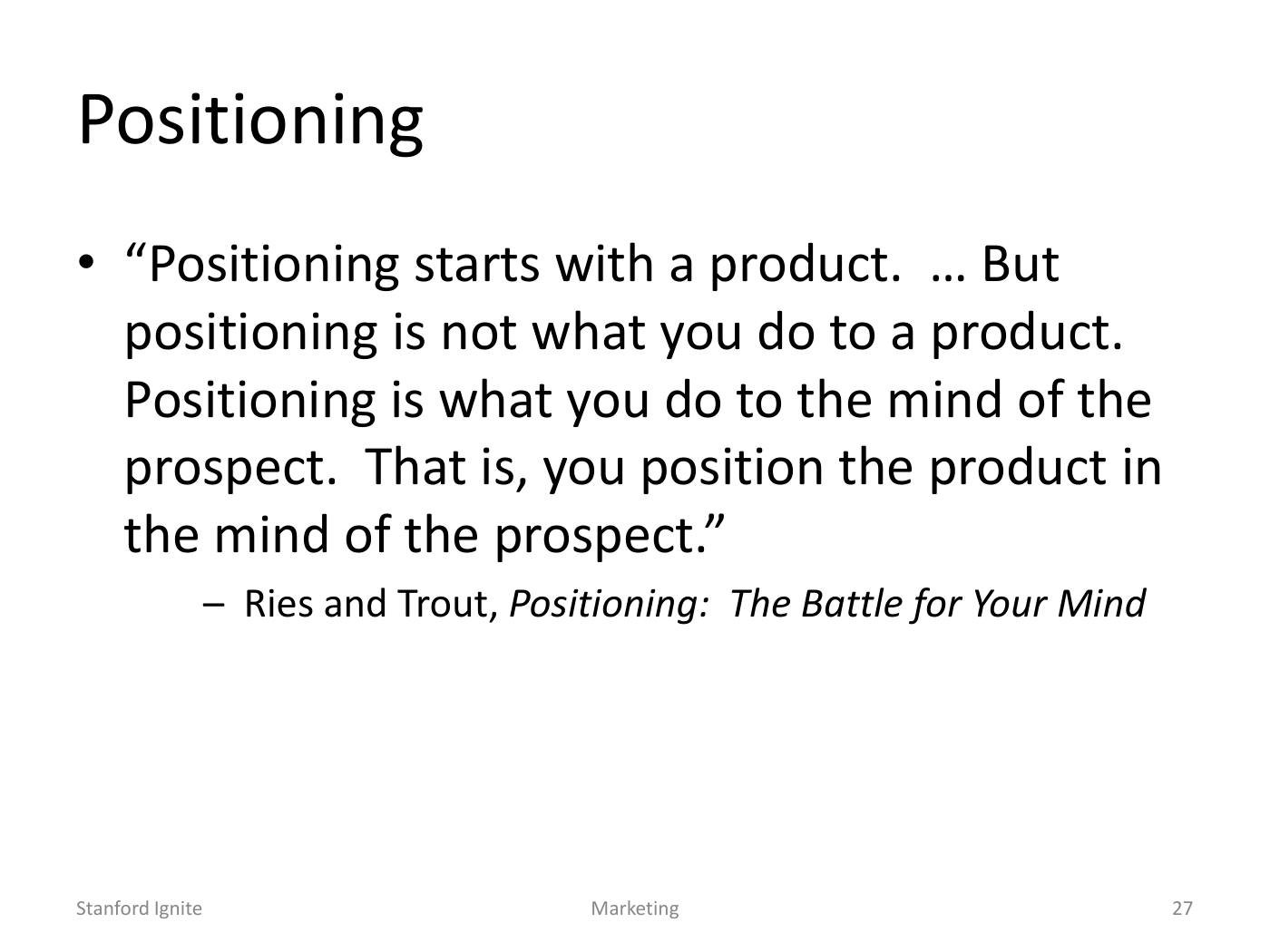
Positioning happens in the prospect's mind (Ries and Trout)
9
08 / Source pagePositioning & the value proposition
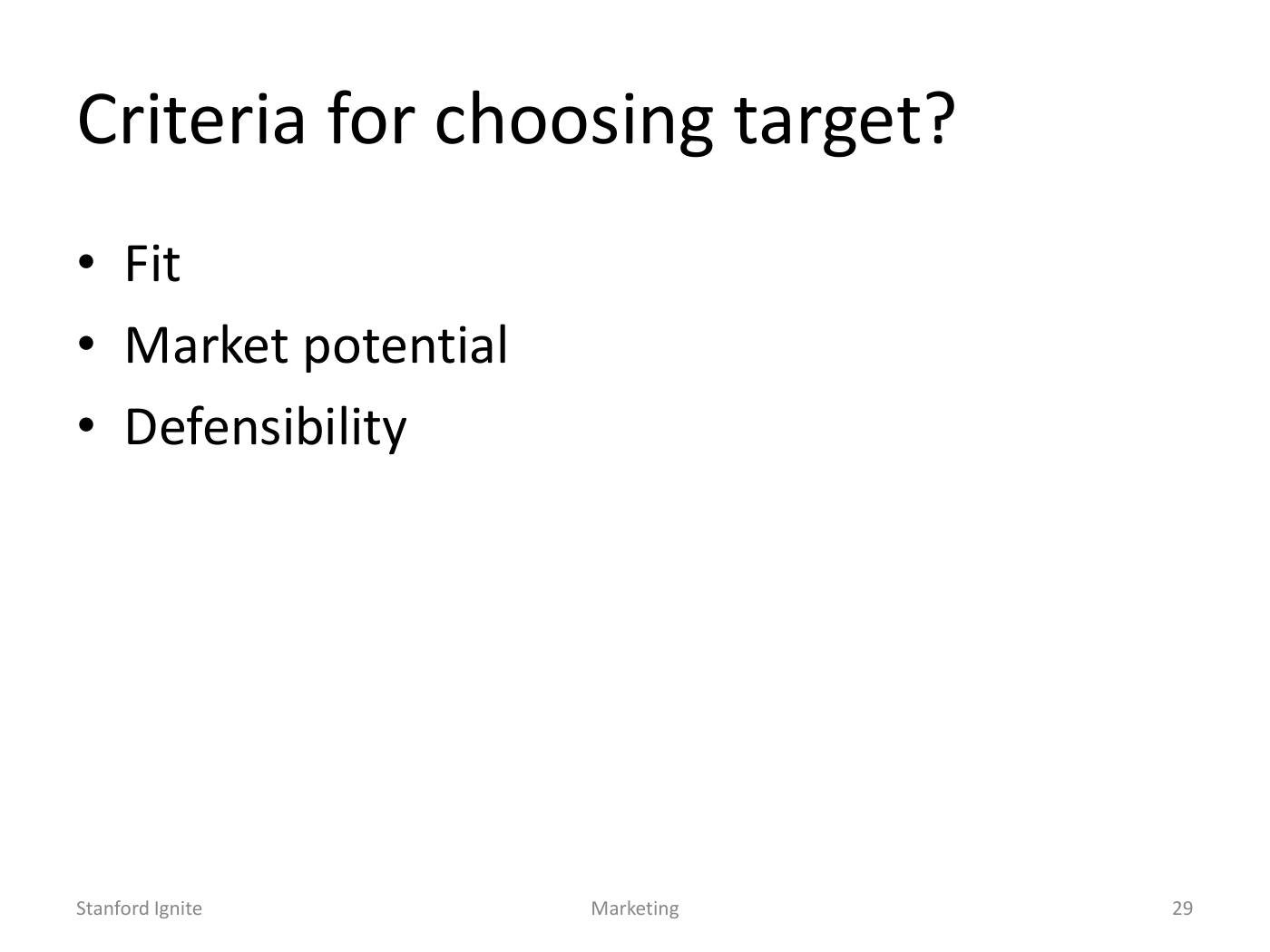
Three criteria for choosing the target: fit, potential, defensibility
10
08 / Source pagePositioning & the value proposition
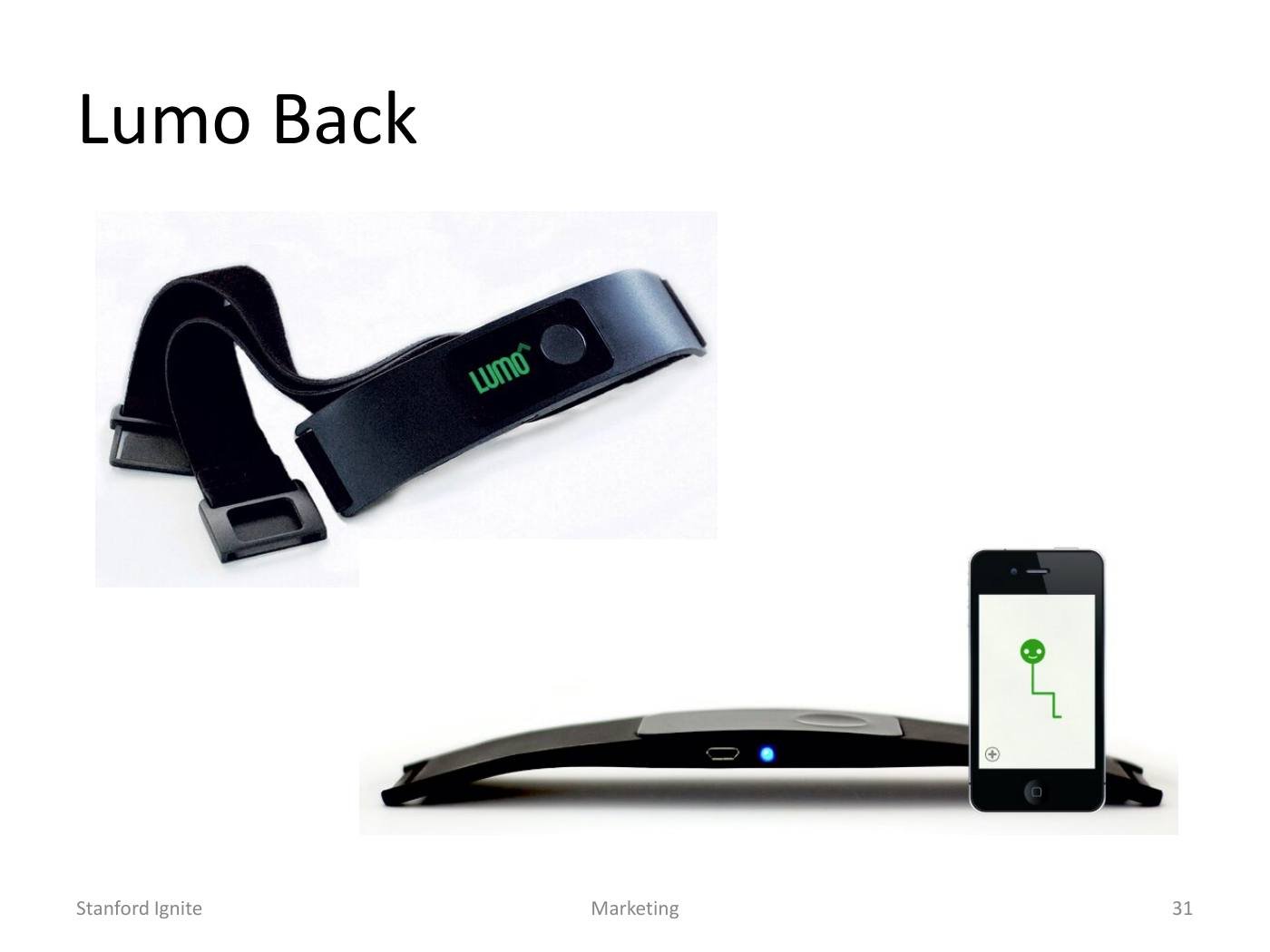
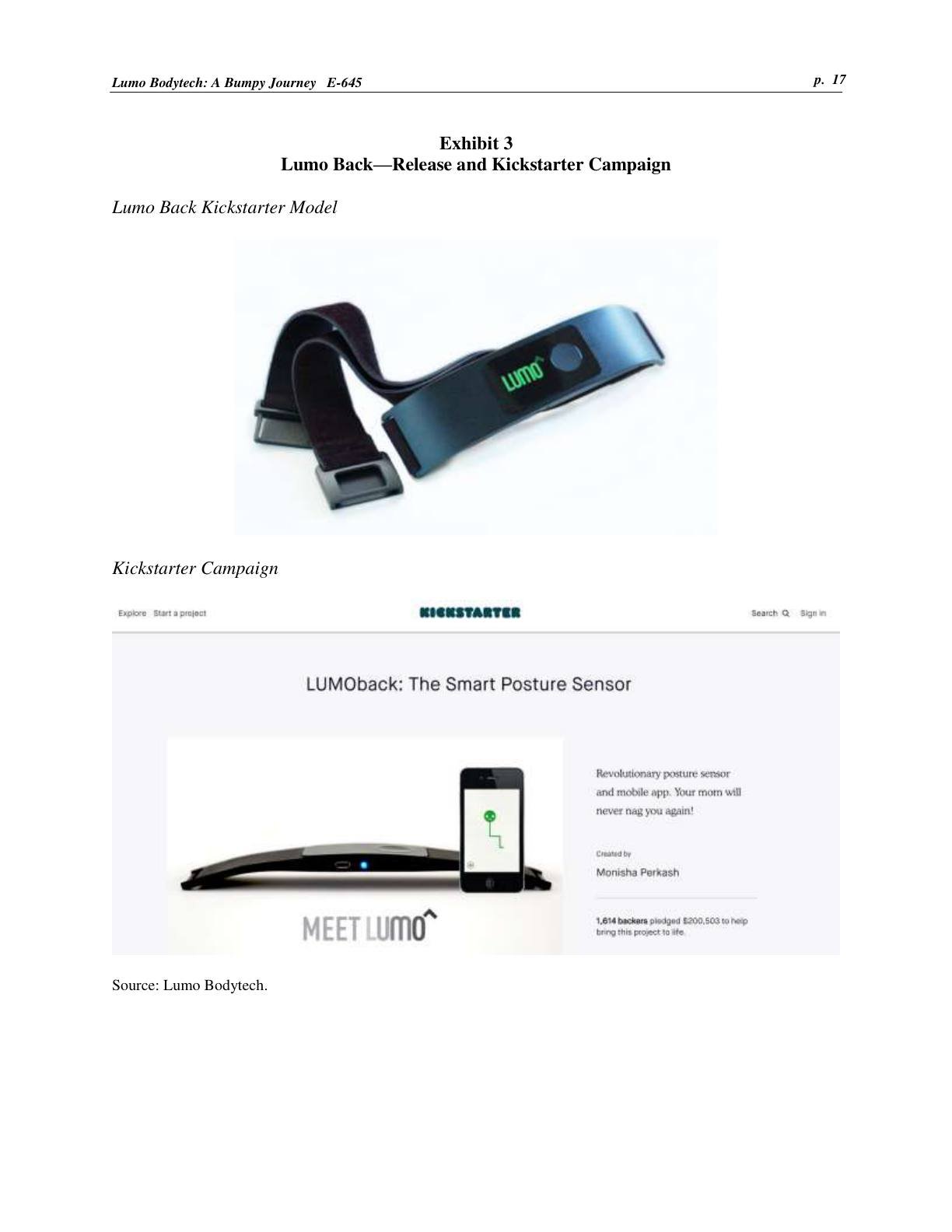
Lumo Back: the product being positioned
11
08 / Source pagePositioning & the value proposition
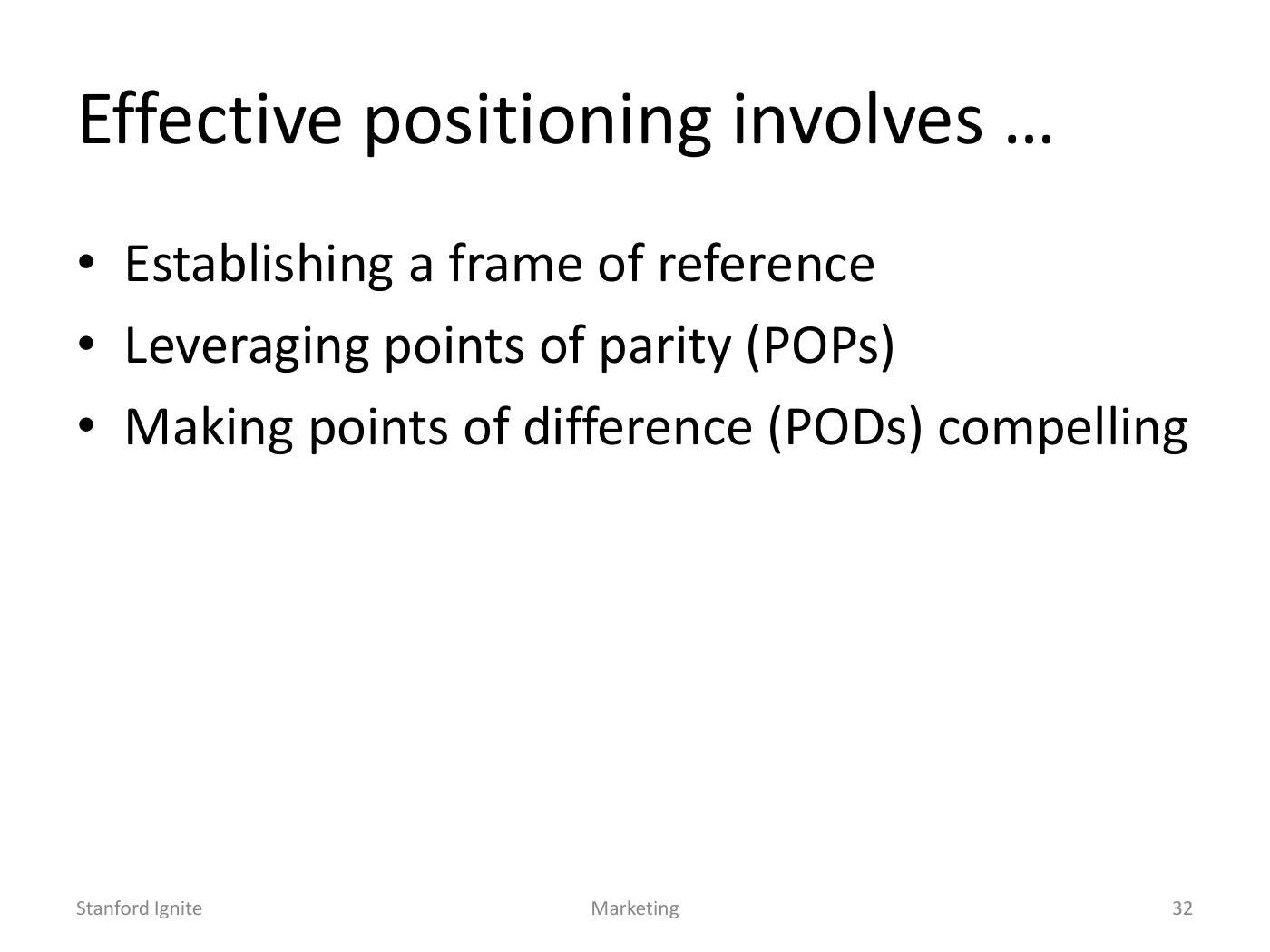
Three tasks of effective positioning: frame, parity, difference
12
08 / Source pagePositioning & the value proposition
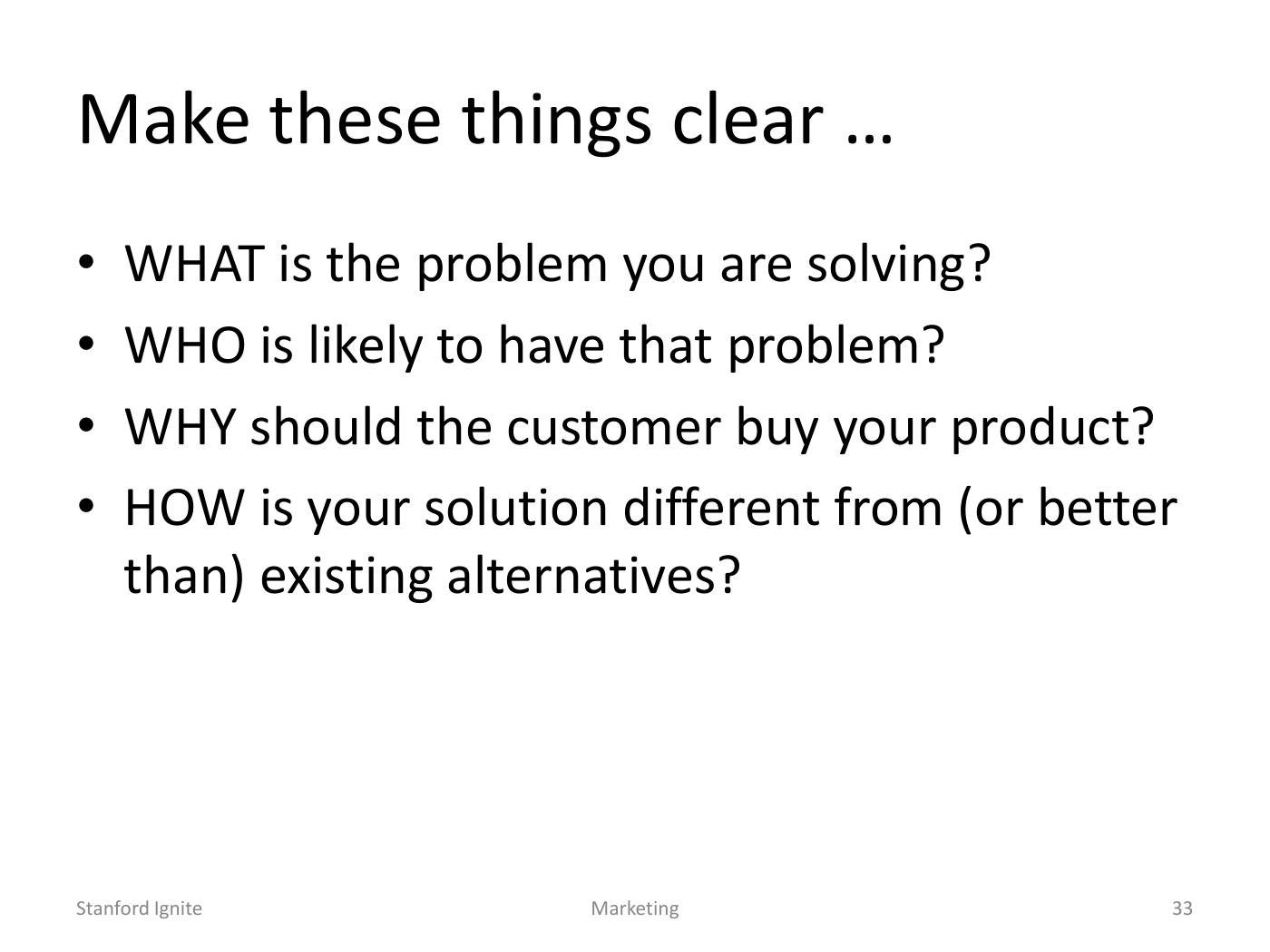
Four questions a position must answer: what, who, why, how
13
08 / TheoryPositioning & the value proposition
A positioning statement is an internal decision tool
The statement names the target, the relevant situation or need, the frame of reference and the reason to choose the offering. It is normally more explicit than a slogan. Its value lies in the choices it helps employees make consistently.
A strong test asks what the team would do differently because of the statement. If changing the target or the claimed benefit leaves the feature priorities, customer evidence and channel plan unchanged, the statement may be too generic to guide work.
14
08 / TheoryPositioning & the value proposition
Meaning and willingness to buy require separate tests
A customer can accurately repeat a message without finding the benefit compelling. They can find the benefit compelling without accepting the price or the required change in behavior. Test these questions separately so that a communication improvement is not mistaken for evidence of adoption.
Begin with an unaided interpretation: ask what the person thinks the offering does and who it is for. Then examine the buying situation, existing alternatives and the consequence of switching. Observe behavior where possible rather than relying only on an expression of interest.
15
08 / TheoryPositioning & the value proposition
The Lumo learning problem
Early interest and later mainstream adoption can come from different needs.
An early user may tolerate discomfort for a strongly felt problem.
A casual user may value appearance and convenience more.
The team must learn which customer it is actually designing and positioning for.
16
08 / TheoryPositioning & the value proposition
Positioning and a slogan
Positioning is an internal decision about customer, need, category and difference. Public wording expresses that choice in a particular setting.
Internal positioning
A decision tool: makes customer, benefit and alternative explicit.
Public wording
An expression of the position for a particular audience and channel. A memorable phrase can still hide an unclear position.
Worked application
Illustrative application: “Work flows better” could describe many products. A position specifying shift supervisors, conflicting instructions and an authoritative handoff record guides what to build and demonstrate. Several headlines could express that same position, and each should be checked for the meaning customers infer.
A memorable phrase cannot resolve an unresolved target or benefit. Test interpretation before optimizing wording.
17
08 / TheoryPositioning & the value proposition
Test the meaning
Positioning exists in the customer’s interpretation. A sentence that sounds clear inside the company may imply an unintended category or promise outside it.
01
Show
Give target customers a short description or prototype with realistic context. Do not explain the desired interpretation first. Otherwise the test may measure their ability to repeat your words.
02
Ask
Invite them to explain what it is, who would use it and why someone would choose it. Ask which alternatives come to mind and what results they would expect.
03
Compare
Record the differences between intended and actual meaning. A team may intend a gentle posture reminder while participants infer a clinical treatment. That changes both expectations and the evidence needed.
04
Revise
Adjust the category, benefit, wording or product. Test the new interpretation again. Strong recall of a misleading promise is a positioning problem rather than a successful communication result.
A slogan is an expression of positioning. Understanding the customer’s interpretation comes before choosing a memorable phrase.
18
08 / TheoryPositioning & the value proposition
Avoid promises the evidence cannot support
A benefit should be specific enough to understand.
An unsupported medical or performance promise can mislead the customer.
Use a modest, supportable description and identify the evidence required for stronger claims.
19
08 / Deep divePositioning & the value proposition
Positioning to a buying group
In B2B, one offer is interpreted by several people, each with a different alternative in mind.
Lumo had one customer per purchase. A clinic decision involves a buyer, daily users, people affected by the change and, for Relay, a second side made up of patients. The position stays the same, but each role needs its own parity conditions met and its own reason to care.
Run the unaided-interpretation test separately for each role. A front-desk lead who hears 'automatic booking' may infer 'loss of control over the schedule.' That misreading can block adoption after the owner has already signed.
Role
Compares Relay with
Parity they require
Difference that matters to them
Clinic owner (buyer)
Doing nothing; front desk phoning
BAA, predictable price, no extra IT work
Recovered visits and revenue (illustrative ~$66k/yr over the phone list; ~$96k gross)
Front-desk lead (user)
Phone list; ClinicOS waitlist
No double entry; easy override
Fewer calls; no scrambling at 8 a.m.
Therapists (affected)
Their current schedule
Bookings respect their rules and visit types
Fewer idle gaps, if pay or targets reward productivity
Patients (second side)
Waiting for the next opening
Clear text with minimal PHI; easy decline
An earlier appointment
20
08 / Source pagePositioning & the value proposition
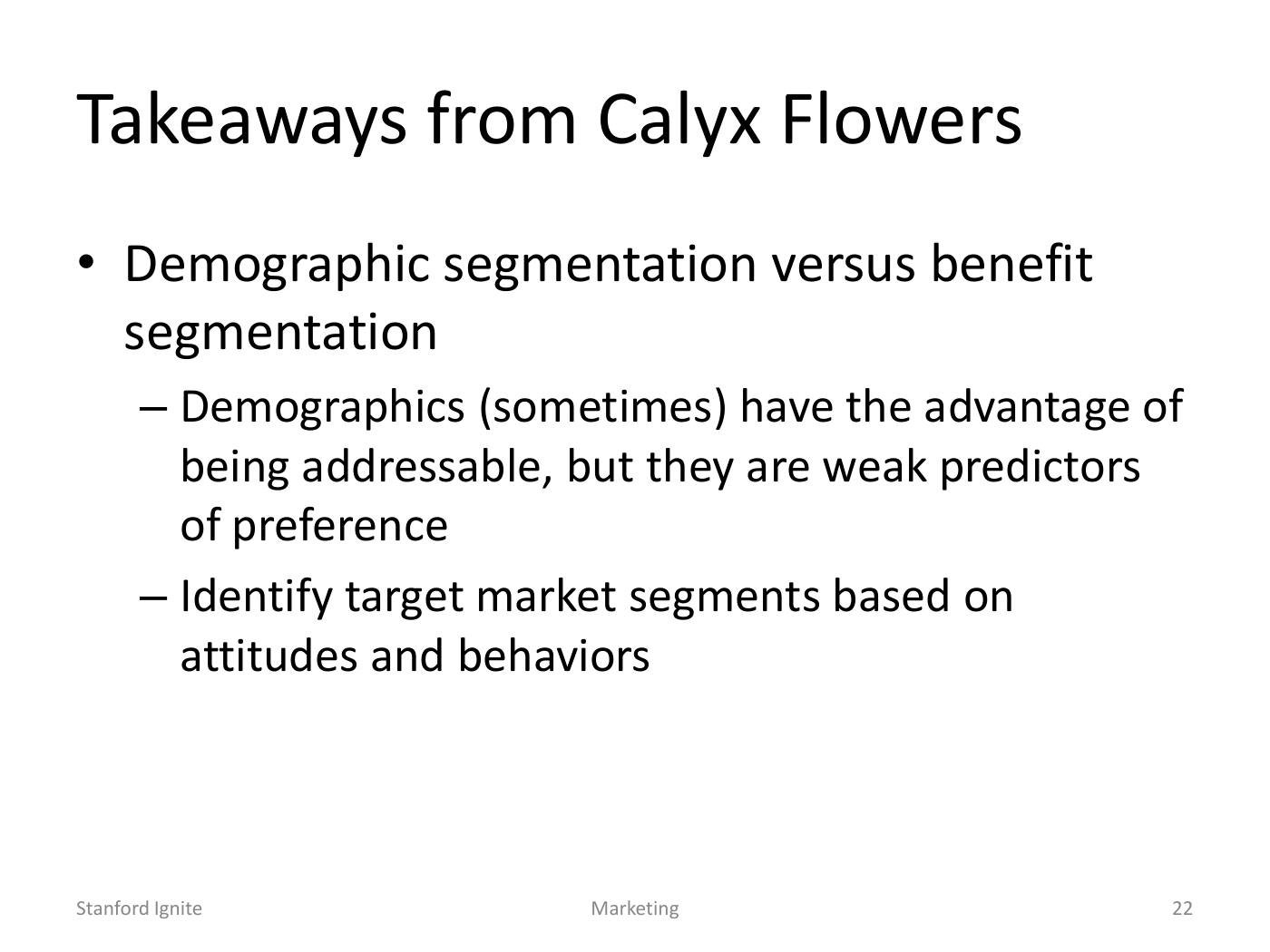
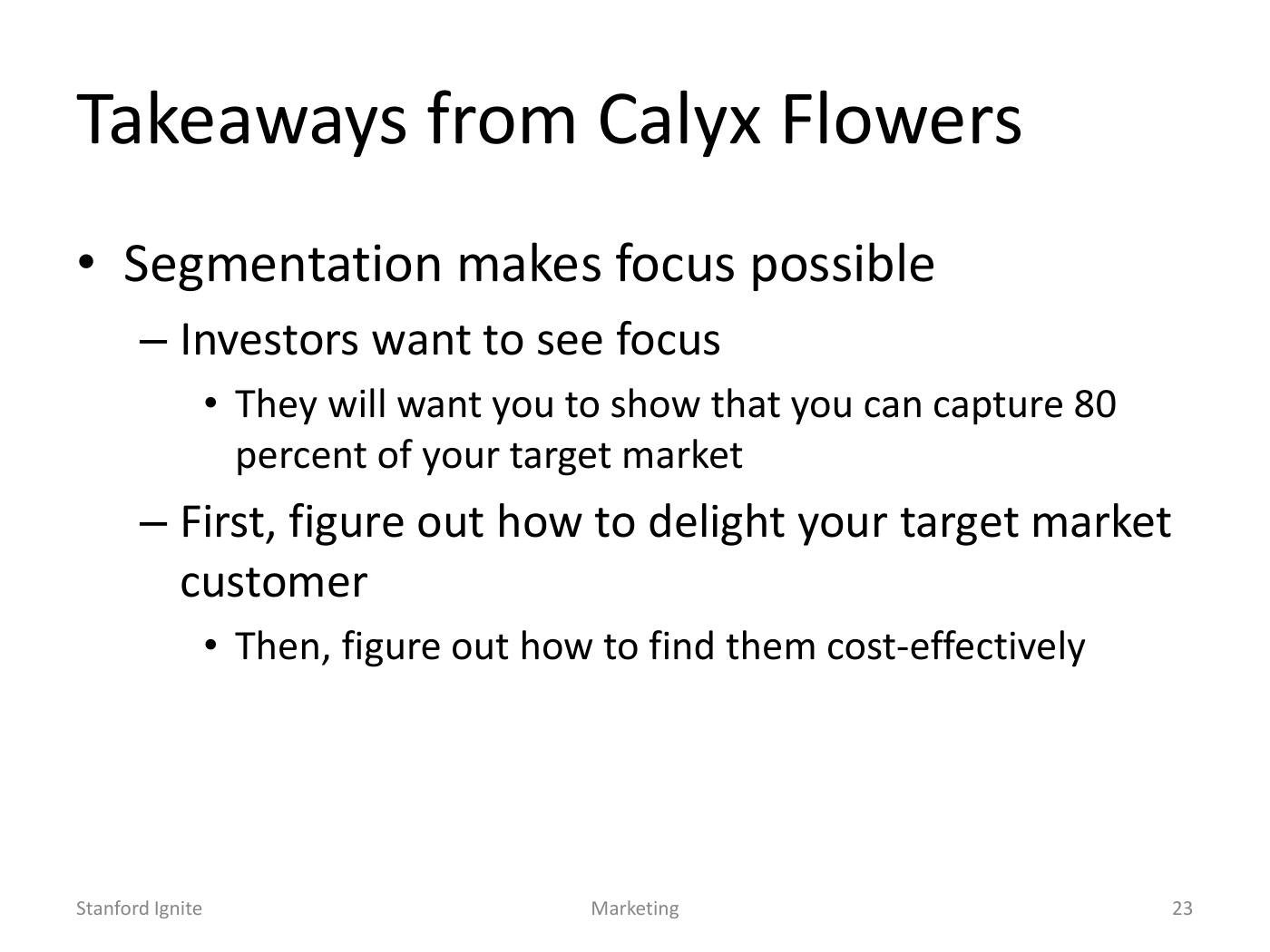
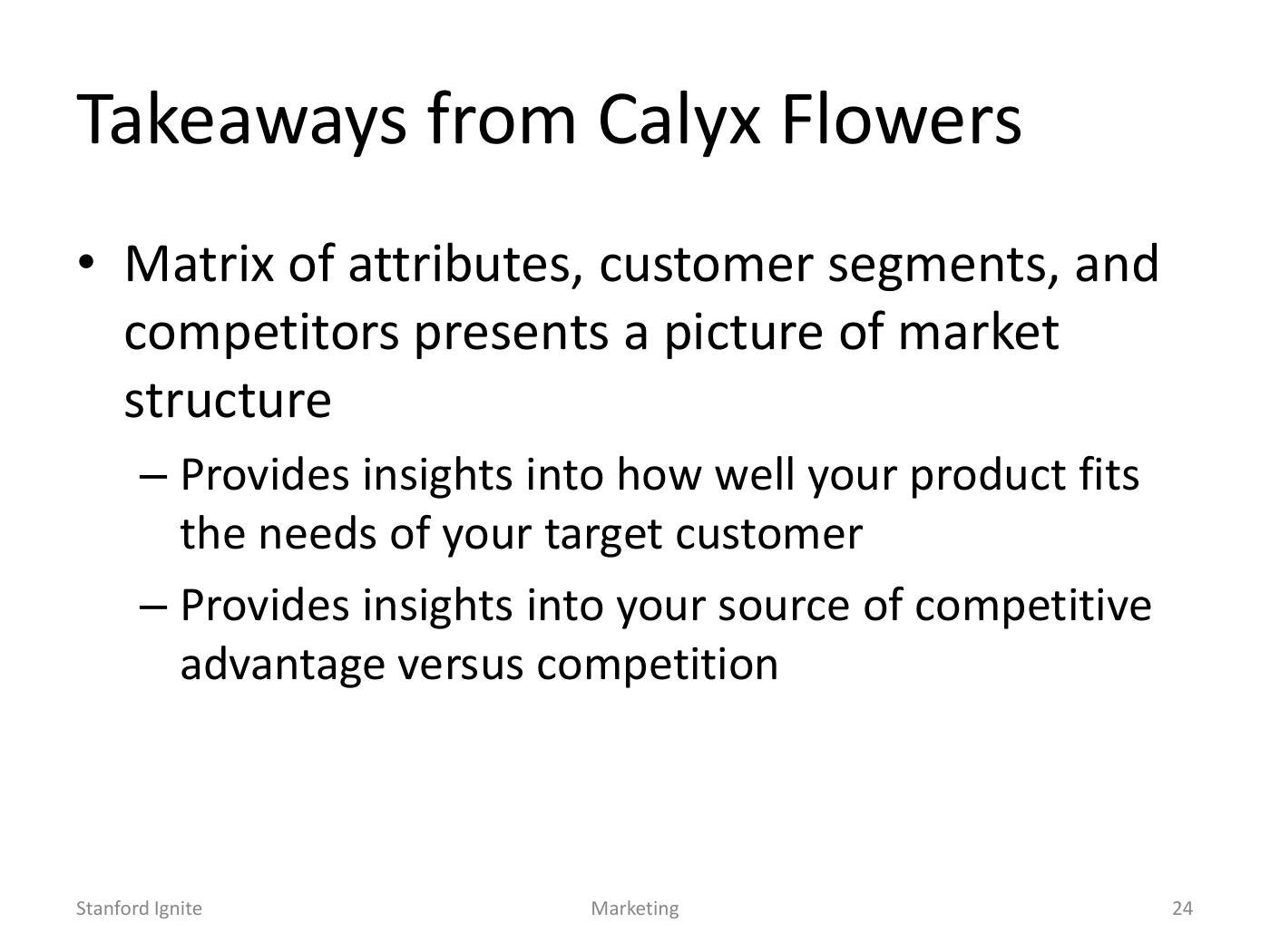
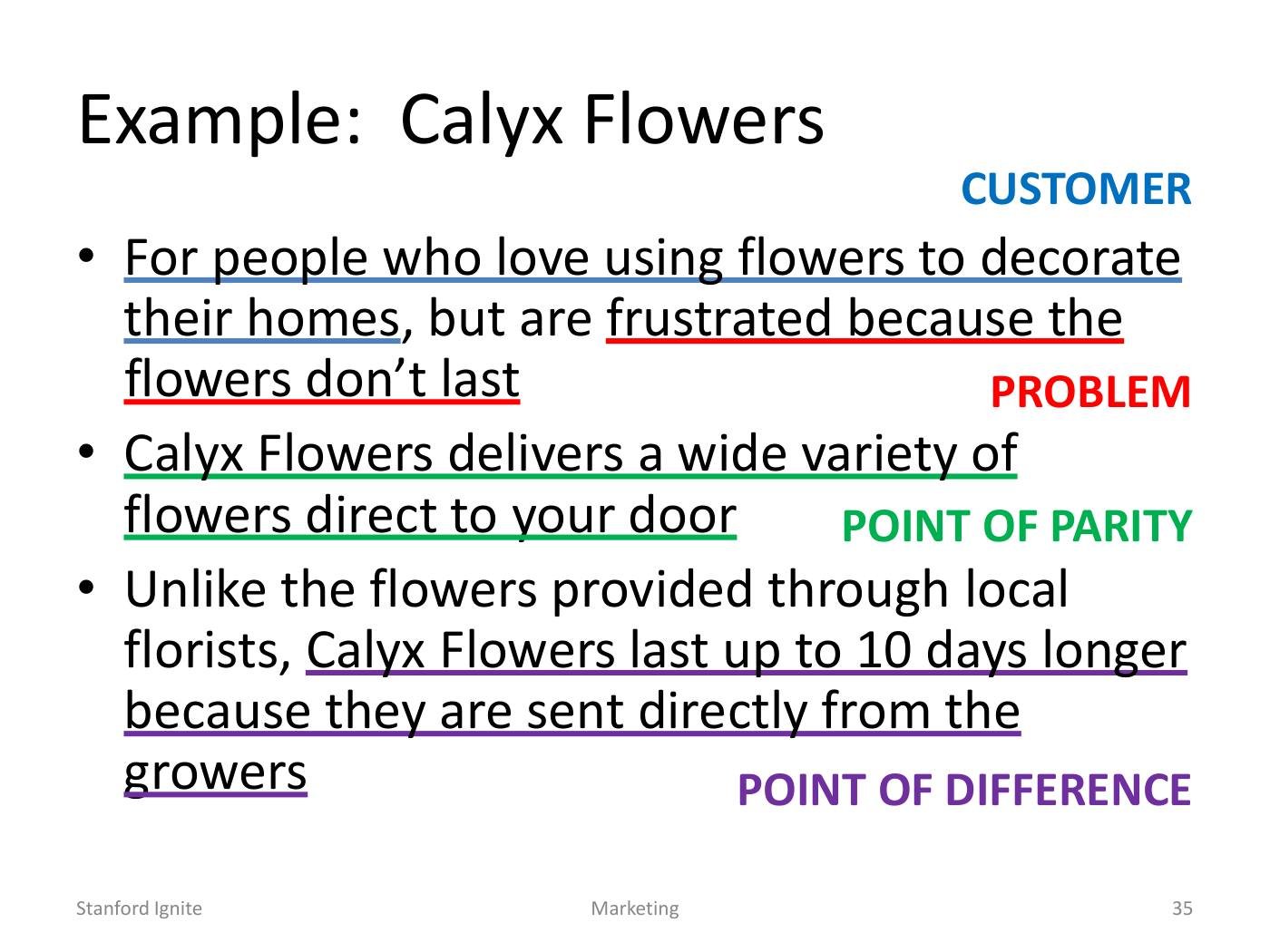
Calyx Flowers: a positioning statement taken apart
21
08 / Source pagePositioning & the value proposition
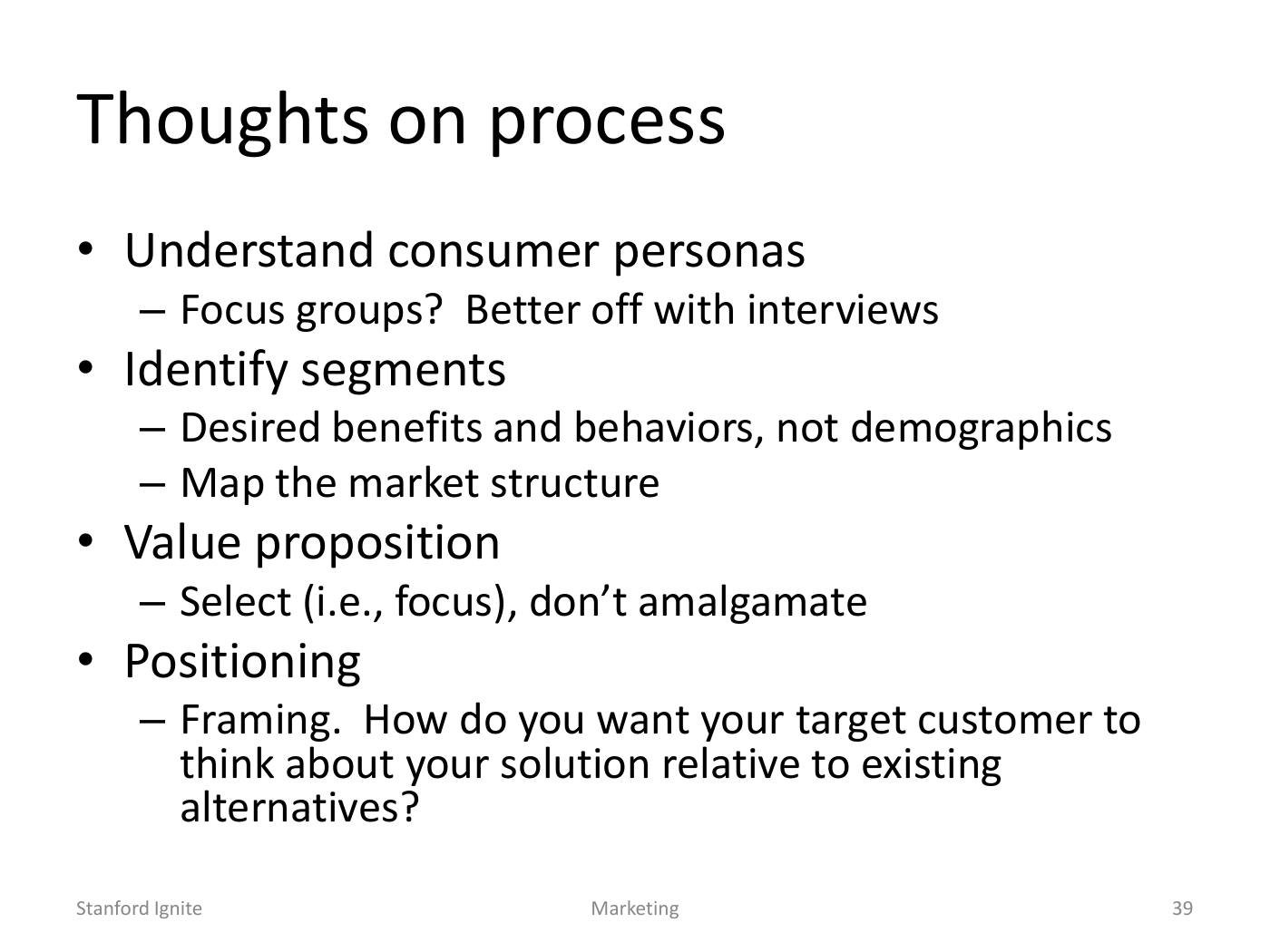
Instructor's view of the right learning sequence
22
08 / Source pagePositioning & the value proposition
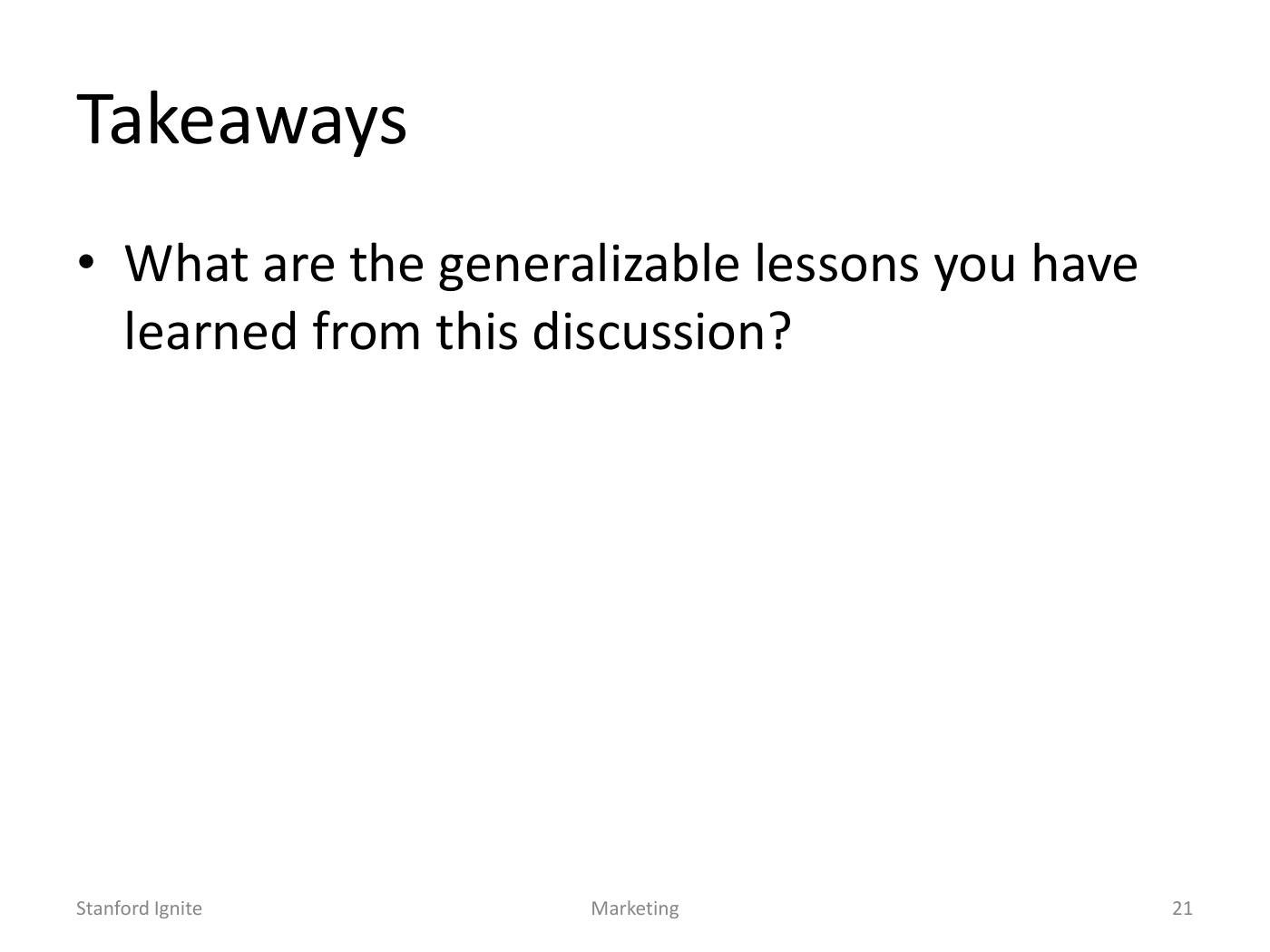
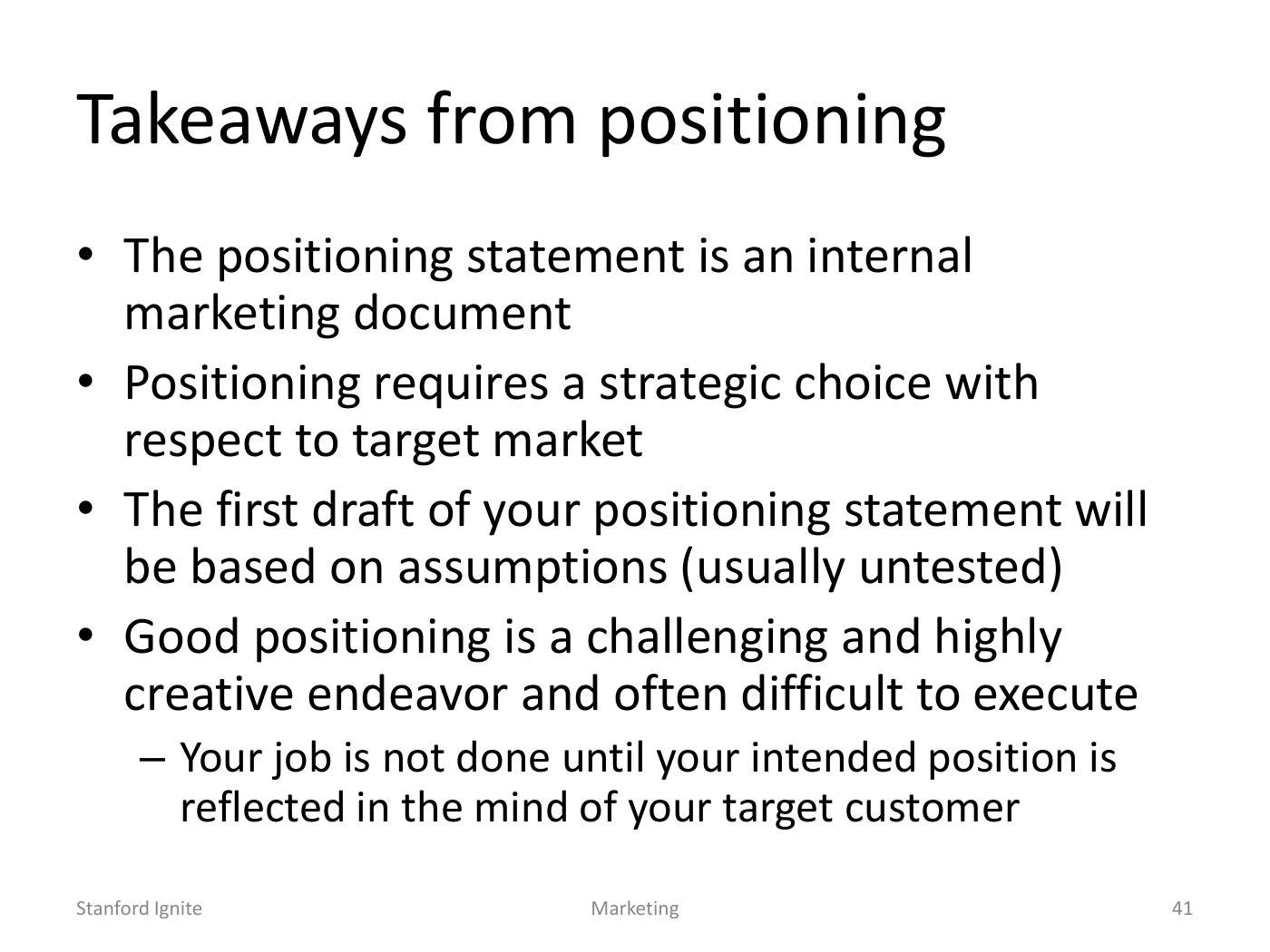
Takeaways: positioning is an internal, assumption-based choice
23
08 / Original readingPositioning & the value proposition
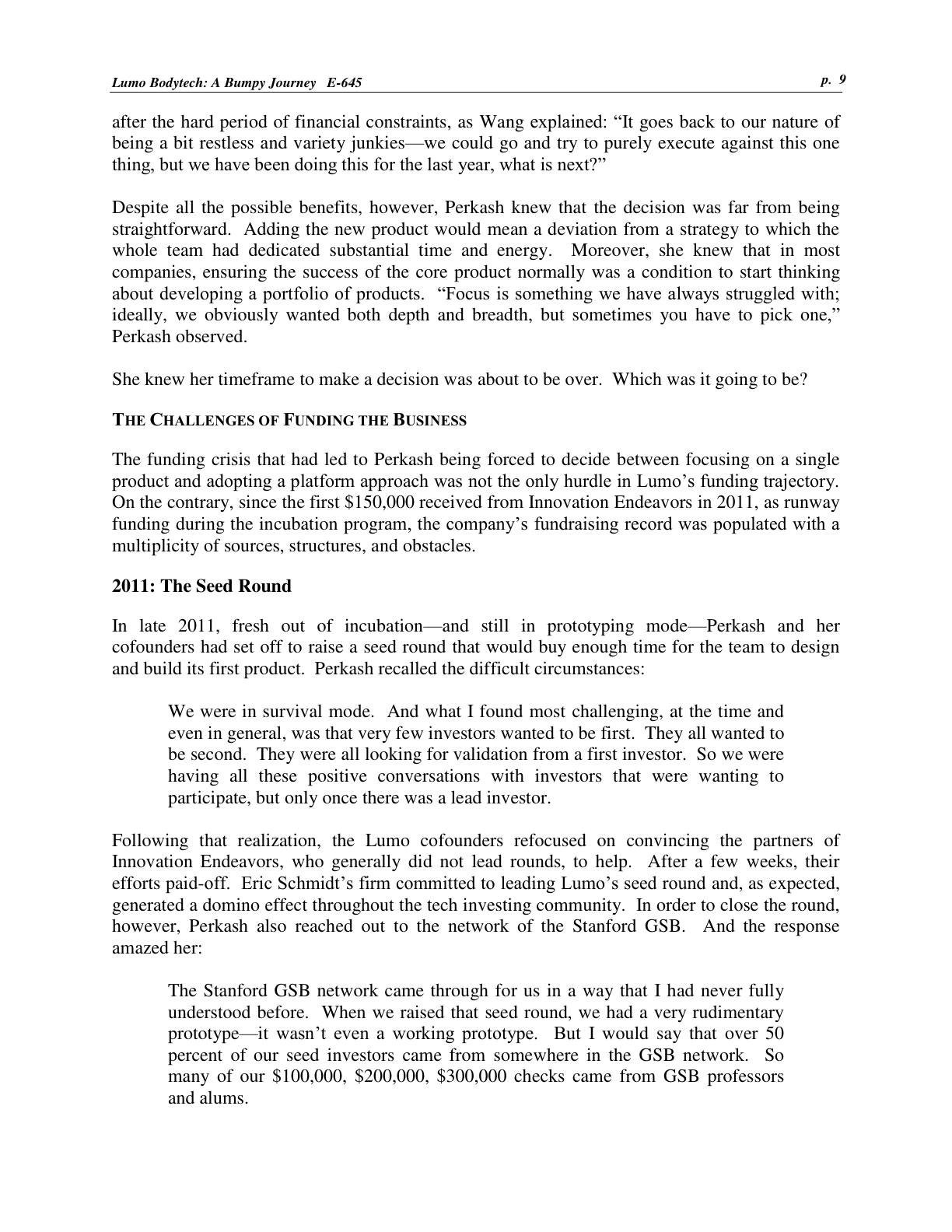
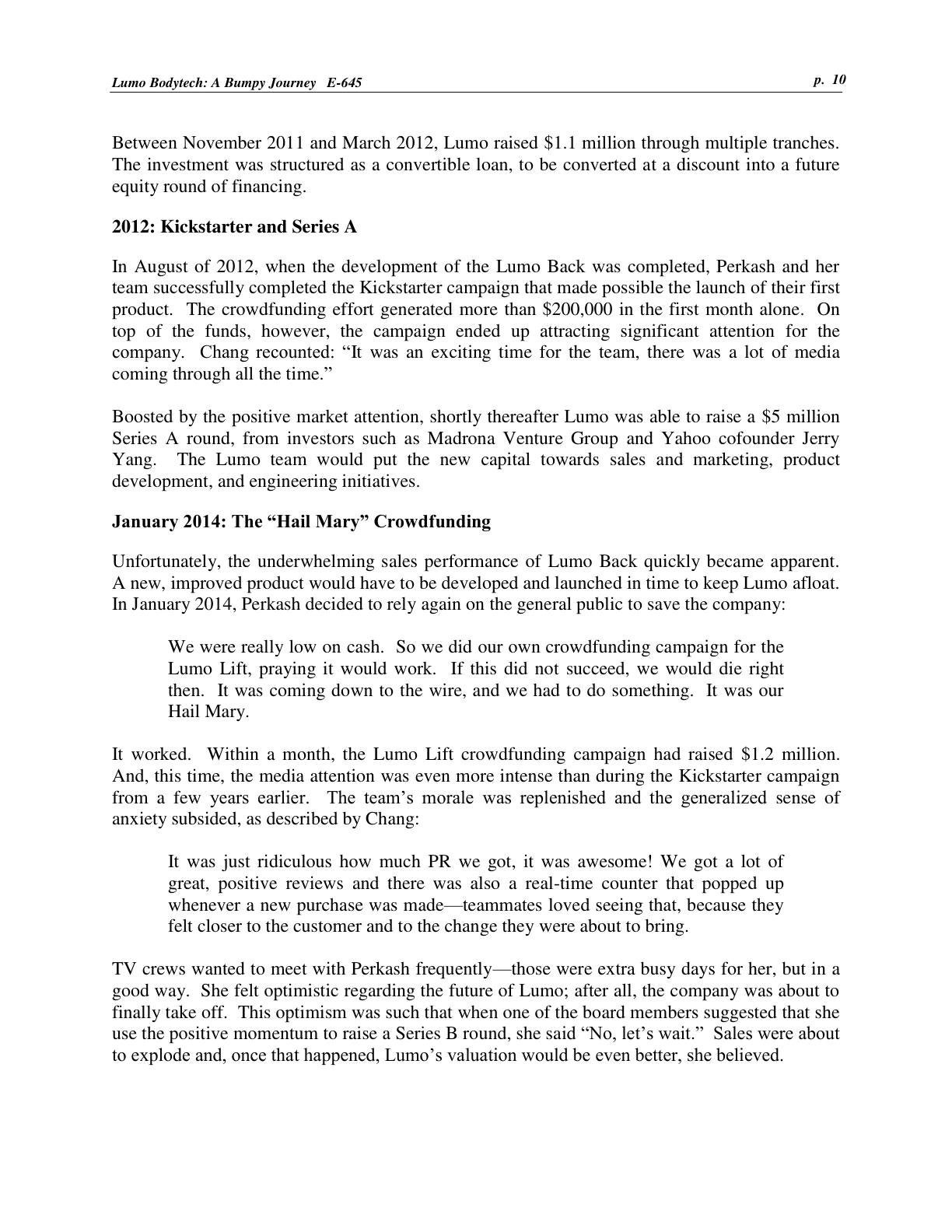
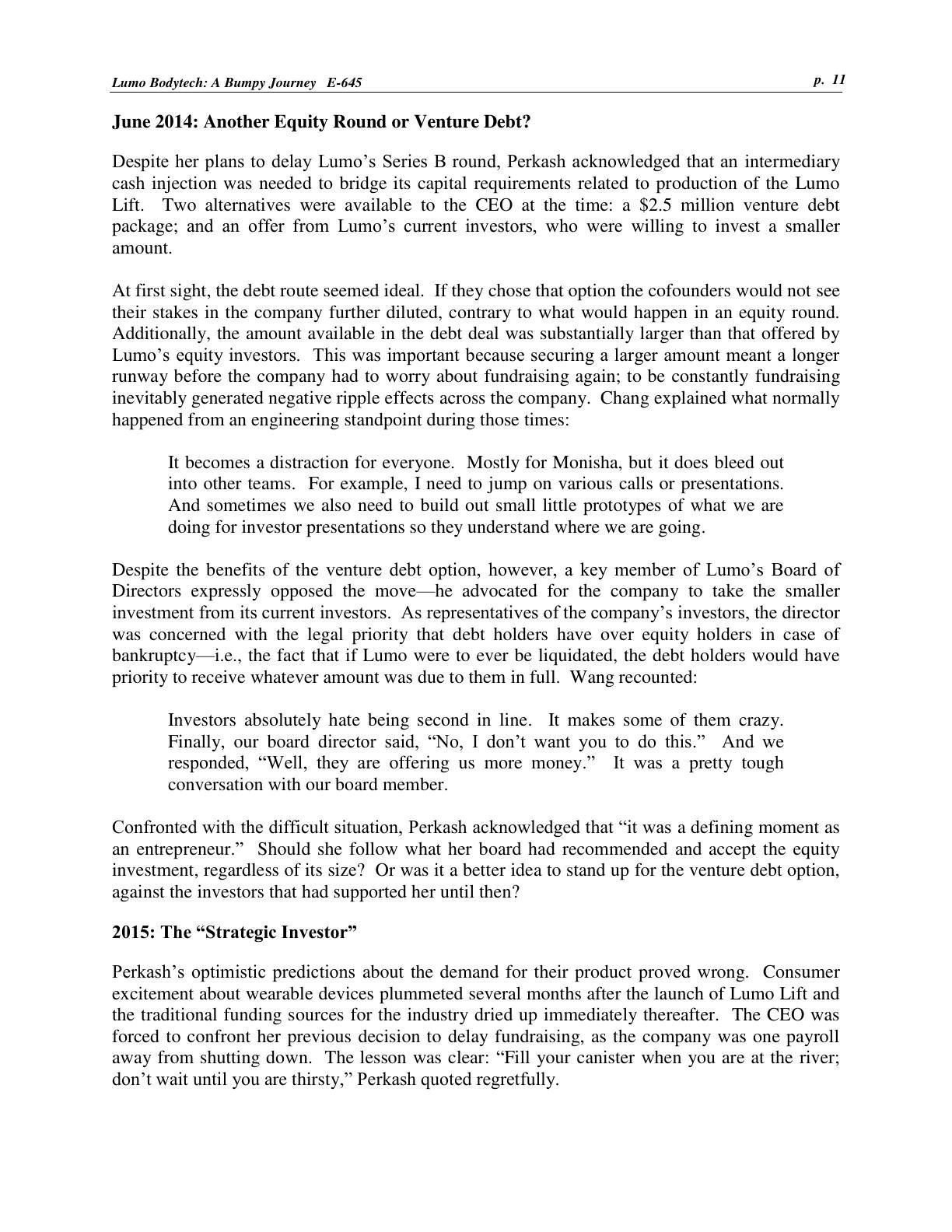
Lattin - Lumo Bodytech A Bumpy Journey (2)
PDF page 2
PDF page 3
Click either page to read it at full size. In the reader, use ← → to switch between these two pages.
24
08 / Source pagePositioning & the value proposition
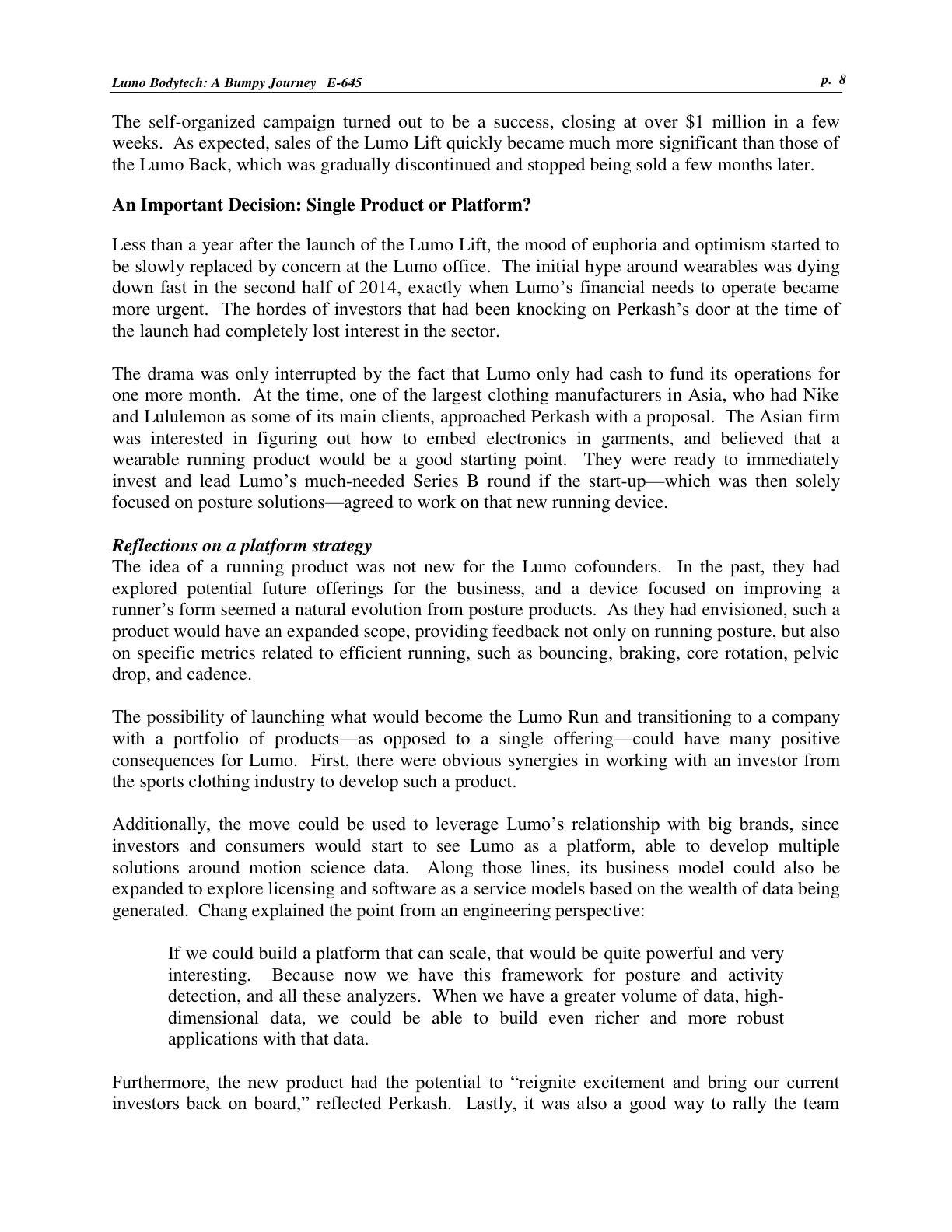
Lumo case, p. 8: single product or platform under cash pressure
25
08 / Reading debriefPositioning & the value proposition
Lumo Bodytech: the selected decision / summary
Selected reading: PDF pages 2, 3, 8
The excerpt connects the formation of a complementary founding team with a later strategic choice under cash pressure. A proposed investment offers resources while also changing the product direction.
A team before a settled venture
The founders bring different technical and operating experiences and a shared desire to address a meaningful problem.
An explicit search process
The incubation setting emphasizes pressure-testing ideas and soliciting user feedback. Founder enthusiasm is only an initial input to that search.
A changing resource constraint
The later excerpt places a running-product proposal alongside limited remaining cash and reduced investor enthusiasm for wearables.
A platform hypothesis
The proposed expansion might use motion-science capabilities across products and business models. The excerpt presents the rationale and expected opportunities.
26
08 / Reading debriefPositioning & the value proposition
Lumo Bodytech: the selected decision / discussion
Selected reading: PDF pages 2, 3, 8
Critical points
A proposal and an outcome
These selected pages show reasoning around the platform choice. They do not establish that every proposed synergy or new revenue stream materialized.
Customer meaning
Posture and running can involve different tasks, expectations and alternatives. Shared technology does not establish a shared value proposition.
Financing and strategy
An investor’s condition changes the available choices. Distinguish accepting an attractive customer opportunity from accepting a direction because it brings immediate cash.
27
08 / ApplicationPositioning & the value proposition
Lumo: one product, different possible customers
In the archived Lumo discussion, the product and its positioning evolved as the founders learned about early users and a broader audience. A technically capable device did not by itself settle the trade-off between a more serious aid and a comfortable everyday wearable.
Which target should guide the next product and positioning test?
28
08 / Current practicePositioning & the value proposition
Current practice: substantiating AI and performance claims
Regulators treat AI claims like any other claim
In September 2024 the FTC announced Operation AI Comply, a sweep of cases over deceptive AI marketing. The headline case was DoNotPay's 'robot lawyer,' settled for $193,000. The agency's stated principle was that there is no AI exemption from existing consumer-protection law.
Accuracy numbers need evidence that matches the claim
The FTC proposed an order in April 2025 and later finalized it against Workado, which had advertised its AI-content detector as 98% accurate. The figure came from a third-party study of academic text only; on other text the same study found 53%. The order requires that future effectiveness claims be backed by reliable evidence.
Enforcement emphasis shifts; substantiation does not
In December 2025 the FTC set aside its 2024 Rytr order, citing burdens on AI innovation. That case never alleged that Rytr itself made a deceptive claim. For a positioning team the practical rule is unchanged: scope each performance claim to the evidence behind it. How the rules apply to a specific claim depends on current law and the facts.
Teaching adaptation: one group wants a discreet daily posture reminder; another seeks help with a strongly felt posture problem and may tolerate more friction. The device can provide a reminder, but the packet contains no evidence of treatment or cure.
Your task
Write a positioning statement for each group. Select one testable target and explain the evidence needed before making stronger claims.
30
08 / DebriefPositioning & the value proposition
Worked answer and reasoning
For daily users, make discretion and repeated wear central; for the second group, investigate the problem and required evidence before promising a health outcome.
Compare both statements with a concrete alternative, such as doing nothing or using an existing reminder.
Test whether the audience understands the intended use and will accept the required behavior.
31
08 / Venture stepPositioning & the value proposition
Venture step: Relay's positioning statement and evidence checklist
Relay · venture step 08
Relay's v0 pilot is running: Maya hand-texts waitlisted patients for 3 clinics and has refilled about 40% of late-cancelled slots (illustrative). Her draft homepage says 'AI-powered patient engagement for modern clinics.' In interviews, two owners replied, 'We already have reminders.' ClinicOS, the EHR used by about 35% of independent clinics, includes a passive waitlist list at no extra cost. The status quo is the front desk phoning a waitlist, filling 10-15% of gaps. The target from Lesson 7 is owners of independent clinics and small groups.
Your task
Write Relay's internal positioning statement (who, need, frame, benefit, difference), list its points of parity and difference against the phone waitlist and ClinicOS, and attach an evidence checklist plus a one-page unaided-interpretation test script.
32
08 / Venture stepPositioning & the value proposition
Venture step: worked reasoning
Statement: For owners of independent PT clinics and small groups who lose about 15% of booked visits to late cancellations and no-shows, Relay is a schedule-fill service that texts waitlisted patients when a slot opens and books the first patient who replies YES. Unlike front-desk phoning, which fills 10-15% of gaps, or a passive EHR waitlist, Relay refilled about 4 in 10 open slots in its pilot clinics without staff calls.
Frame of reference: 'patient engagement' or 'reminders' puts Relay next to cheap reminder tools judged on no-show reduction, which explains the 'we already have reminders' reply. 'Schedule fill / recovered visits' asks to be judged on refilled slots (about 17 visits a week, about $96,000 a year gross per clinic, or about $66,000 over what the phone list already fills, illustrative), so fill-rate evidence becomes the proof that matters.
Points of parity: signs a BAA and handles PHI under HIPAA; works with the clinic's EHR without double entry; dependable text delivery with opt-out; front-desk override. Points of difference: books the slot automatically within minutes, and reports recovered visits each week. 'AI' is not a point of difference in v1, so drop it from the claim.
Versus ClinicOS: its free, native waitlist sets the parity bar for 35% of the target. Relay's difference must be active matching and rebooking, which a passive list does not do. If ClinicOS adds automatic texting, this difference erodes (Lessons 13-14).
Evidence checklist: (1) re-measure the fill rate with automated v1, because the 40% came from Maya's personal texts; (2) unaided test with 8-10 owners and front-desk leads: show the one-line description, then ask what it is, who it is for and what it replaces, and log 'reminder' answers as a frame failure; (3) separately, test willingness to pay $399 a month against the phone list; (4) scope every public claim to the pilot ('in three pilot clinics over N weeks').
33
08 / DebriefPositioning & the value proposition
Reasoning traps
Landing in the reminder category
If owners file Relay under appointment reminders, they compare it with near-free reminder features and judge it on no-show rates. Name the frame, recovered visits, before writing any copy.
Leading with the mechanism
'AI-powered' describes how something works, not what the customer gains, and in v1 it is not even true. Both buyers and regulators expect such claims to be substantiated.
Turning a hand-run pilot into a promise
The 40% fill rate came from Maya texting patients she knew. Automated v1 may perform differently, so re-measure before the number appears in any external claim.
34
08 / ReviewPositioning & the value proposition
What you can now explain
Relay's internal positioning statement with points of parity and difference against the phone waitlist and ClinicOS, an evidence checklist, and an unaided-interpretation test script.
The frame of reference decides what the customer compares you with and which parity attributes they will demand.
A point of difference counts only if the chosen customer values it, believes it and finds the parity basics already met.
Comprehension, preference and willingness to buy are separate tests; record misunderstanding and lack of preference as different findings.
Next lesson: Go-to-market, channels & economic value
35
Check your understanding
How should the chosen customer understand your offer relative to alternatives?
Score
Question 1
Shown the line 'Relay fills cancelled appointments automatically,' a clinic owner says, 'So it's like the reminder texts ClinicOS already sends.' What has the test revealed?
The owner has chosen a category, reminders, and is judging Relay on that category's terms. That is a frame problem. A snappier tagline would repeat the same misreading. Nothing yet shows that the difference, or filled slots, lacks value.
Question 2
A team argues that Relay's positioning statement should be pasted onto the homepage word for word, because that is how customers will learn the position. What is the best response?
The statement exists to make choices consistent: target, frame, difference, evidence. Public copy is one expression of it, and several headlines can carry the same position. Each needs its own interpretation test. Shortening the statement does not turn it into customer copy.
Question 3
For a multi-location PT group evaluating Relay, which attribute is a point of parity rather than a point of difference?
Healthcare buyers expect a BAA and EHR compatibility before they will consider any vendor. Without them Relay never reaches the shortlist, however good its fill rate is. The other three options are reasons to prefer Relay over the alternatives, which makes them candidate points of difference.
Question 4
In a test, 9 of 10 owners correctly explain what Relay does and whom it is for. Only 2 agree to a pilot at $399 per month. What should the team conclude?
Understanding the message and choosing to buy are different tests. The meaning landed. Now the question is why owners who understand Relay still decline, and switching effort, data-security worries, doubt about the fill rate and price are all possible causes. Cutting the price before diagnosing the refusals guesses at one cause.
Question 5
Relay's three Wizard-of-Oz pilot clinics refilled 38-44% of late-cancelled slots over four weeks, with Maya personally texting patients. Which public claim is supportable?
The supportable claim states the source, the scope and the period. A guarantee extends three hand-run clinics to all clinics and to automation. 'AI' and 'eliminates' describe things the pilot did not show. 'Patient outcomes' is a health claim that no evidence here supports.
Question 6
A posture-device startup finds that its first buyers have chronic back pain and tolerate a bulky belt, while a much larger casual market wants something discreet. The current product is the belt. Which first position fits the evidence best?
Fit is strongest with the group that values the benefit enough to accept the parity gap, which is comfort. Merging both groups produces a vague statement. The casual frame demands discretion that the belt lacks. A treatment claim goes beyond the evidence and changes what the product would have to prove.
Workbook
How should the chosen customer understand your offer relative to alternatives?
Module output: An evidence log, problem frame, prototype, segment choice, positioning and route to market.
Library
Every original page used in this lesson
9 appear in the slides with notes; the rest are kept here for reference.
Positioning happens in the prospect's mind (Ries and Trout)The classic Ries and Trout definition: positioning starts with a product, but it is what you do to the mind of the prospect, not to the product. The definition moves the test of positioning from the company's wording to the customer's interpretation. This is why the lesson insists on an unaided-meaning test before anyone polishes a tagline.Lattin - Segmentation and Positioning Slides · PDF page 27 · in the slides
1
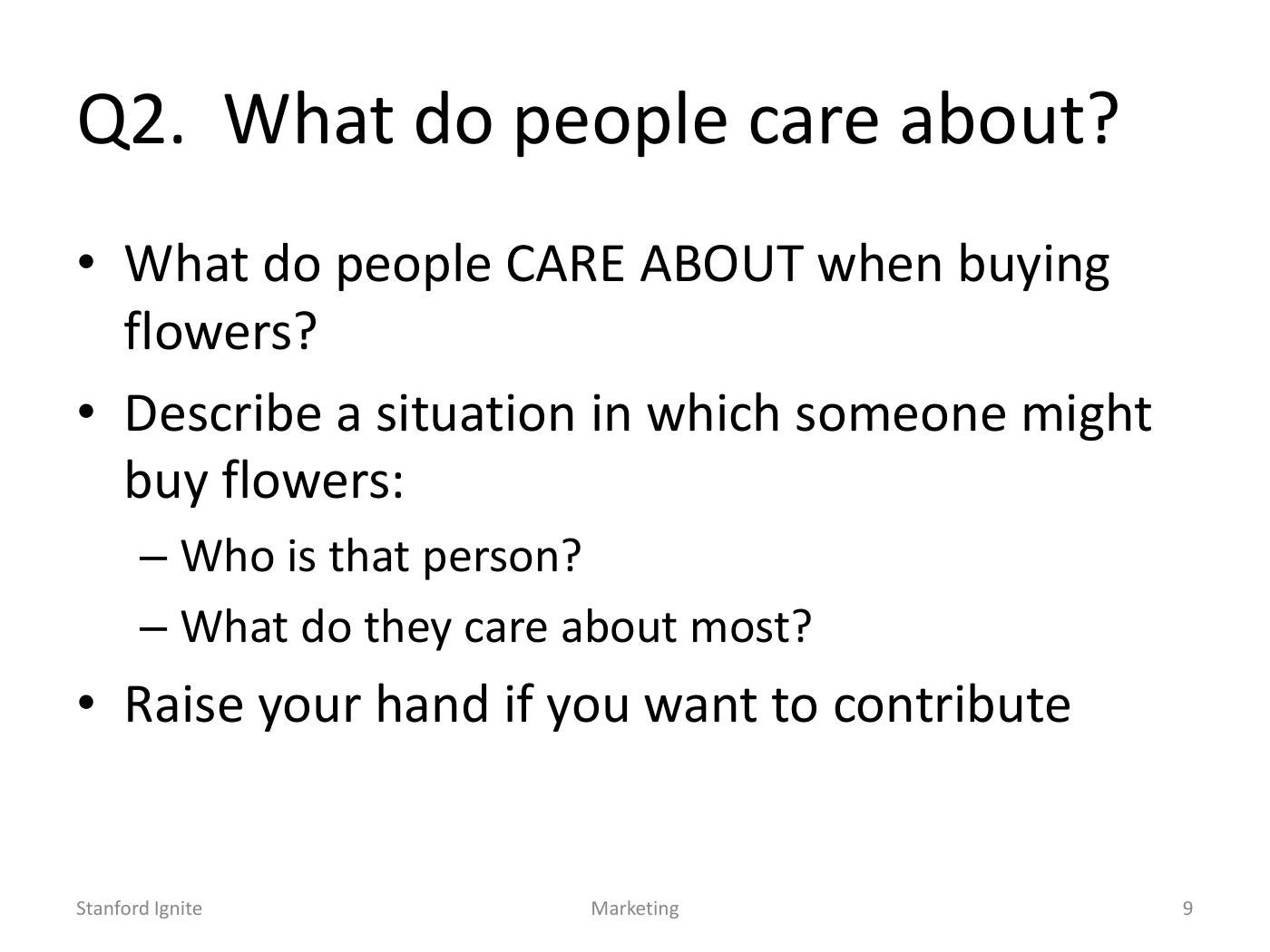
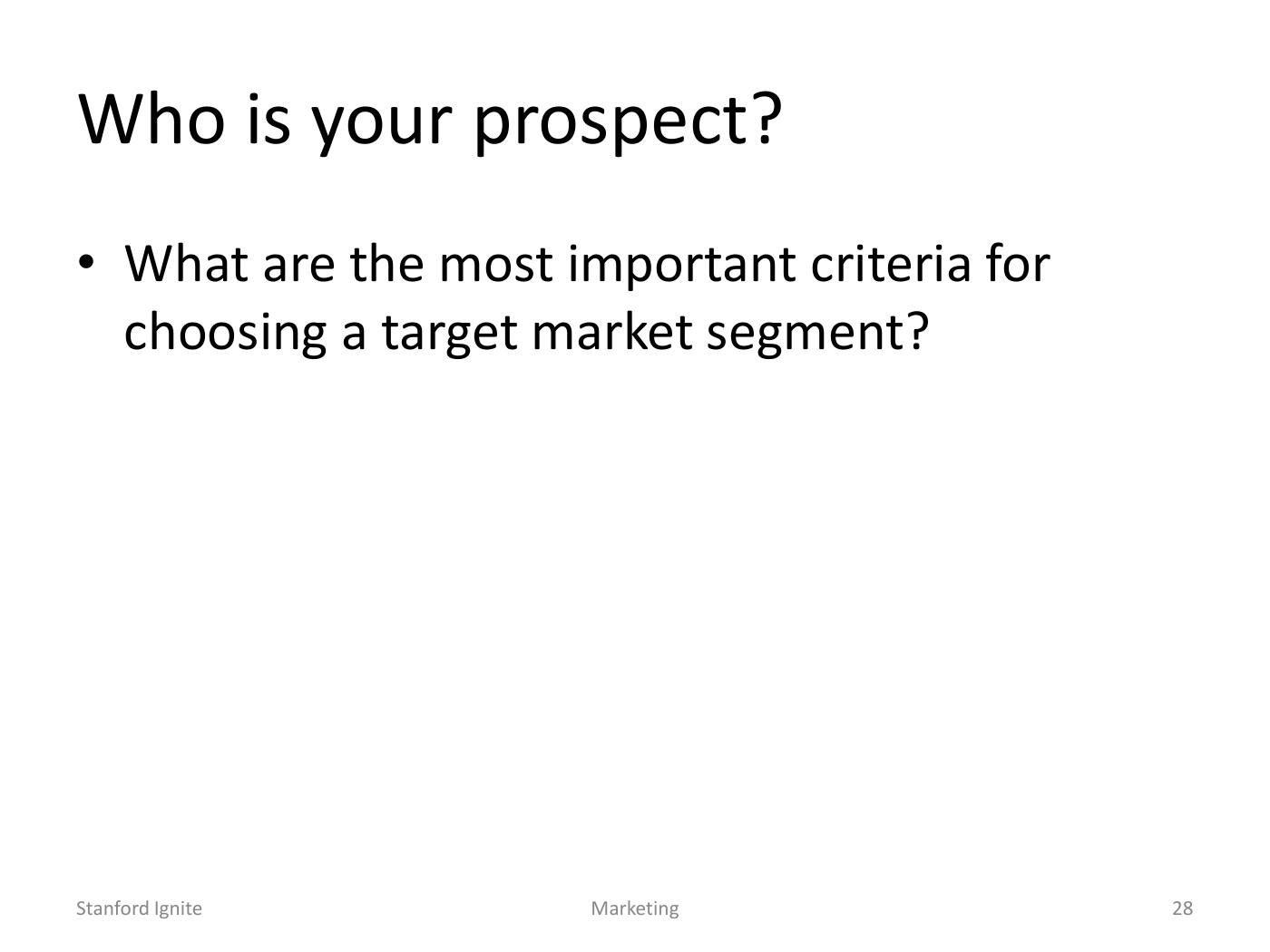
Who is your prospect?A discussion prompt asking for the most important criteria for choosing a target segment. Sets up the next page; the answer appears there.Lattin - Segmentation and Positioning Slides · PDF page 28
2
Three criteria for choosing the target: fit, potential, defensibilityA short list naming fit, market potential and defensibility as the criteria for choosing which segment to position for. Positioning begins only after a target is chosen, and the three criteria pull in different directions: the most passionate early segment may be small, and the largest may be easy for others to serve. Lumo's posture sufferers versus casual wearers is exactly this trade-off.Lattin - Segmentation and Positioning Slides · PDF page 29 · in the slides
3
Lumo Back case discussion questionsThe case questions: write a positioning statement for Lumo Back, then discuss how the team learned about customers and chose a strategy. Agenda page for the case discussion.Lattin - Segmentation and Positioning Slides · PDF page 30
4
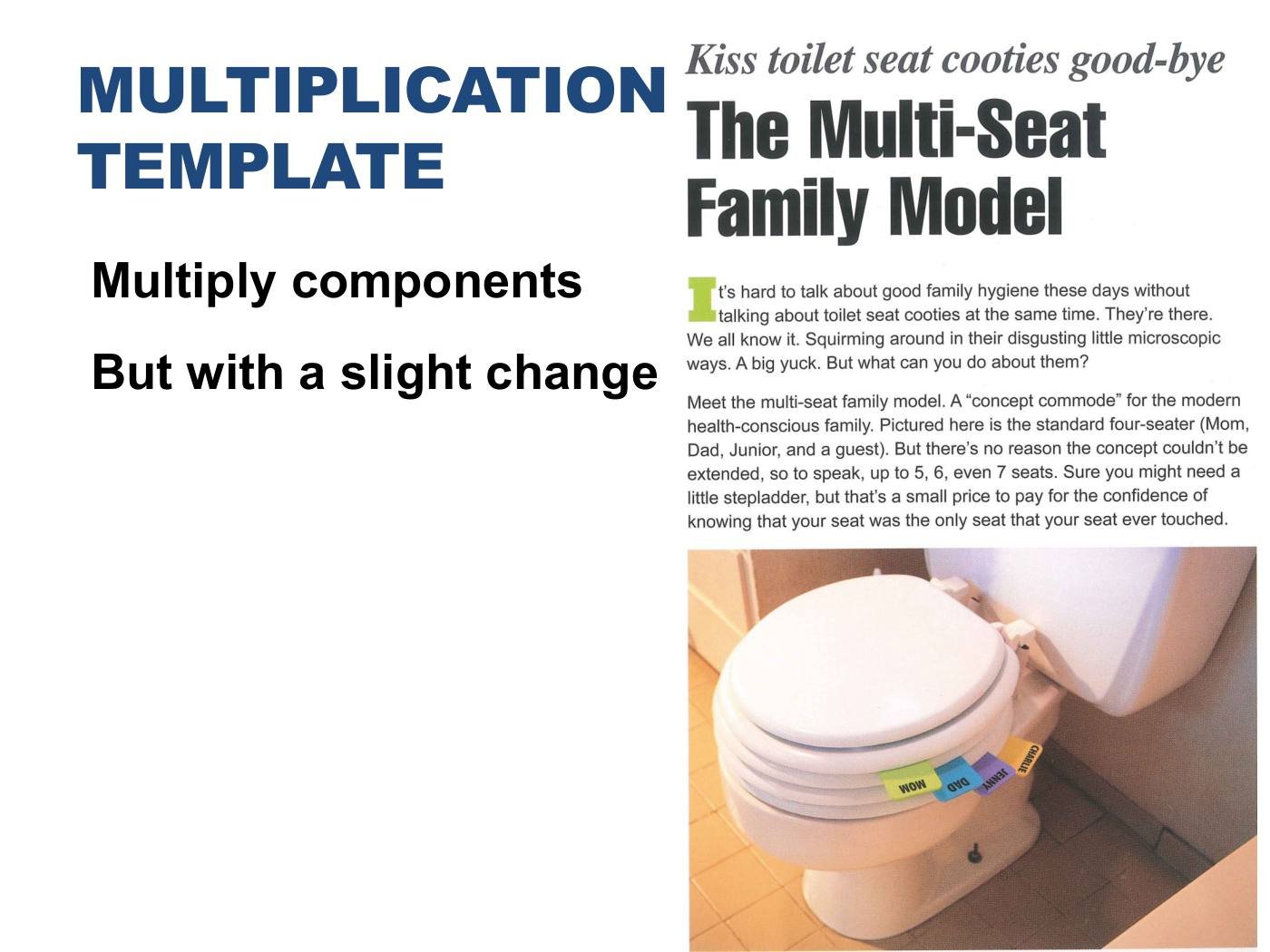
Lumo Back: the product being positionedPhotographs of the Lumo Back, a sensor belt worn around the lower back, paired with a smartphone app that displays a posture figure. The form factor is part of the positioning problem. A belt worn all day must meet comfort and discretion expectations before any feedback feature counts, which makes wearability a point of parity rather than a detail.Lattin - Segmentation and Positioning Slides · PDF page 31 · in the slides
5
Three tasks of effective positioning: frame, parity, differenceEffective positioning involves establishing a frame of reference, leveraging points of parity (POPs) and making points of difference (PODs) compelling. The order matters. The frame decides which parity attributes the customer will demand, and only then can a difference be judged compelling. A difference cannot rescue an offer that fails the frame's parity test.Lattin - Segmentation and Positioning Slides · PDF page 32 · in the slides
6
Four questions a position must answer: what, who, why, howA checklist: what problem you solve, who is likely to have it, why the customer should buy, and how the solution is different from or better than existing alternatives. The fourth question forces a named alternative. 'Better' with no comparison point is not a position; for Relay the comparison is the front desk phoning a waitlist or the EHR's built-in list.Lattin - Segmentation and Positioning Slides · PDF page 33 · in the slides
7
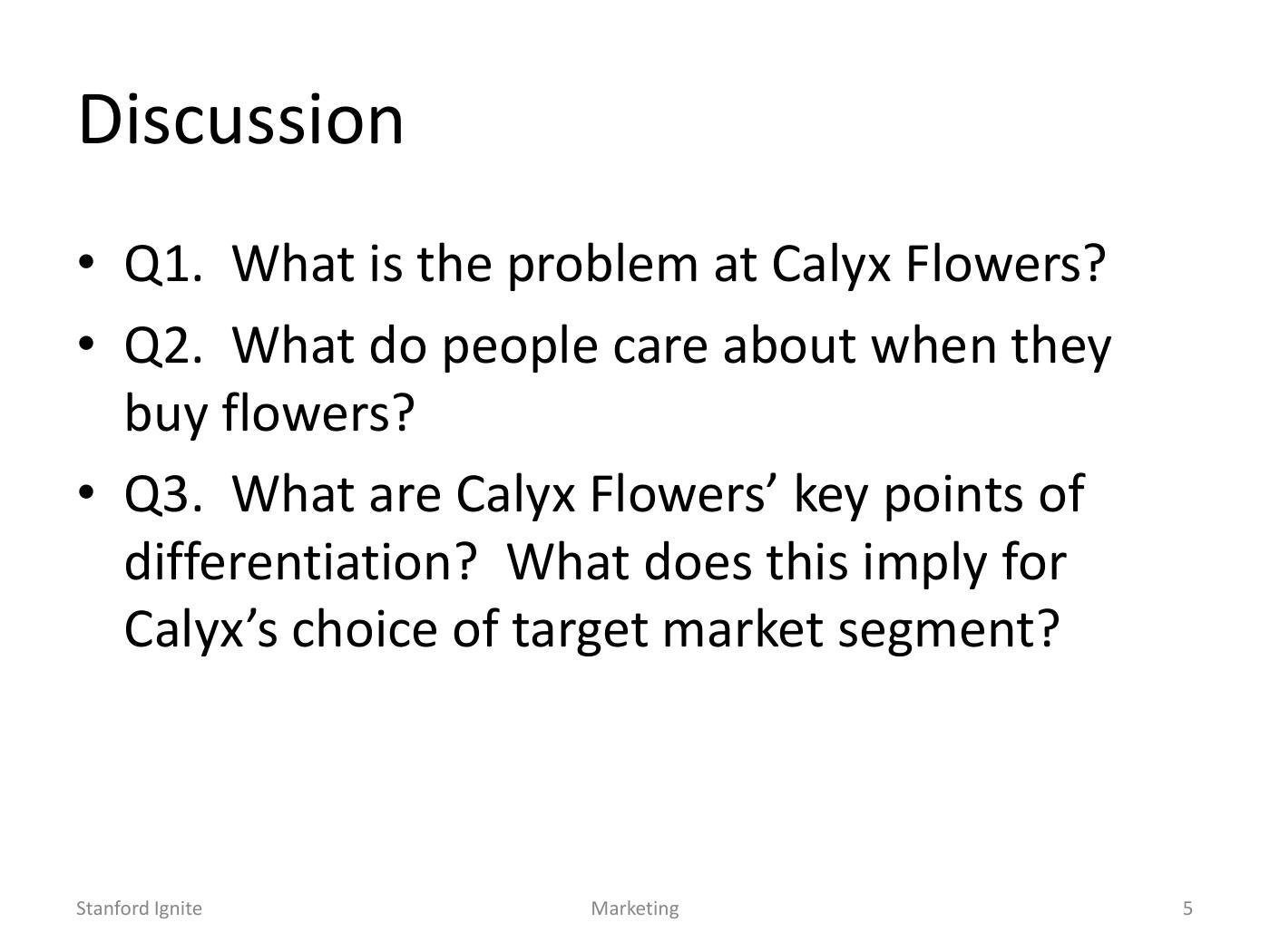
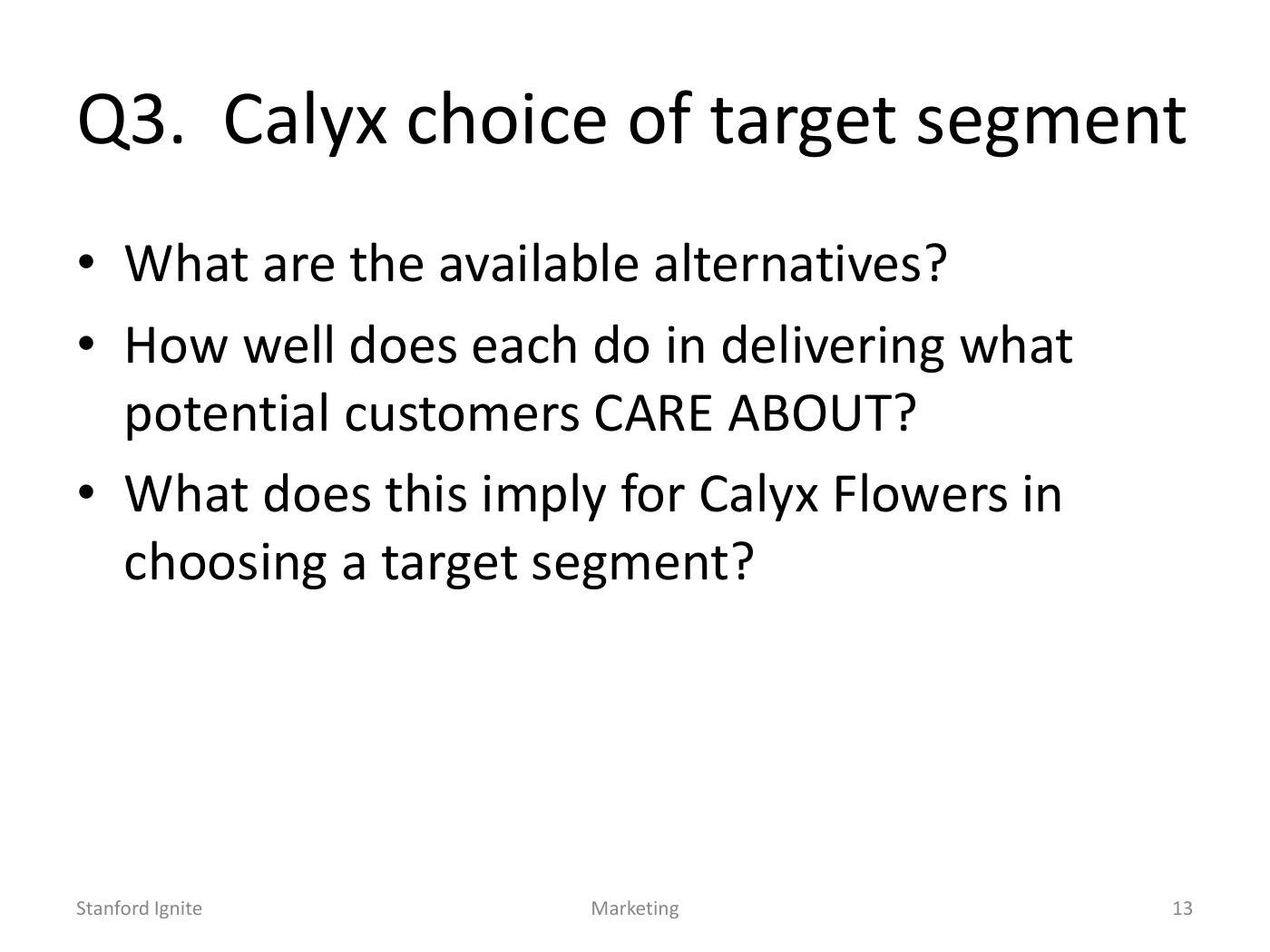
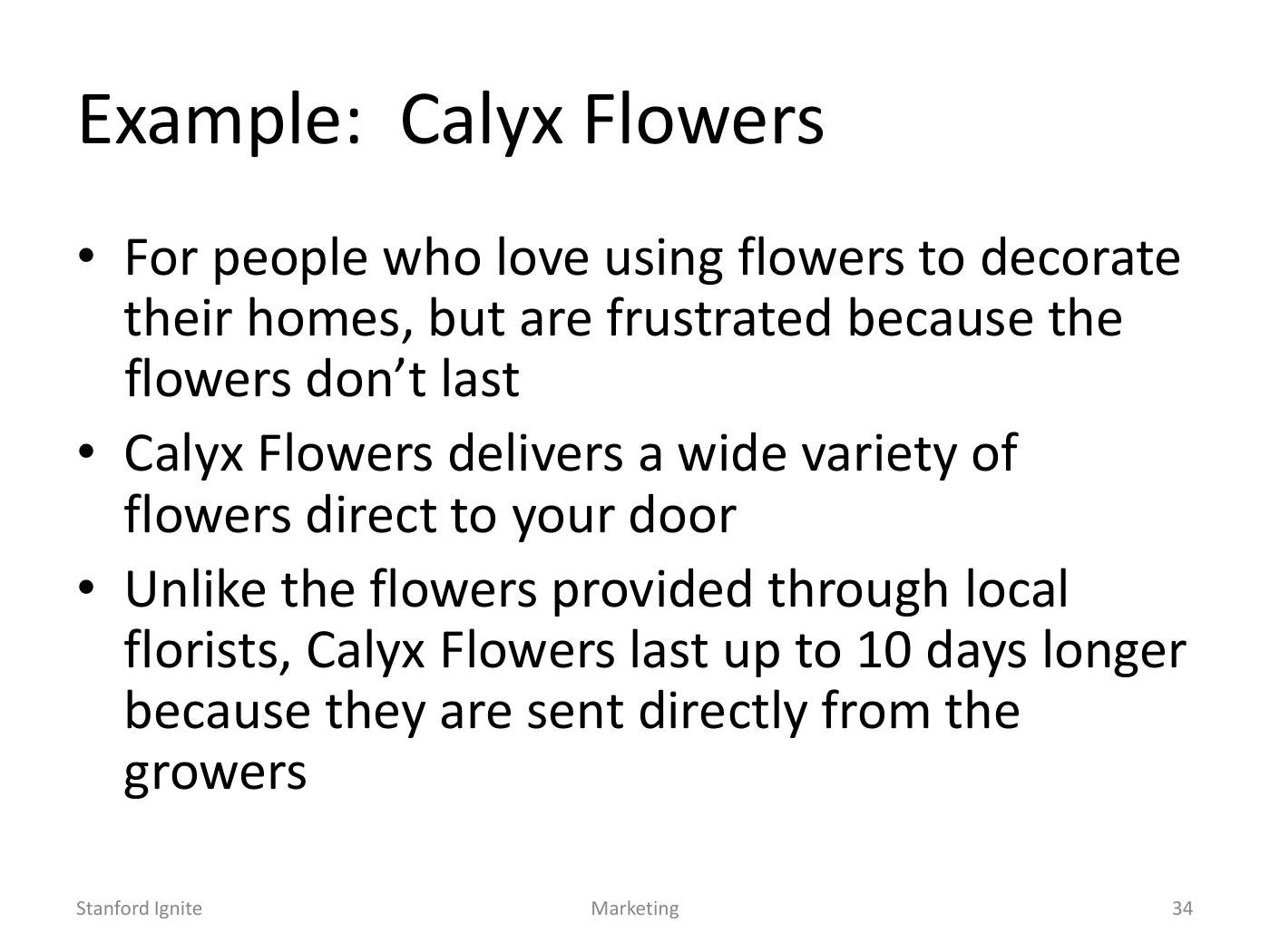
Calyx Flowers positioning example (unannotated)A three-sentence positioning statement for a direct-from-grower flower delivery service. Superseded by the annotated version on slide 23.Lattin - Segmentation and Positioning Slides · PDF page 34
8
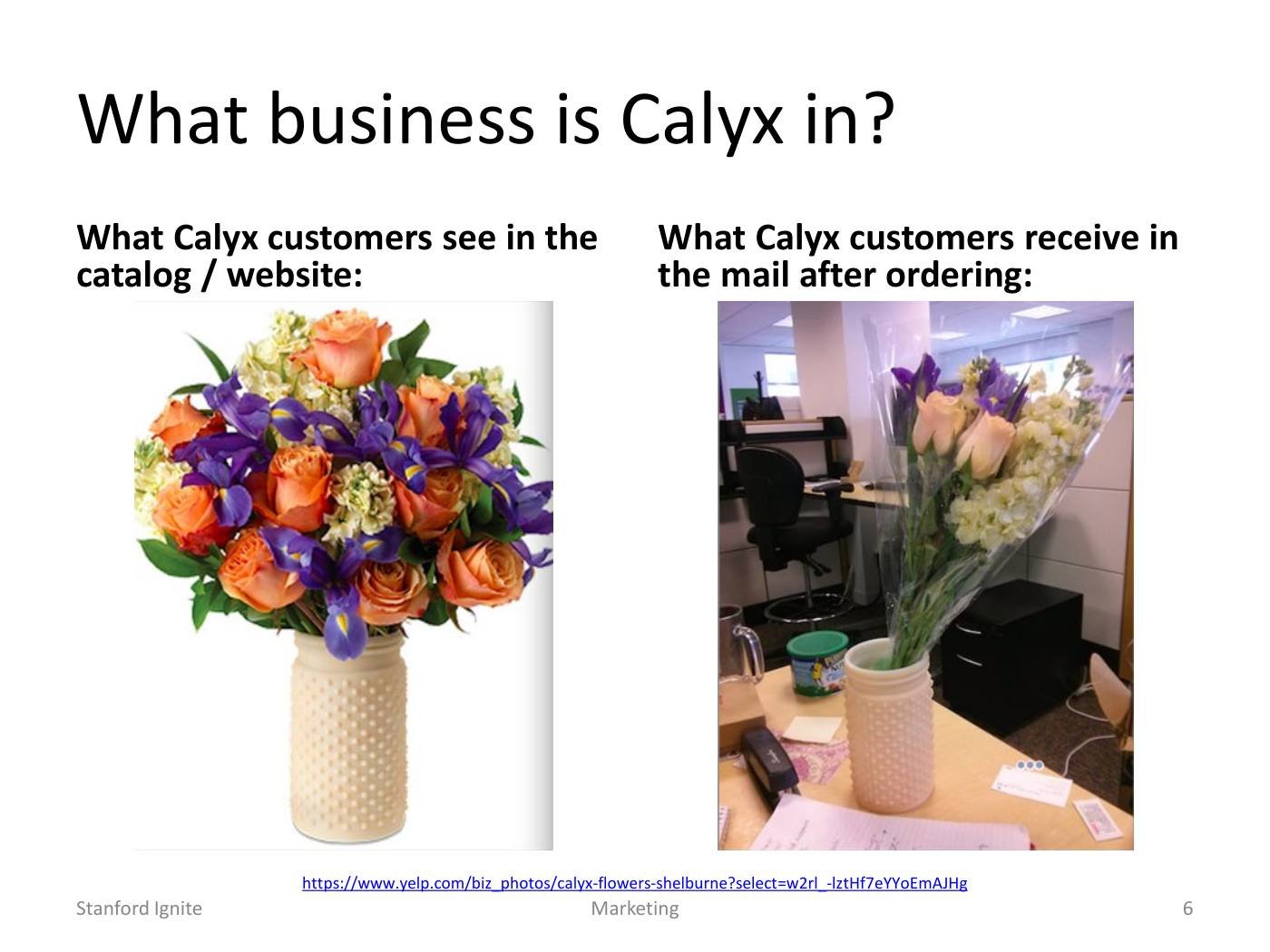
Calyx Flowers: a positioning statement taken apartThe Calyx statement with each clause labeled: customer (people who decorate with flowers), problem (flowers don't last), point of parity (wide variety delivered to your door) and point of difference (lasts up to 10 days longer because it ships direct from growers). The difference carries its own reason to believe: 'because they are sent directly from the growers' explains why the claim is true. A strong point of difference names a mechanism the customer can check, which is also what makes it defensible as a claim.Lattin - Segmentation and Positioning Slides · PDF page 35 · in the slides
9
Lumo Back positioning statements: discussionTitle-only divider for the in-class discussion of student positioning statements. No content beyond the heading.Lattin - Segmentation and Positioning Slides · PDF page 37
10
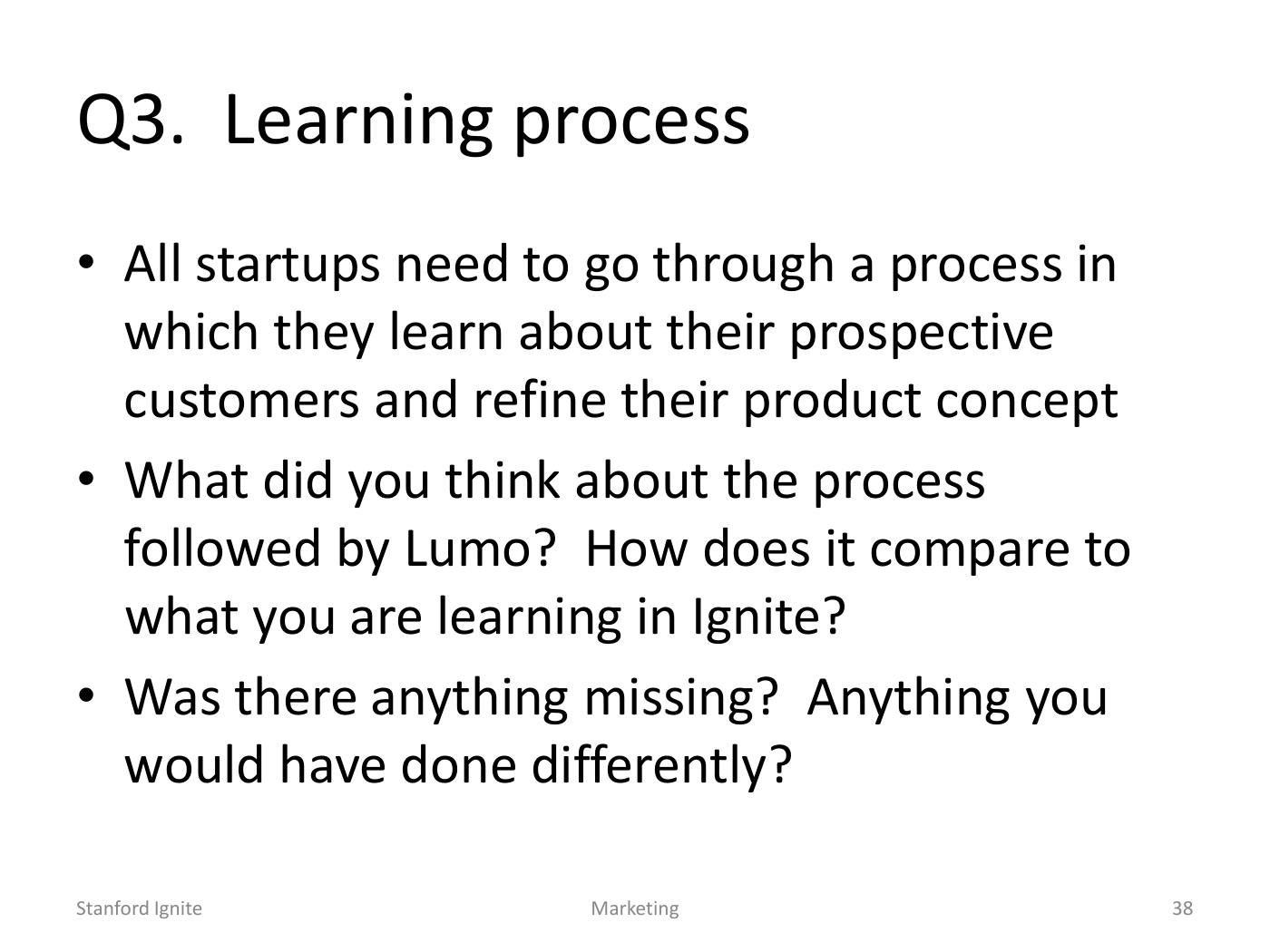
Q3: the learning processPrompts asking how Lumo learned about customers, how that compares to the course's process and what was missing. Discussion prompts; the instructor's answer is on the next page.Lattin - Segmentation and Positioning Slides · PDF page 38
11
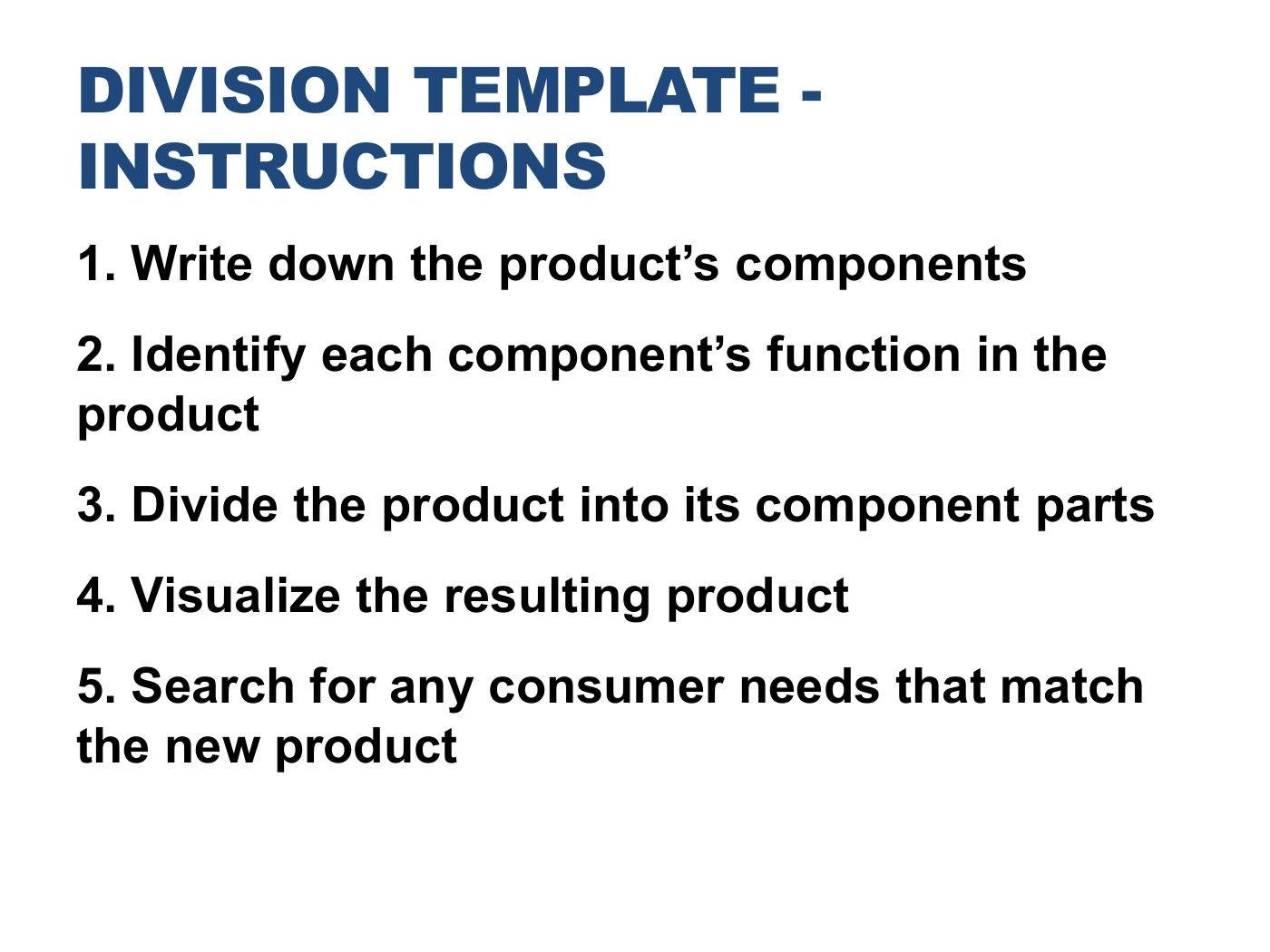
Instructor's view of the right learning sequenceA sequence: understand personas (interviews over focus groups), identify segments by desired benefits and behaviors rather than demographics, map market structure, select a focused value proposition rather than amalgamating, then frame the position relative to existing alternatives. 'Select, don't amalgamate' is the key warning: a statement that tries to serve both the serious sufferer and the casual wearer satisfies neither. Segmenting on benefits, not demographics, is what reveals that those are two different customers.Lattin - Segmentation and Positioning Slides · PDF page 39 · in the slides
12
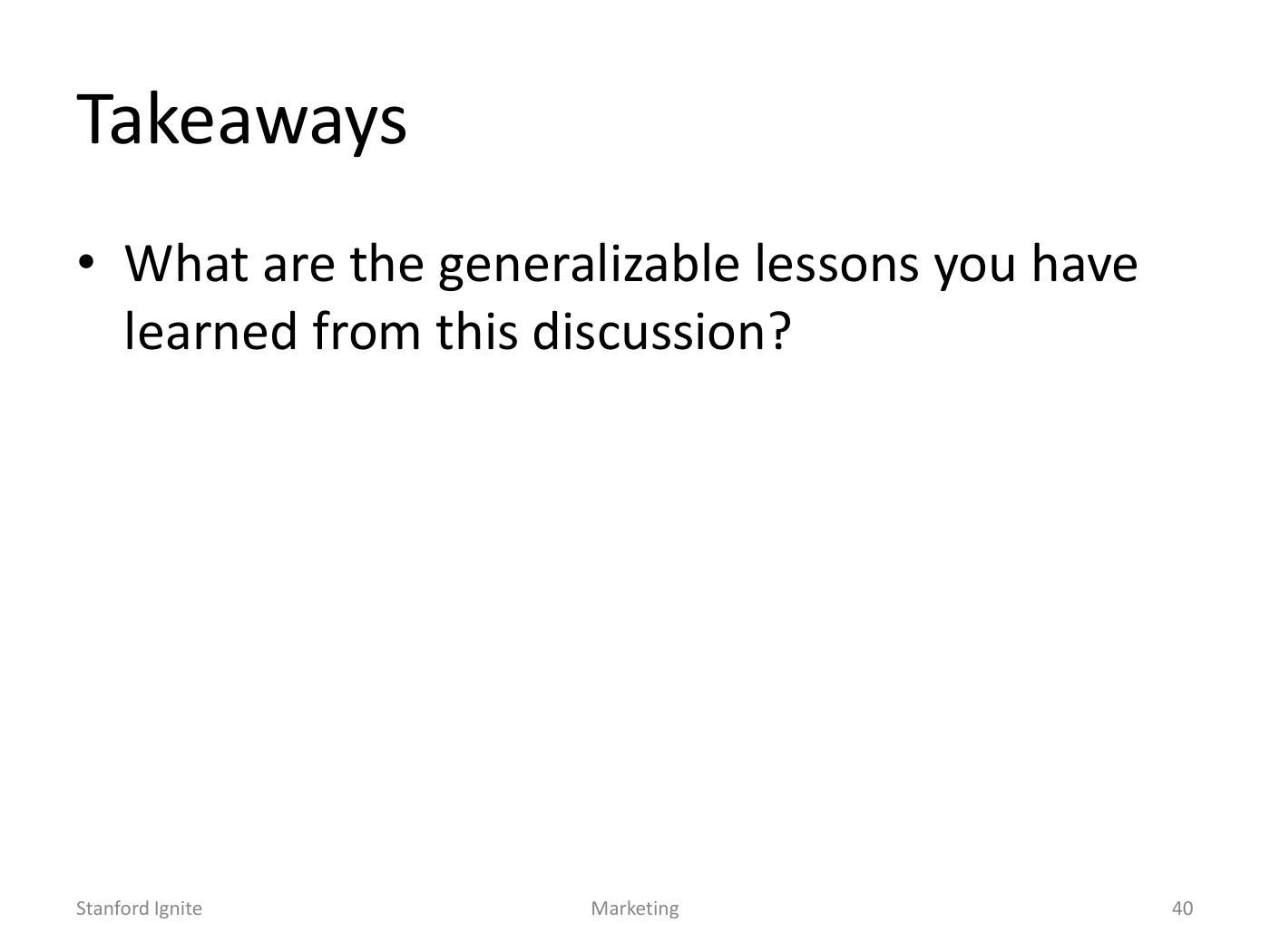
Takeaways: positioning is an internal, assumption-based choiceFour takeaways: the statement is an internal marketing document; it requires a strategic choice of target; the first draft rests on usually untested assumptions; and the job is not done until the intended position is reflected in the target customer's mind. Treat a first positioning statement as a hypothesis with a test attached. The final bullet defines success as customer interpretation, not internal agreement.Lattin - Segmentation and Positioning Slides · PDF page 41 · in the slides
13
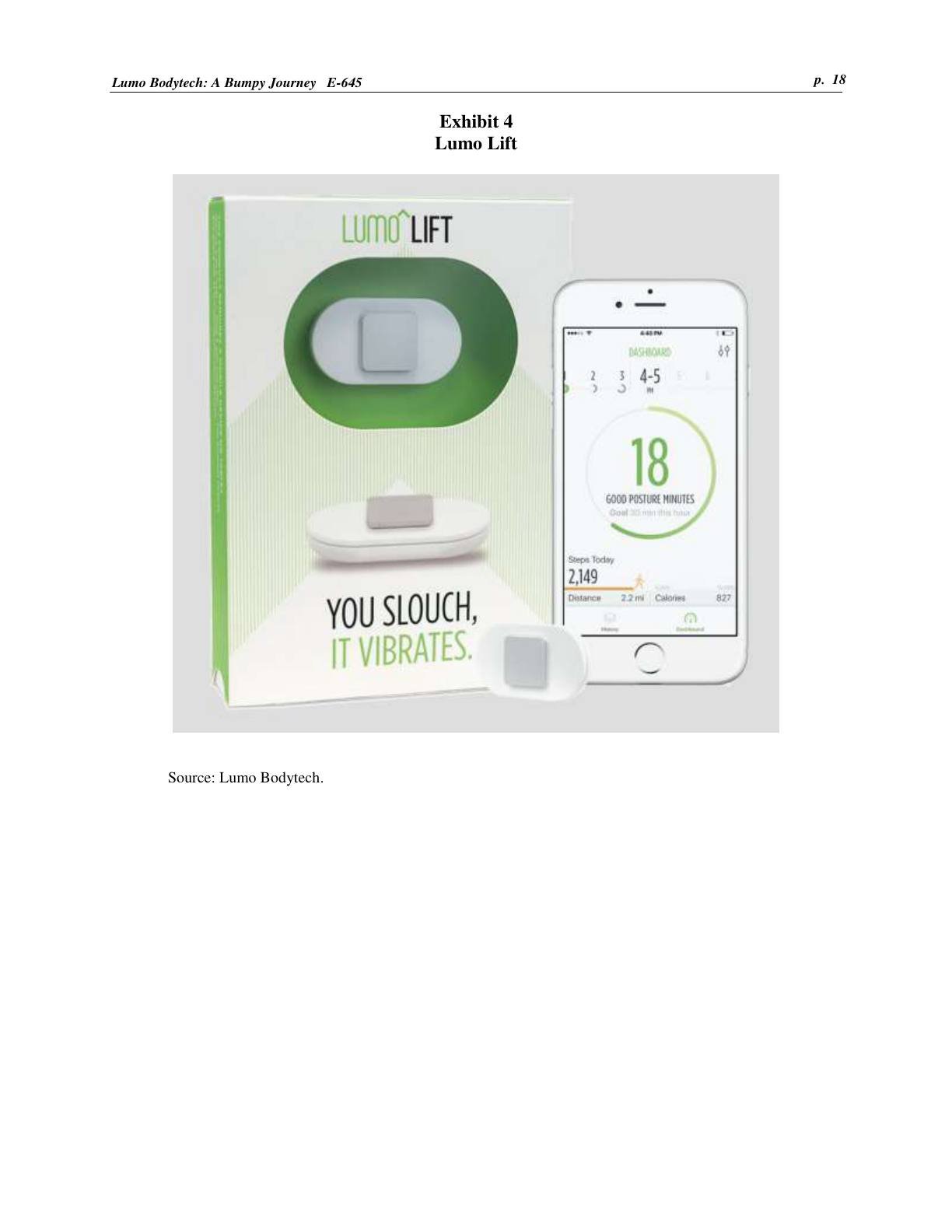
Lumo case, p. 8: single product or platform under cash pressureThe case page describing Lumo Lift's crowdfunding success (over $1 million) and the phase-out of Lumo Back, the collapse of investor interest in wearables in the second half of 2014, and an offer from a large Asian apparel manufacturer to lead the Series B if Lumo built a running product, framed internally as a move toward a motion-science platform. A running device implies a different customer, frame of reference and point of difference than a posture aid. The founders' platform reasoning is real, but the trigger was one month of remaining cash; separate what customer evidence supports from what the financing requires.Lattin - Lumo Bodytech A Bumpy Journey · PDF page 8 · in the slides