The business narrative & evidence portfolioModule 08 · Negotiation, persuasion & integration
IGNITE EXTENDED / LESSON 39
The business narrative & evidence portfolio
Can the audience trace the recommendation to evidence?
A business argument and an inspectable evidence portfolio.
1
39 / OpeningThe business narrative & evidence portfolio
The decision and the learning goals
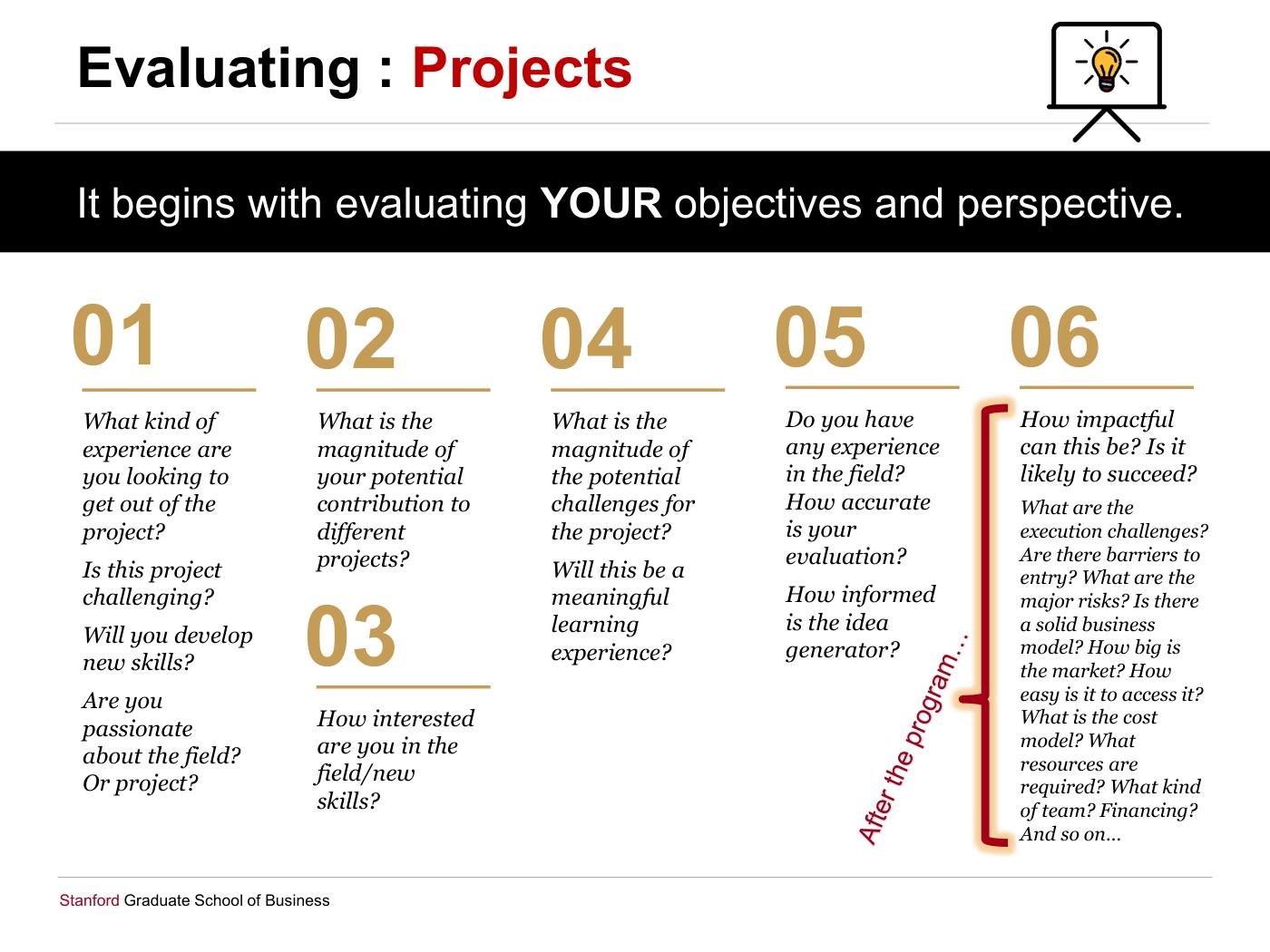
Connect a customer episode to a scoped business claim.
Explain the operating assumptions behind the numbers.
Find contradictions between customer, channel, model and funding claims.
90-minute workshopOpening 5 minConcepts and original examples 35 minPractice 25 minDebrief 15 minReview 10 min
2
39 / TheoryThe business narrative & evidence portfolio
A business argument connects a decision to evidence
The final presentation should make the requested decision clear and explain why the evidence supports it. Customer need, the proposed benefit, adoption, business economics and resource requirements form a connected argument. A missing connection can matter more than an additional product feature.
Work backward from the decision. Identify what a reasonable audience would need to believe, then choose evidence that bears on those beliefs. Keep assumptions visible. A credible recommendation can acknowledge uncertainty and still propose a concrete next commitment.
3
39 / TheoryThe business narrative & evidence portfolio
A story can make the mechanism concrete
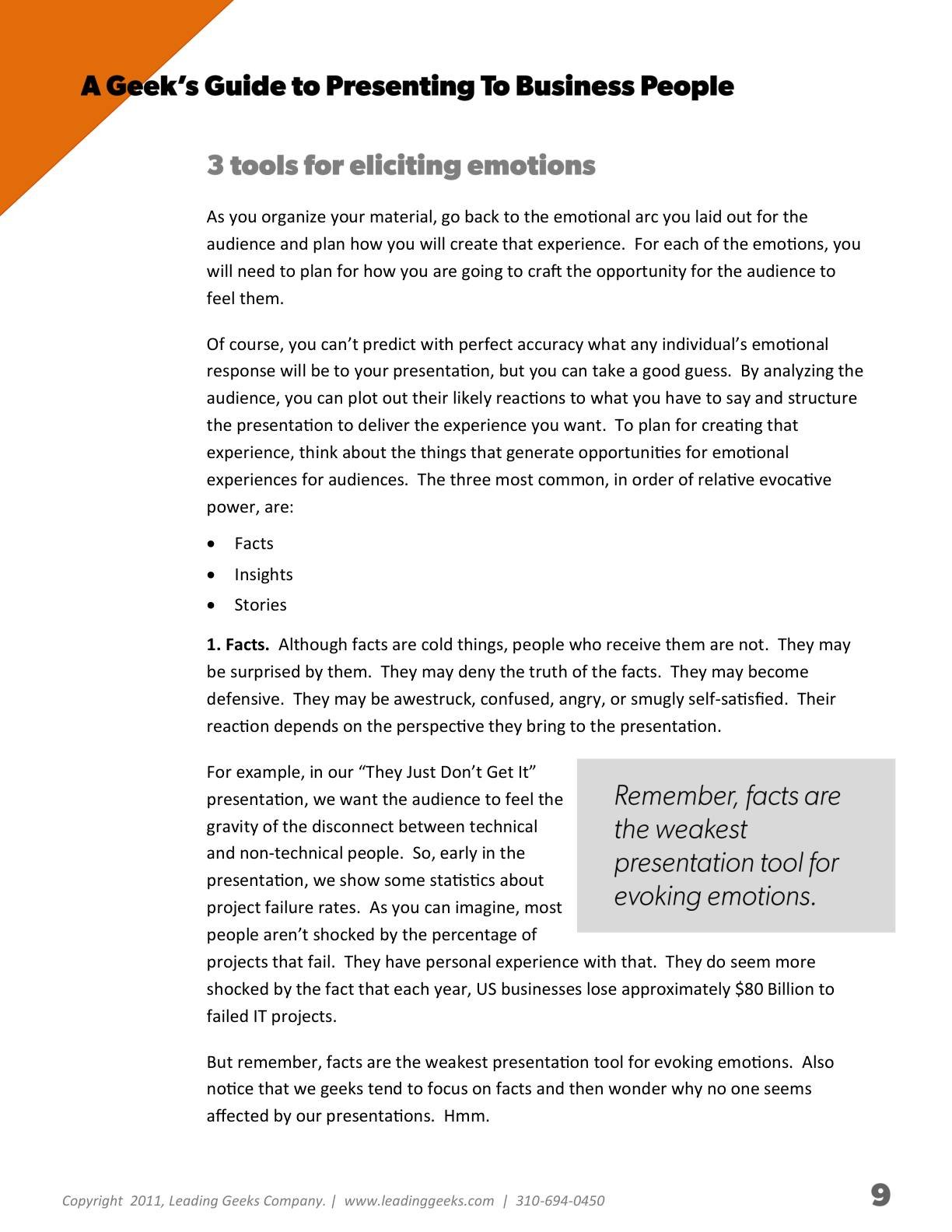
The presentation readings describe how a concrete episode helps an audience understand a situation and its consequences. A story should clarify the problem or mechanism, rather than replace evidence with an emotionally attractive anecdote.
Connect the episode to the broader claim and its limits. Explain whether it is one observation, a representative pattern or an invented teaching example. If the audience must decide how common the situation is, supply separate evidence about prevalence and relevance.
4
39 / TheoryThe business narrative & evidence portfolio
A coherent business argument
Use this sequence to build a recommendation, with each part supporting the next. The illustration is a limited pilot for a scheduling tool, rather than a claim that a whole market has been validated.
01
Customer
Describe the planner’s duplicate scheduling work and the evidence that the problem occurs. Separate interview accounts, observed behavior and the interpretation that a new tool is needed.
02
Business
Explain how the proposed workflow improves the task and how the venture might earn enough to deliver it. Short pilot payments support willingness to try, while retention remains unobserved.
03
Resources
Trace the pilot into recruitment, delivery capacity, cash and required rights. State what the requested $15,000 buys during the proposed three-month test.
04
Decision
Request a specific commitment with an owner and review conditions. Define success and stop criteria before the test so its result can change the next investment decision.
This integrates earlier lessons: customer evidence supports the offer, operating logic supports the resource request, and the decision remains conditional on unresolved evidence.
5
39 / TheoryThe business narrative & evidence portfolio
Open with the decision, not the feature inventory
State the recommendation and the audience’s role.
Explain the customer problem and the proposed benefit.
Show the evidence that makes the decision plausible.
Make the next action clear.
6
39 / TheoryThe business narrative & evidence portfolio
An evidence chain
Claim
Support to show
Customers need this
Behavior, alternatives and meaningful consequences.
The offer can work
Task, prototype or delivery evidence.
The business is attractive
Value creation, costs and strategic logic.
The capital request fits
Operating drivers, cash needs and milestones.
The team can act
Capabilities, responsibilities and unresolved risks.
7
39 / Original readingThe business narrative & evidence portfolio
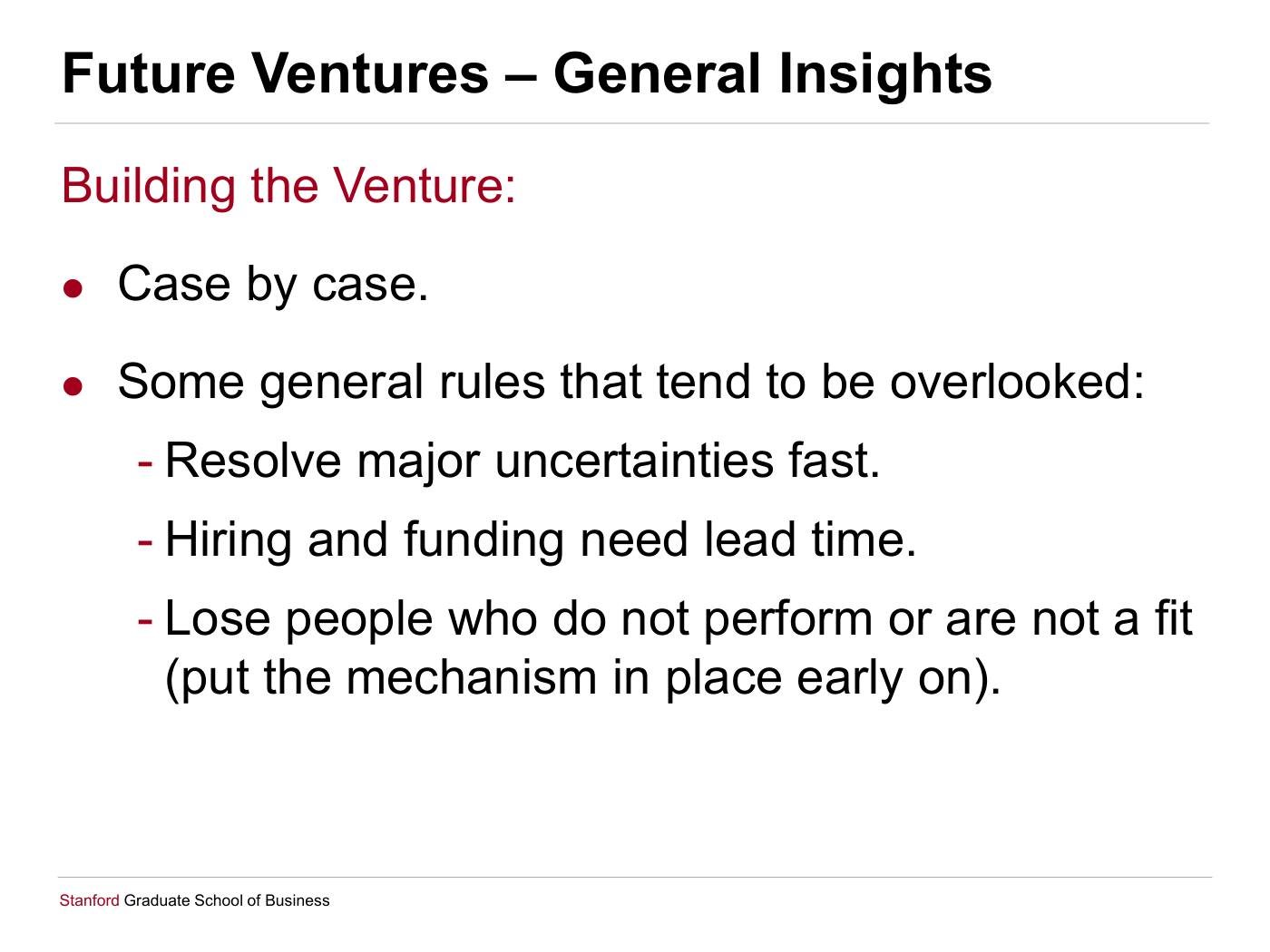
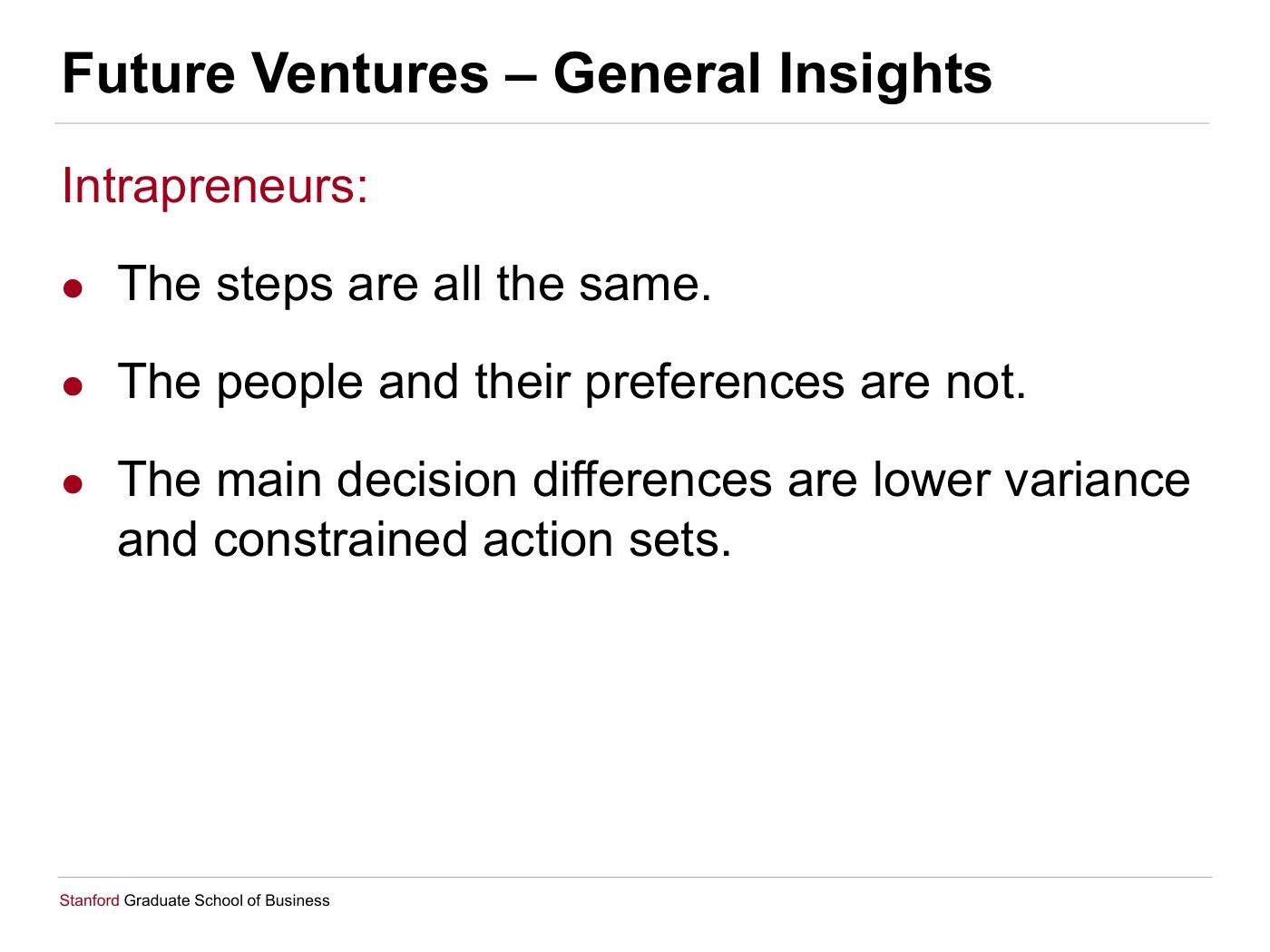
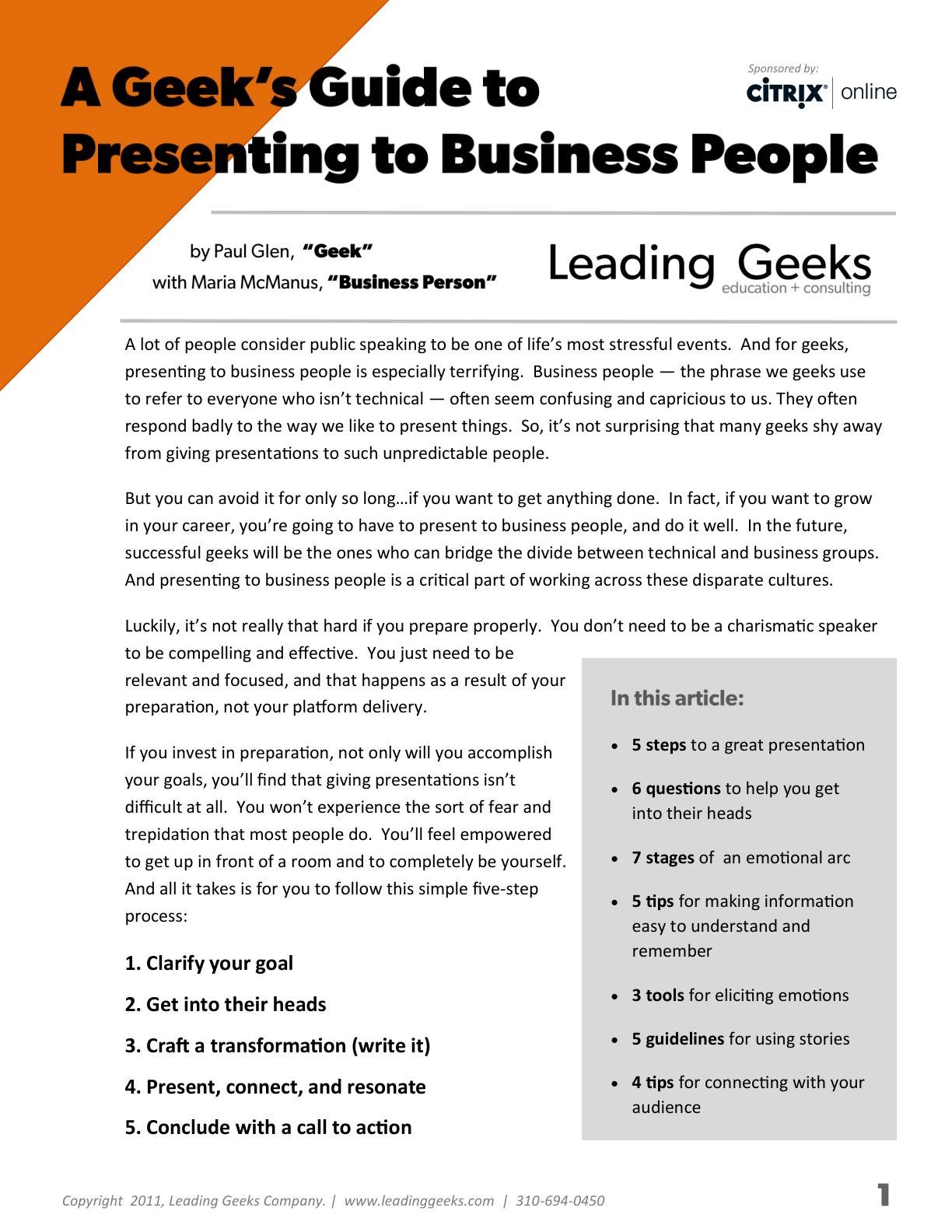
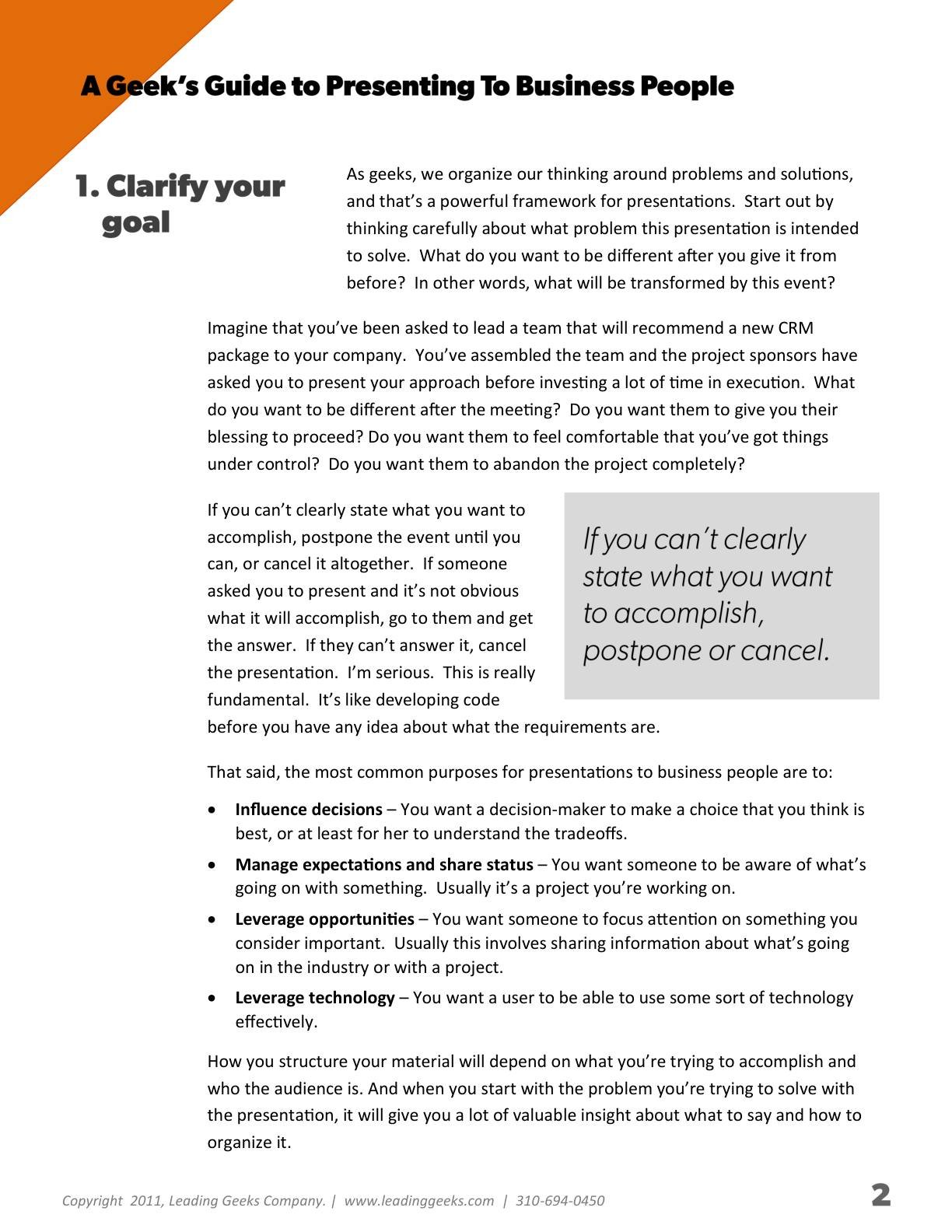
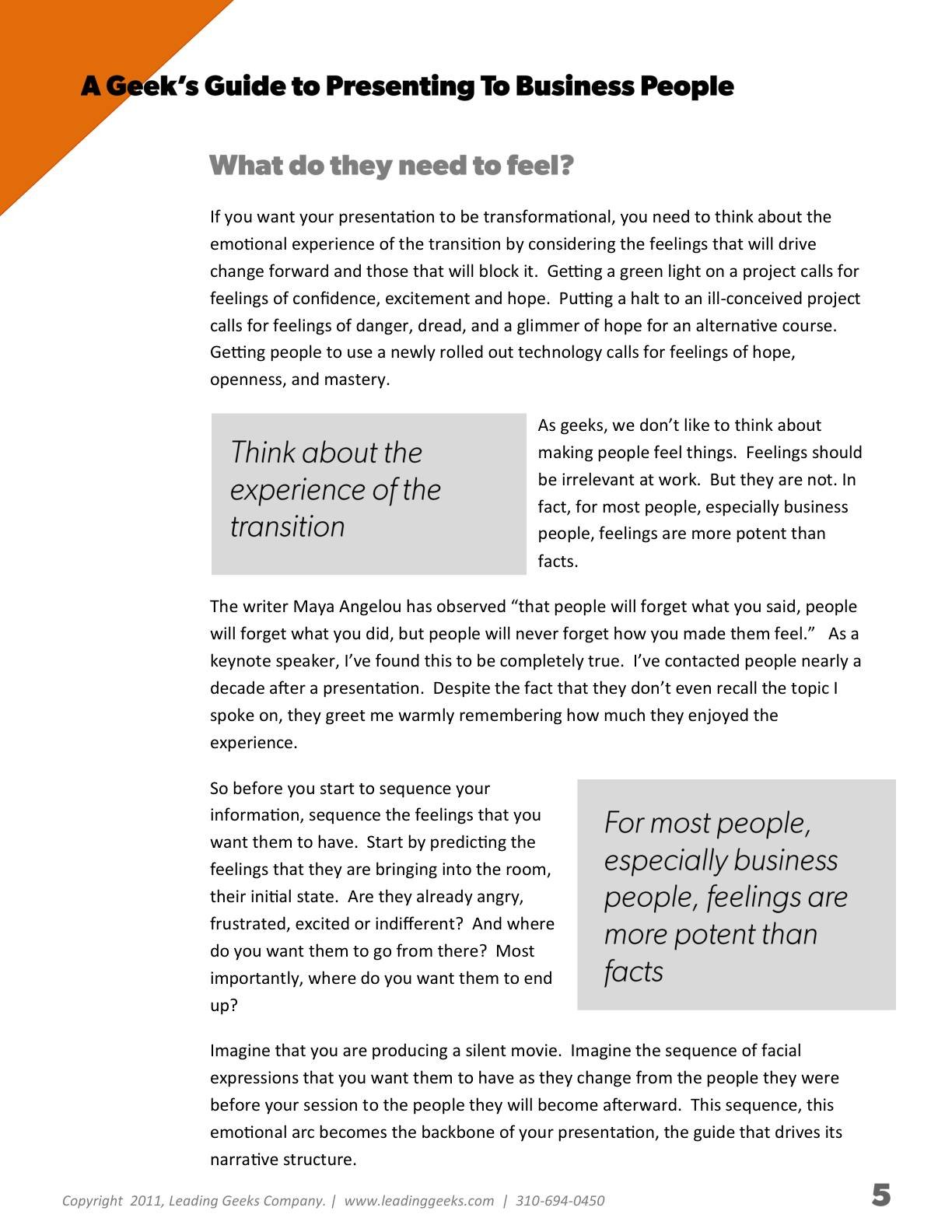
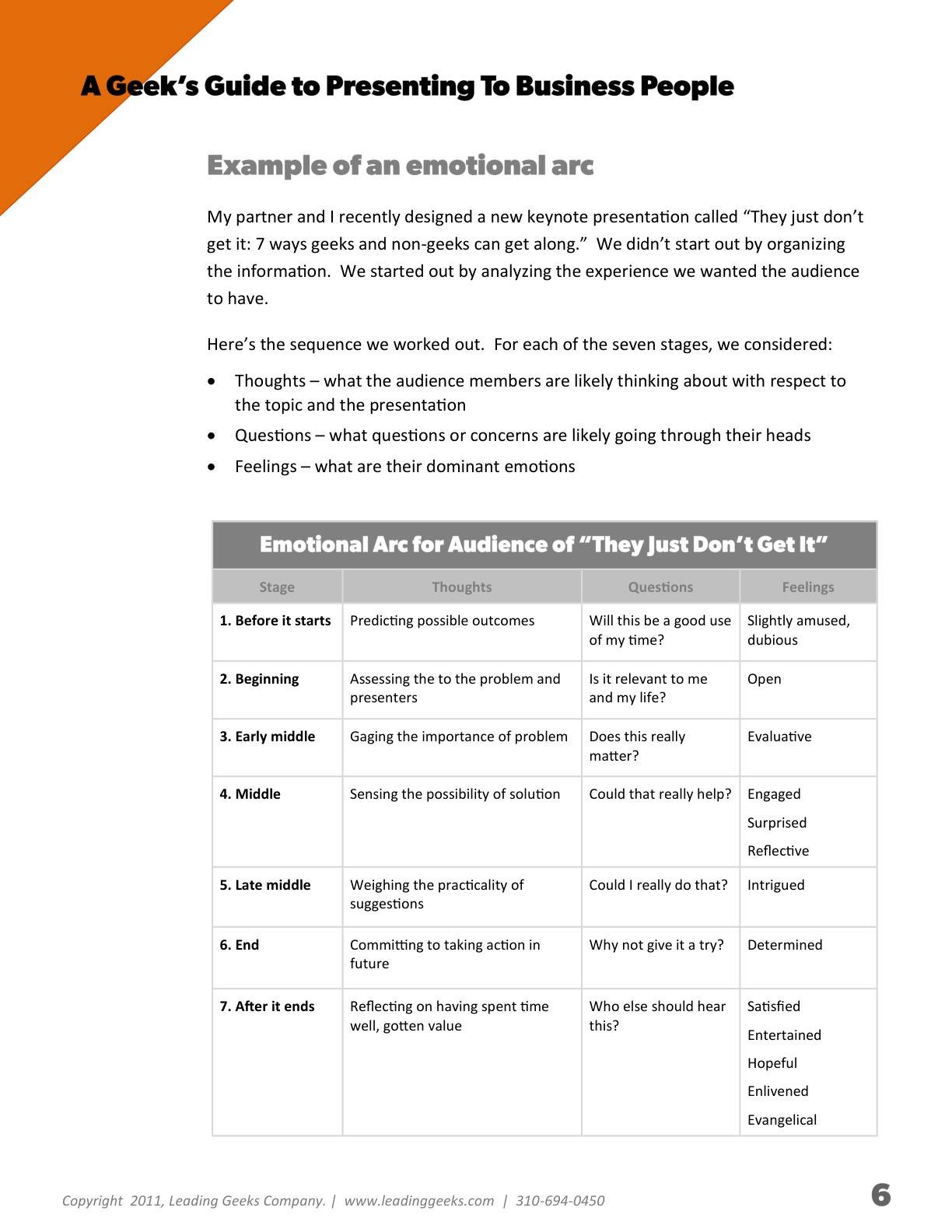
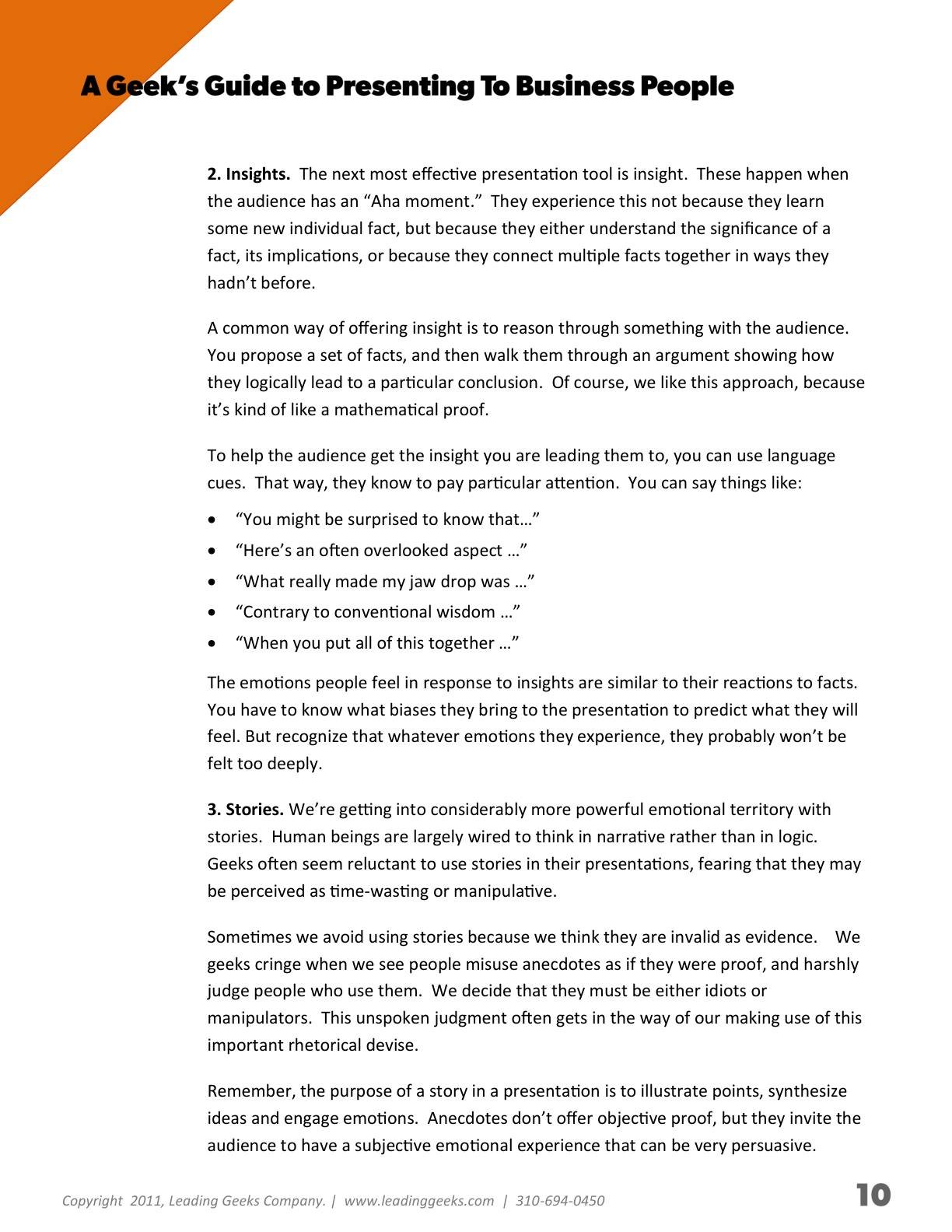
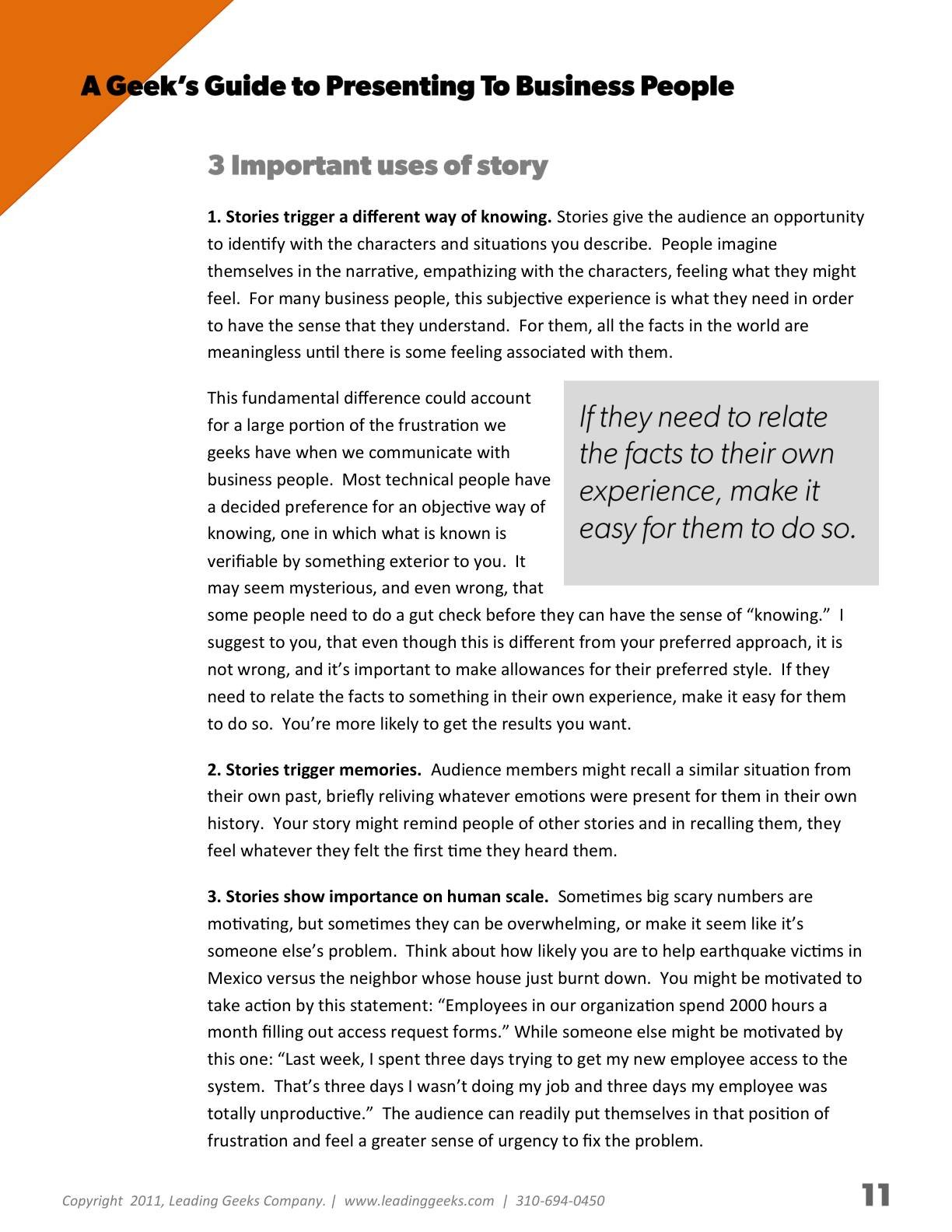
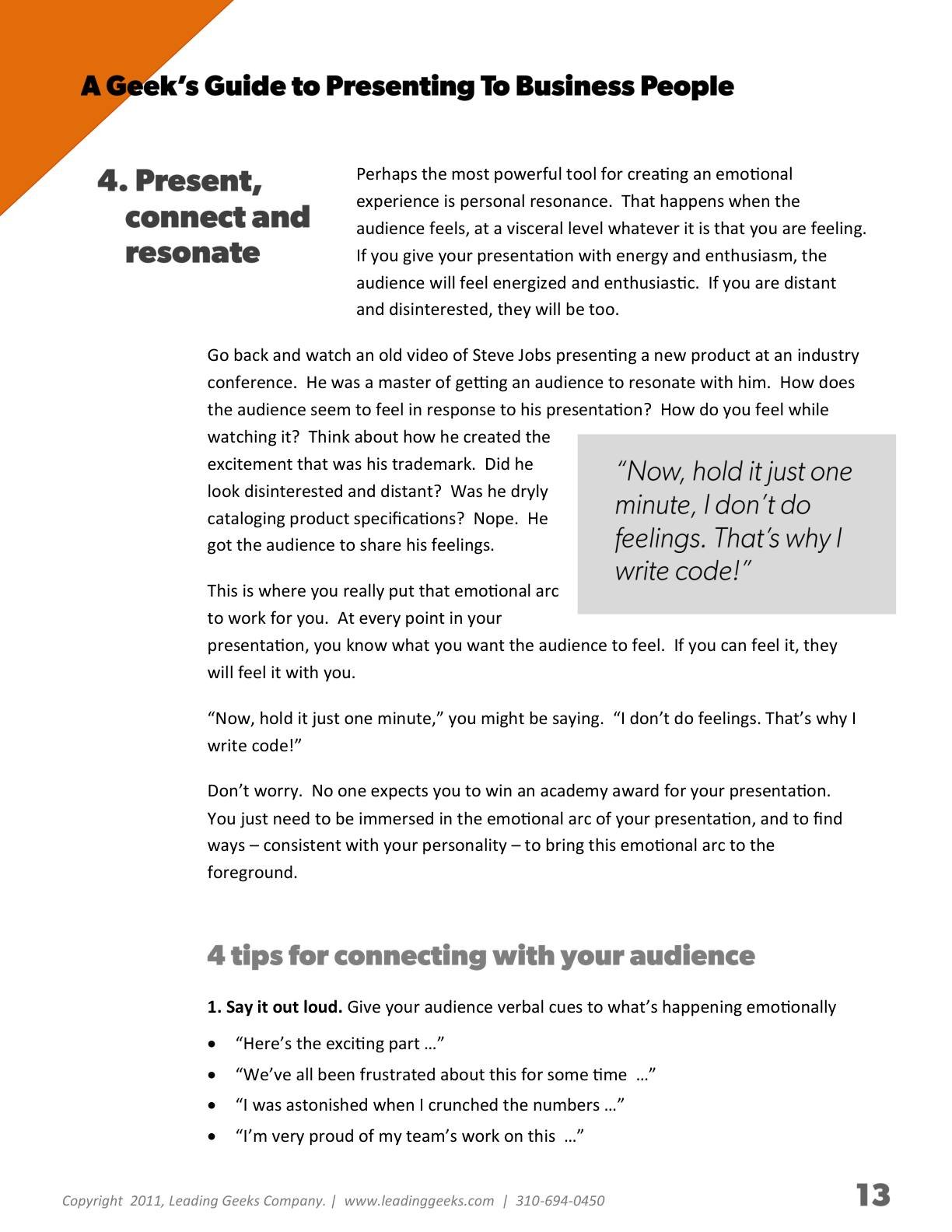
Abrahams - A Geeks Guide to Presenting to Business People
PDF page 10
PDF page 11
Click either page to read it at full size. In the reader, use ← → to switch between these two pages.
8
39 / Original readingThe business narrative & evidence portfolio
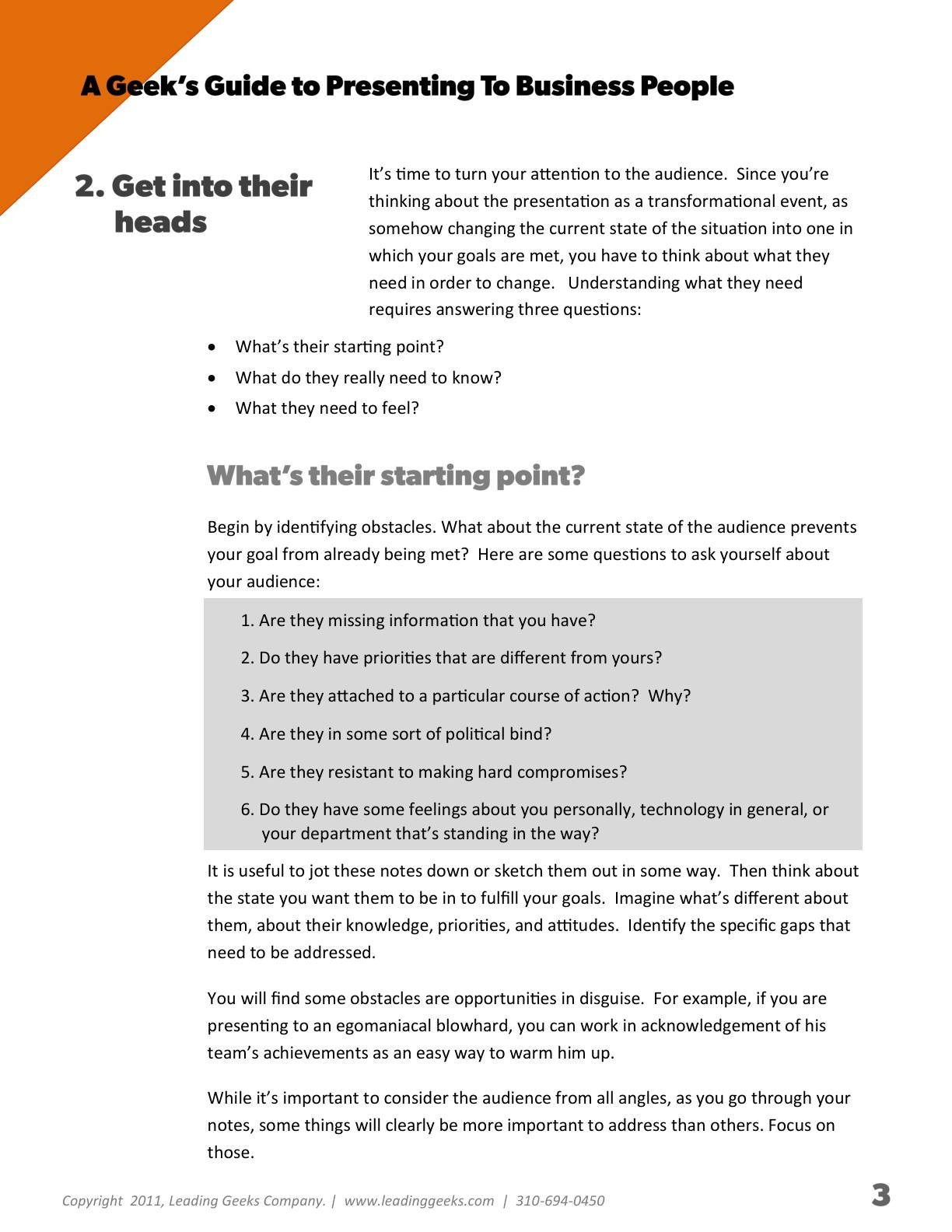
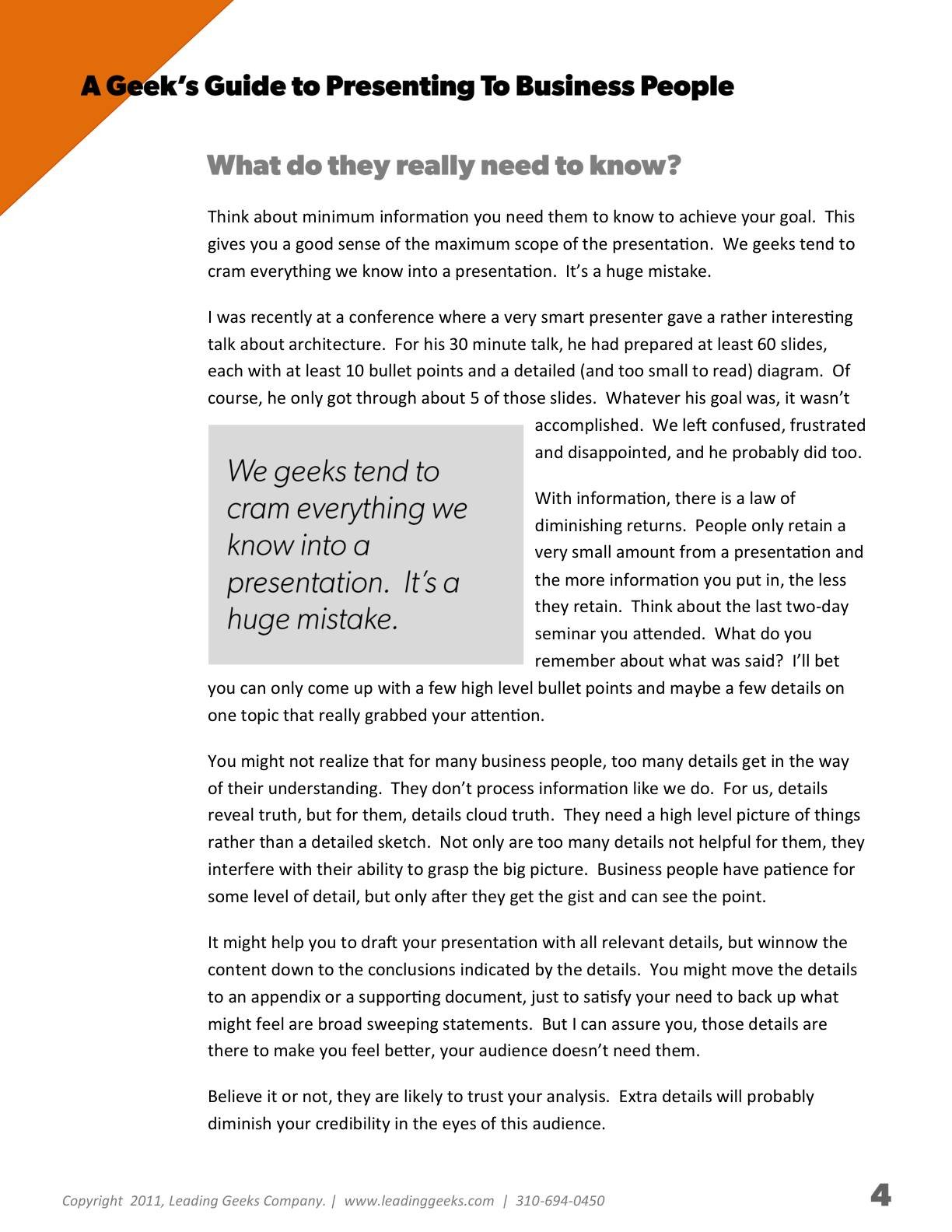
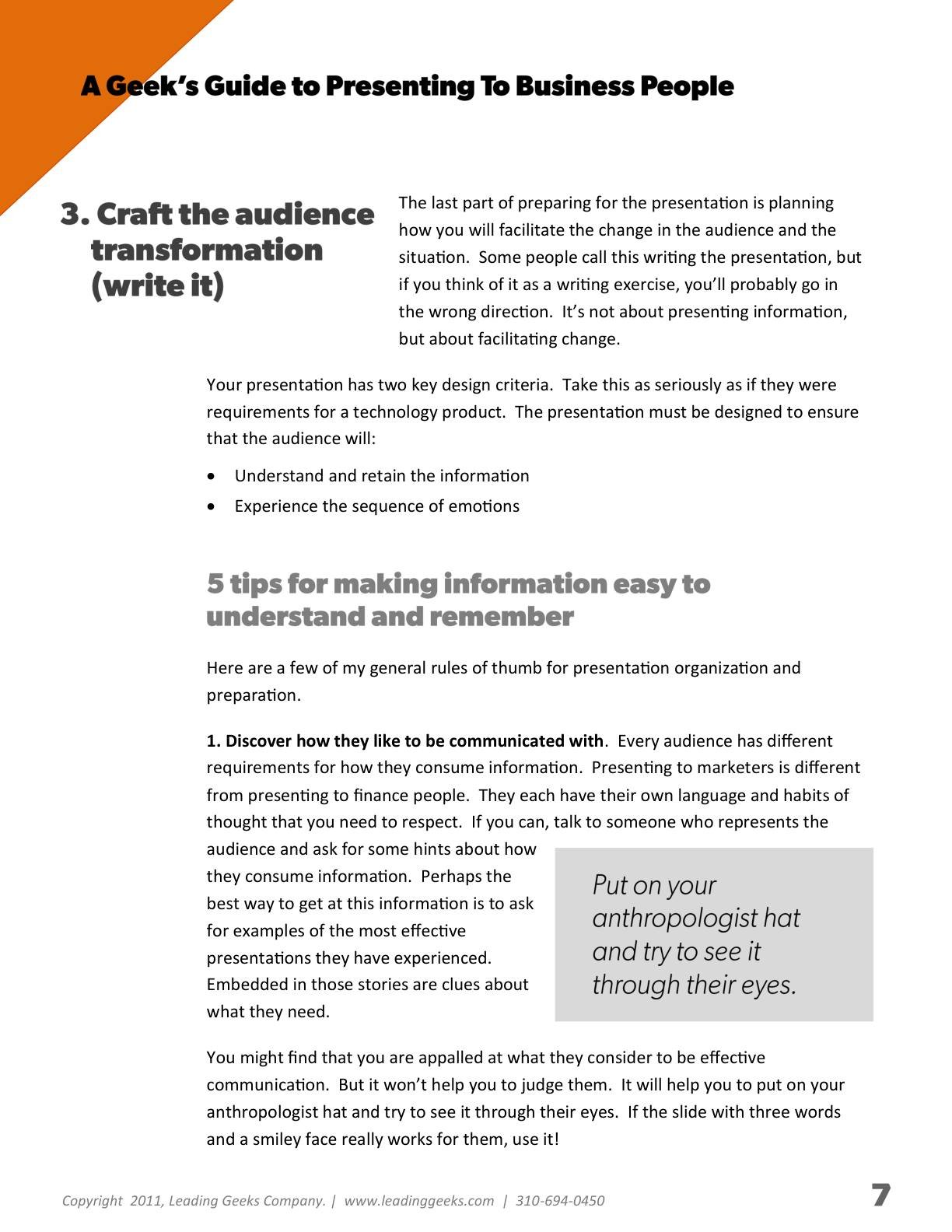
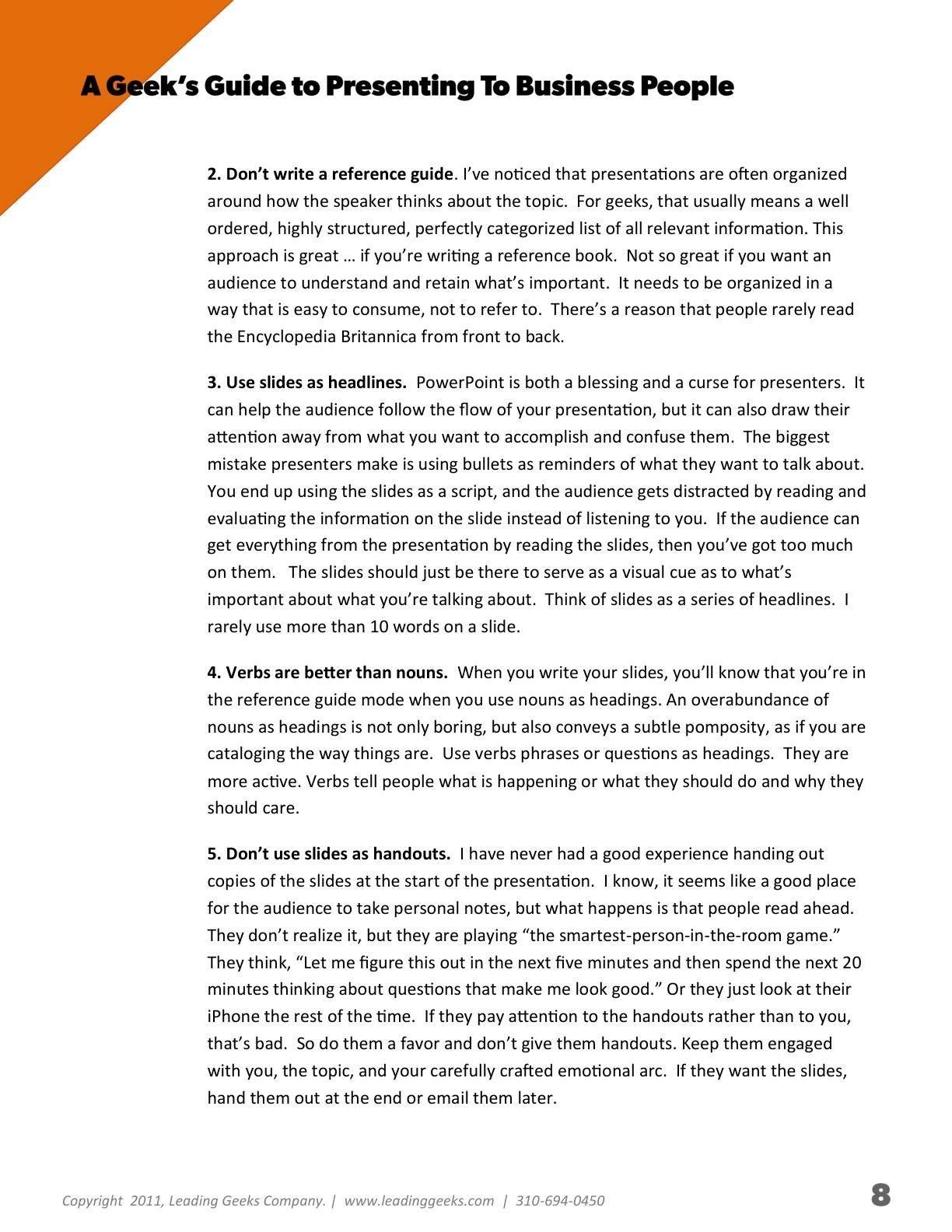
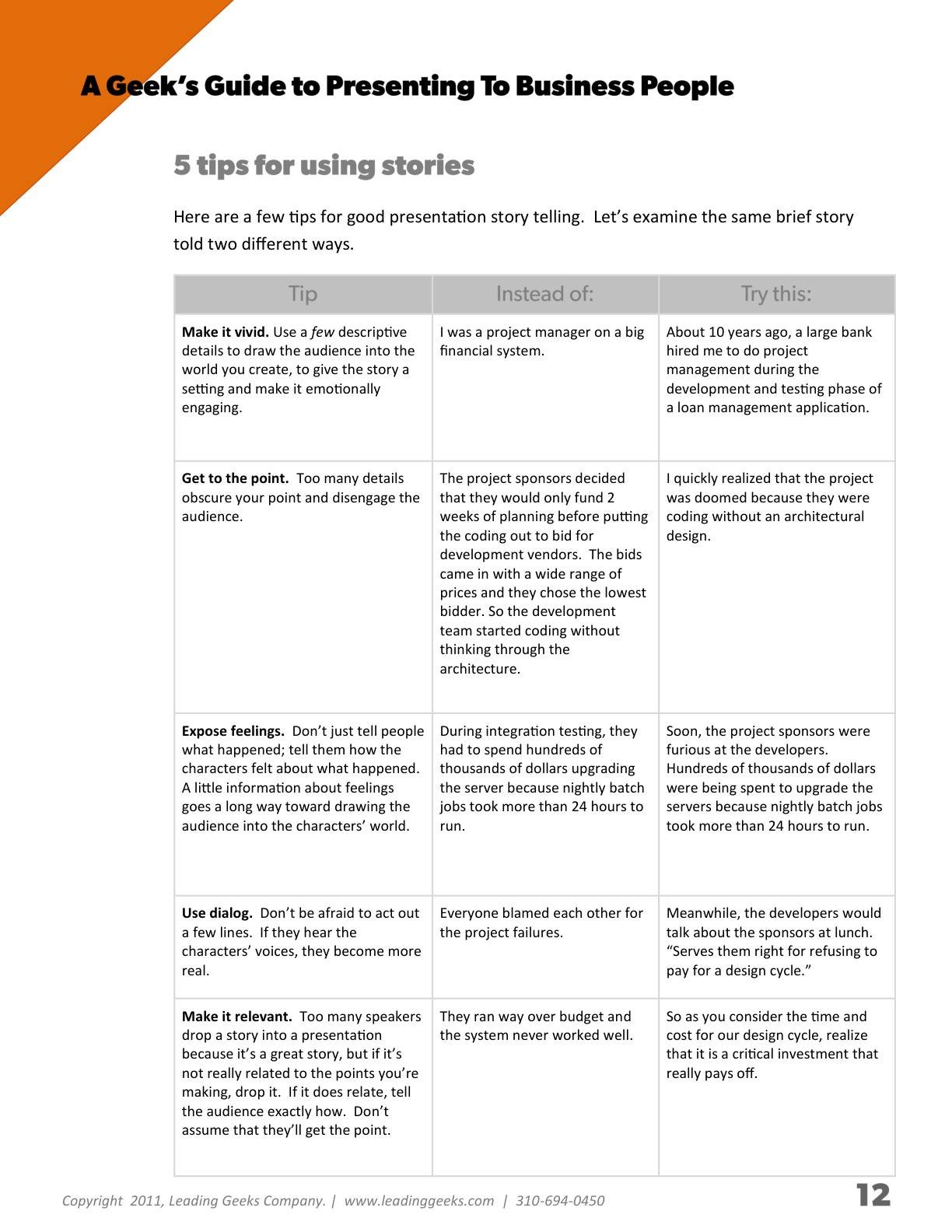
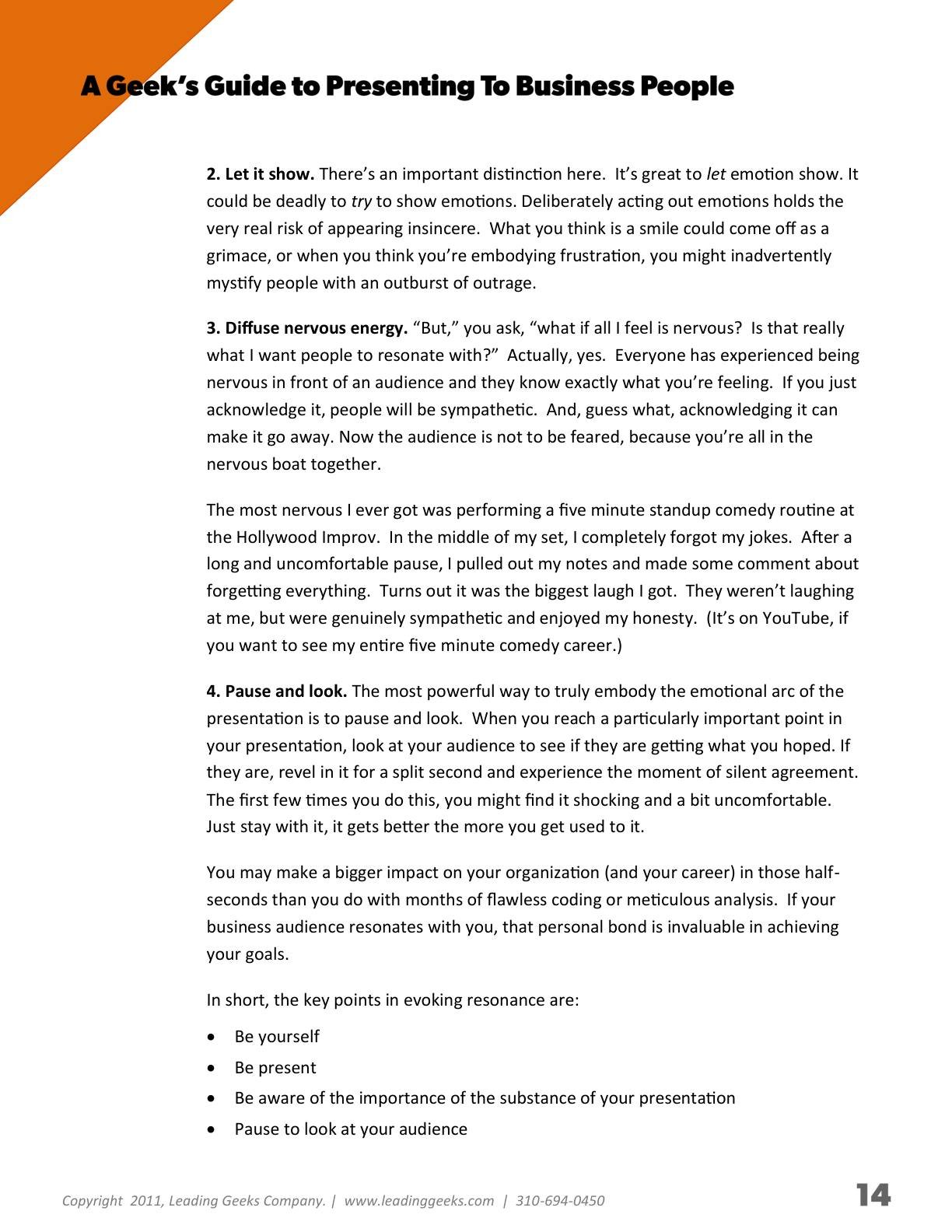
Abrahams - A Geeks Guide to Presenting to Business People
PDF page 12
PDF page 13
Click either page to read it at full size. In the reader, use ← → to switch between these two pages.
9
39 / Original readingThe business narrative & evidence portfolio
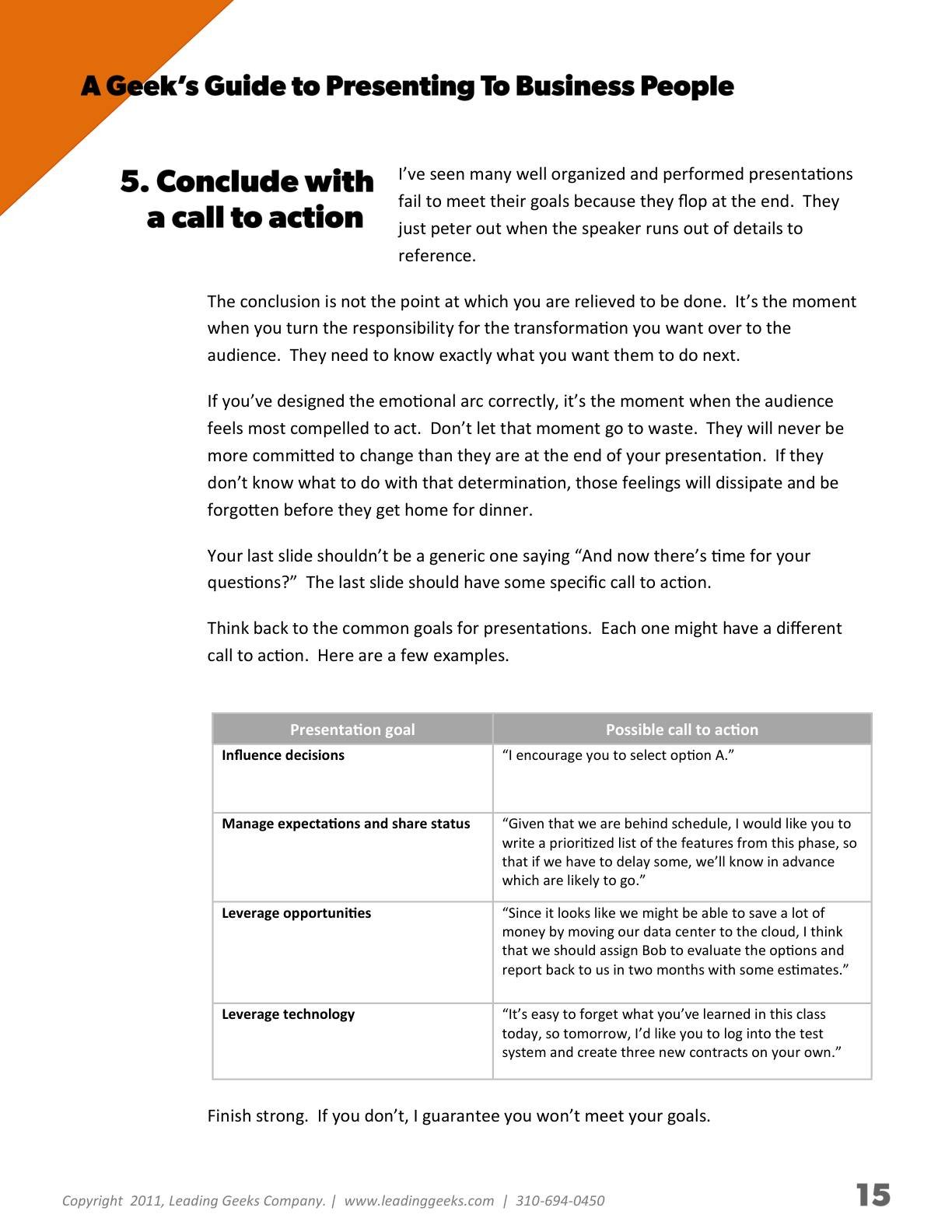
Abrahams - A Geeks Guide to Presenting to Business People
PDF page 14
PDF page 15
Click either page to read it at full size. In the reader, use ← → to switch between these two pages.
10
39 / Reading debriefThe business narrative & evidence portfolio
A Geek’s Guide to Presenting / summary
Selected reading: PDF pages 10, 11, 12, 13, 14, 15
The later excerpts explain how insights, stories and the speaker’s connection to the topic make a message meaningful. The conclusion hands responsibility for the next action to the audience.
An insight connects facts
An audience understands more when it sees an implication or relationship, rather than receiving another isolated observation.
A story makes a situation concrete
Characters, circumstances and relevant details help the audience imagine the episode. State the connection between the story and the argument.
Personal connection affects delivery
The guide asks speakers to connect with the substance of their message and communicate with sincere energy rather than perform artificial emotion.
The ending completes the purpose
The audience needs a clear next action. A conclusion should return to the intended change and make the requested response concrete.
11
39 / Reading debriefThe business narrative & evidence portfolio
A Geek’s Guide to Presenting / discussion
Selected reading: PDF pages 10, 11, 12, 13, 14, 15
Critical points
Audience differences
The guide uses broad contrasts between technical and business audiences. Treat these as prompts to investigate the actual audience, rather than fixed personality categories.
Emotion and evidence
A story can make a consequence understandable. Separate that explanatory role from the evidence needed to support the size or frequency of a claimed result.
Presentation purpose
The guide favors sparse visuals for live speaking. This course also supports independent study, so detailed explanations remain available on the study pages.
12
39 / TheoryThe business narrative & evidence portfolio
Financial evidence needs an operating explanation
A forecast becomes understandable when the audience can see how the work produces the numbers. Explain units, conversion, retention, delivery cost and timing. A table of rapidly growing revenue gives little basis for judging whether the company can execute it.
Choose a few assumptions that carry the recommendation and show their consequence. Include a downside case or sensitivity when it could reverse the choice. The supporting material can contain the detailed model, while the presentation supplies enough reasoning for the audience to question it intelligently.
13
39 / TheoryThe business narrative & evidence portfolio
A portfolio makes the course’s decisions inspectable
An integrated portfolio combines the customer evidence, segment and positioning choice, route to market, business model, financial logic, ownership implications and organizational requirements. Each item should support the same proposed business decision.
Review the portfolio for contradictions. A positioning claim about a premium experience should agree with the service budget. A channel assumption should agree with the adoption evidence. A financing plan should reflect the actual cash path. This is a reasoning exercise, rather than a requirement to recreate the original cohort projects.
14
39 / Deep diveThe business narrative & evidence portfolio
Relay portfolio map (1): customer, market and strategy
Each narrative section maps to the lesson artifacts that support it, the type of evidence, and the gap to disclose.
Figures are the course's illustrative Relay numbers. Replace them with your own artifact values, and keep the evidence labels honest.
Narrative section
Claim the investor must believe
Supporting artifacts
Evidence type
Gap to disclose
Ask
$12M at $48M pre makes Scheduler the fill system for PT groups
L1 opportunity brief; L34 milestones and funding need
Decision
Milestones the B round will test
Problem
About 15% late cancellations and no-shows, about 42 empty slots/week; front desk phones for about 1 hour/day
L2 clinic-owner pitch; L4 interview guide and observations; L5 reframe
Observed in pilots; averages illustrative
Prevalence beyond Austin pilot clinics
Proof
Relay refills about 40% of slots vs 10-15% by phone
Delaware C-corp, IP assigned; BAAs with clinics and LLM vendor; trademark searched; FTO under EHR terms
L25-L28; L34 data room
Documents
Current-law review by counsel
Team and operations
22 people, half remote; incident review after the PHI near-miss
L3 working agreement; L35 culture; L36 management levers
Documents and observed practice
Disclose the near-miss
Largest customer
Northpoint: 42 locations, 3-year contract at about $318/location/month (floor $209, target $339, list $399)
L37 preparation; L38 multi-issue deal
Signed contract
Discount vs list; data-use rights
16
39 / TheoryThe business narrative & evidence portfolio
Customer value and investor value
A business argument must explain both why a customer benefits and why the proposed resource commitment is worthwhile. Those conclusions require different evidence.
Customer
Why should this offer improve a relevant situation?
Investor or sponsor
Why is this a coherent use of resources under uncertainty, and what makes the expected outcome worthwhile?
Worked application
Scheduling-pilot illustration: reduced duplicate work could benefit a planner. A sponsor also needs a plausible delivery plan, budget and useful learning outcome. Two paid trials provide evidence of willingness to try, while retention and repeatable acquisition remain questions for the next stage.
Connect customer evidence to operating economics and then to the requested decision, making each unresolved link visible.
17
39 / TheoryThe business narrative & evidence portfolio
Numbers should carry an explanation
State units, periods and what is compared.
Distinguish observed results from forecasts and assumptions.
Trace important totals to drivers.
Show the uncertainty that could change the recommendation.
18
39 / TheoryThe business narrative & evidence portfolio
A useful final portfolio
Customer and market choice.
Business model and strategic advantage.
Cash model, funding and ownership logic.
People, operating expectations and asset/data responsibilities.
Recommendation, alternatives and next evidence.
19
39 / Deep diveThe business narrative & evidence portfolio
Contradiction log: where Relay's artifacts disagree
Reconcile these before the partner meeting; each one is a likely diligence question.
Resolve each conflict by choosing one source of truth, restating the dependent numbers, and showing the change on the slide that uses them.
Artifact A
Artifact B
Conflict
Resolution
L1, L8: about $96,000 recovered per clinic
L9, L12: about $66,000 over the phone list
Gross versus incremental customer value
Use $66,000 in value claims, pricing and EVC; show $96,000 only as gross recovered revenue
L10: 80% gross margin, LTV/CAC 4.4
L15: Scheduler at about 72% margin
Economics overstated for the product being sold
Restate LTV as about $9,480 and LTV/CAC as about 3.95; show the inference cost per conversation and the margin plan as a forecast
L8: value positioning at $399/location
L38: Northpoint priced below list
Model ARPA uses list price
Model blended ARPA; present a group tier tied to volume, term and data rights
L9: channel CAC about $1,500 per clinic
L15: enterprise-style sales to groups
Per-clinic CAC no longer describes the motion
Report CAC per group and per location, plus payback months
L11: waitlist network effects
L14: defensibility claim
Implied winner-take-all
State that effects are local; rest defensibility on integration depth, outcome data and switching costs
L28: HIPAA program described as in place
L35: PHI near-miss
The data room will show the incident
Disclose it with root cause, changed controls and a test of those controls
L31: $100M year-6 revenue
L7: about 38,000 clinic locations
At $399, $100M needs about 55% penetration
Present an ARPA path through Scheduler for groups, labeled as an assumption; treat $100M as the investor's case
20
39 / Original readingThe business narrative & evidence portfolio
Abrahams - How to Nail the Startup Pitch (2)
PDF page 2
PDF page 3
Click either page to read it at full size. In the reader, use ← → to switch between these two pages.
21
39 / Reading debriefThe business narrative & evidence portfolio
How to Nail the Startup Pitch / summary
Selected reading: PDF pages 2, 3
The selected pages organize a pitch around understandable customer value and evidence of a viable business. They also treat investor questions as a chance to understand concerns and build a working relationship.
A recognizable problem
The problem, proposed response and resulting benefit give listeners a short path to understanding what the company does.
A concise product explanation
A brief description or demonstration can orient the audience before detailed support. Unfamiliar or inflated terms create extra work for the listener.
Business value needs proof
Investors need evidence concerning the plan and potential return as well as customer benefit. The reading uses operating examples, metrics and customer evidence.
Curiosity supports questions
Listening and considering a challenge helps reveal the investor’s concern. A defensive response can leave the substantive issue unresolved.
22
39 / Reading debriefThe business narrative & evidence portfolio
How to Nail the Startup Pitch / discussion
Selected reading: PDF pages 2, 3
Critical points
Different claims need different support
A quote, a payment and a retained customer bear on different questions. Explain what each observation establishes and what remains unknown.
Analogy has limits
Comparing a venture with a familiar business can speed understanding. It can also import assumptions about economics or adoption that the evidence does not support.
A pitch remains a decision argument
Delivery and a clear story help the audience inspect the proposition. They cannot substitute for a coherent operating plan and a justified request.
23
39 / Source pageThe business narrative & evidence portfolio
Thinking verbs: naming the analytical work a claim rests on
24
39 / Reading debriefThe business narrative & evidence portfolio
Thinking Verbs / summary
Selected reading: PDF page 1
This one-page reference supplies verbs for describing intellectual work. Its value in the course is to make the reasoning behind an analysis or learning objective observable.
Actions specify the task
Words such as compare, calculate and evaluate indicate different kinds of work that a learner or analyst can demonstrate.
A verb needs an object
“Evaluate the channel choice against installation risk” gives more direction than a topic label such as “channels.”
Criteria complete the instruction
A stated action still needs relevant inputs and a standard for judging the output. The verb alone does not define a useful analysis.
The words are a resource
The page is a vocabulary list rather than an empirical argument. Choose a familiar verb that accurately describes the required work.
25
39 / Reading debriefThe business narrative & evidence portfolio
Thinking Verbs / discussion
Selected reading: PDF page 1
Critical points
Avoid empty activity
“Analyze the market” can remain vague. Name the comparison, evidence and intended decision so the action has a clear boundary.
Keep the meaning accurate
Calculate, estimate and prove imply different evidence and certainty. Choose wording that fits the work actually completed.
Match the learning goal
A task asking for recall cannot fully assess an objective that asks learners to evaluate alternatives. Align the exercise and the expected reasoning.
26
39 / Current practiceThe business narrative & evidence portfolio
Current practice: what a 2025-2026 Series A narrative has to survive
Decks get minutes, not hours
DocSend's April 2025 research summary reports that investors now spend less than three minutes reviewing a pitch deck. The sent deck therefore has to carry the ask, the evidence chain and the key numbers without the presenter, so self-explanatory message titles matter more than visual polish.
Longer gaps and frequent bridges
Carta's 2025 review puts the median time from seed to Series A at about 2.1 years, up from about 1.5 years five years earlier, and reports that about 29% of seed and Series A deals in 2025 were bridges. The median 2025 Series A post-money valuation was $60M. Investors therefore compare a narrative against many companies that raised extensions first, and they ask what the seed money proved.
AI gross margin is a diligence line item
ICONIQ's January 2026 State of AI survey, as summarized by SaaStr, reports AI product gross margins of about 45% in 2025 and projects 52% for 2026, well below traditional SaaS. An AI-layer product such as Relay Scheduler should show inference cost per conversation and its margin trajectory explicitly, instead of quoting a legacy SaaS margin.
39 / PracticeThe business narrative & evidence portfolio
A complete argument for a limited pilot
Illustrative venture: six of eight interviewed planners describe duplicate scheduling work. Four organizations attempted the prototype; three completed the task unaided. Two paid $100 for a pilot. No customer has used it beyond two weeks. The team requests $15,000 for a three-month test with ten organizations. Forecast retention is untested.
Your task
Build a five-minute argument for or against the pilot. Distinguish evidence, interpretation and what must be learned. Specify success and stop criteria before the test.
28
39 / DebriefThe business narrative & evidence portfolio
Worked answer and reasoning
The interviews support a problem hypothesis, while the prototype and payments provide narrower evidence about usability and willingness to try.
Long-term retention and a repeatable acquisition process remain unresolved. A full-scale launch recommendation would exceed this evidence.
A defensible pilot argument ties the budget to recruitment, measured use and a retention observation, with explicit criteria for continuing or stopping.
29
39 / Venture stepThe business narrative & evidence portfolio
Venture step: The Series A narrative and evidence portfolio
Relay · venture step 39
Month 30. Relay's lead investor has issued a term sheet: $12M at $48M pre-money ($60M post), 1x non-participating preferred, pari passu with the seed, no pool top-up. The partner meeting is in two weeks. Relay has about 300 live clinic locations, 42 of them Northpoint's, and roughly $1.4M ARR (illustrative; up from about 250 locations at month 28, with Northpoint billing below list), 22 people, multi-location groups retaining 3x better than independents, Relay Scheduler running at about 72% gross margin, and the 42-location Northpoint contract signed at about $318 per location per month (Lesson 38 package B). The team holds 38 lesson artifacts, but they do not yet form one argument, and several contradict each other.
Your task
Produce a 10-slide Series A narrative that opens with the ask, plus an evidence portfolio: an index mapping every material claim to its lesson artifact, its evidence type (observed, calculated, assumed) and its open risk, and a contradiction log resolving at least four inconsistencies.
30
39 / Venture stepThe business narrative & evidence portfolio
Venture step: worked reasoning
Spine, decision first: (1) the ask: $12M to make Relay Scheduler the default fill-rate system for multi-location PT groups; (2) one front desk's day (L2, L4); (3) the mechanism and proof: Wizard-of-Oz pilot (L5) and the randomized comparison against the phone tree, about 40% of empty slots refilled vs 10-15% by phone, about $66,000 a year incremental per clinic (L12); (4) why groups, why now: the L15 pivot data, 3x retention, 10+ locations per purchase; (5) economics (L10, L18); (6) defensibility vs ClinicOS and commoditized LLMs (L13, L14); (7) plan, scenarios and cash (L19, L20, L34); (8) risk and compliance (L26-L28, L35); (9) team (L24, L36); (10) the ask again, with milestones and review dates.
Customer value and investor value need different evidence. The clinic case is strong: about $66,000/year of incremental revenue over the phone list ($96,000 gross) against about $4,800/year in price (L9, L12). The investor case is weaker. At $399/location/month, $100M revenue requires 100,000,000 / (399 x 12) = about 20,900 locations, about 55% of the illustrative 38,000 US clinics. The narrative must rest the venture-scale outcome on higher ARPA from Scheduler for groups, and label that as an assumption.
Restate the economics before an investor does it for you. At the v2 margin, LTV = 399 x 0.72 x 33 = about $9,480, so LTV/CAC = 9,480 / 2,400 = about 3.95 direct, down from 4.4 at 80% margin. Show the plan to recover margin (templated messages for routine replies, smaller models for prediction) as a forecast, separate from the observed 72%.
Label evidence by type. Observed: pilot fill rates, cohort retention, signed Northpoint contract, FY1 statements ($180,000 revenue, -$616,000 operating loss). Calculated: LTV/CAC, NPV of the second EHR (+$16k at 20%, -$27.6k at 30%), post-A cap table (founders 46.78%). Assumed: channel CAC of $1,500, the 38,000-clinic market, year-6 revenue. A claim without a label becomes a diligence question.
Open with one story, then scope it. Maya's front desk spending about an hour a day phoning patients shows the mechanism. The interview and pilot base (how many clinics, which segment) shows the prevalence. Say which one each slide is doing.
31
39 / DebriefThe business narrative & evidence portfolio
Reasoning traps
The portfolio as scrapbook
Presenting 38 artifacts in lesson order turns the course sequence into the argument. Organize the artifacts around the claims the investor must believe, and leave unused artifacts out of the deck.
Numbers that disagree across artifacts
An 80% margin in the unit economics, 72% in the Scheduler plan, $399 in the model and a discounted Northpoint price is exactly what diligence checks. Reconcile every repeated number to one source before the meeting.
Illustrative figures presented as data
The 38,000-clinic market and the $1,500 channel CAC are assumptions or targets. Presenting them alongside observed pilot results without a label invites a re-trade once the data room shows the difference.
32
39 / ReviewThe business narrative & evidence portfolio
What you can now explain
A 10-slide Relay Series A narrative, a claim-to-artifact evidence index covering lessons 1-38, and a contradiction log with resolutions.
A Series A narrative works backward from the ask: name what the investor must believe, then attach the strongest evidence to each belief.
Customer value (about $66k incremental vs $4.8k price) and investor value (a path to venture-scale revenue) are separate claims that need separate evidence.
Labeling each claim as observed, calculated or assumed, and logging contradictions between artifacts, makes the portfolio survive diligence.
Next lesson: Presentation, questions & the final decision
33
Check your understanding
Can the audience trace the recommendation to evidence?
Score
Question 1
A Series A slide claims that Relay refills about 40% of empty slots. Which supporting evidence would a careful investor weight most heavily?
Only the randomized comparison addresses causality: it balances manager enthusiasm, season and patient mix, and automatic logging removes front-desk recording bias, as designed in L12. The Wizard-of-Oz result is tempting, but Maya's personal effort may not generalize to software. Quotes show satisfaction, not effect size, and a scenario is an assumption.
Question 2
Relay Scheduler runs at about 72% gross margin rather than 80%. Using $399/month, 33-month average lifetime and $2,400 direct CAC, what is LTV/CAC?
LTV = 399 x 0.72 x 33 = about $9,480; 9,480 / 2,400 = about 3.95. The 4.4 figure uses the old 80% margin, and 7.0 uses the $1,500 PT-association CAC with no revenue share at 80% margin (through the ClinicOS marketplace it would be about 4.4). A narrative that reports 4.4 alongside a 72%-margin product contradicts itself.
Question 3
Maya opens the pitch with the story of her Austin front desk spending an hour a day calling patients to fill gaps. What does this story establish?
A single episode establishes possibility and makes the mechanism vivid. Prevalence, revenue at stake and segment willingness to pay need interview counts, pilot data and cohort evidence. Treating the anecdote as proof of market size is the classic narrative error.
Question 4
The positioning slide presents Relay as premium value at $399 per location, while the Northpoint contract (L38) prices well below list. What should the portfolio do?
Diligence will find the contract, so hiding the discount turns a commercial decision into a credibility problem. Modeling blended ARPA keeps the forecast honest. Framing the discount as a tier with explicit trades preserves the positioning logic.
Question 5
The lead's VC method assumes $100M of revenue in year 6. At Relay's v1 price of $399 per location per month, what share of the illustrative 38,000 US clinic locations does that imply?
100,000,000 / (399 x 12) = about 20,900 locations, and 20,900 / 38,000 = about 55%. That penetration is implausible, so the venture-scale case must rest on higher ARPA from Scheduler sold to groups. The narrative should name that as its weakest assumption rather than hide it.
Question 6
The plan slide says: Relay will reach $6M ARR in 24 months. What must accompany this sentence for it to work as evidence in a decision argument?
A forecast becomes inspectable only when its drivers and their observed starting values are visible, and when the downside case shows whether it could reverse the decision. A comparable company imports assumptions the evidence does not support, and calling a forecast conservative adds no information.
Workbook
Can the audience trace the recommendation to evidence?
Module output: A negotiation brief, package comparison and individual decision portfolio.
Library
Every original page used in this lesson
1 appear in the slides with notes; the rest are kept here for reference.
Thinking verbs: naming the analytical work a claim rests onA one-page grid of roughly 150 verbs (compare, estimate, forecast, infer, verify, test, hypothesize and others) from the Stanford GSB communication program, offered as vocabulary for describing intellectual work. The verbs encode different levels of certainty: observed, estimated, forecast, inferred and verified are not interchangeable. Use them to label every claim in the evidence portfolio so a reader can tell whether Relay measured, calculated or assumed it.Bootcamp - Thinking Verbs · PDF page 1 · in the slides