All lessons
Lesson 01

Entrepreneurial judgment & the venture life cycleModule 01 · Business judgment & communication

IGNITE EXTENDED / LESSON 01

Entrepreneurial judgment & the venture life cycle

What must be true before an idea deserves more time and resources?

A one-page opportunity-and-uncertainty brief.

1
01 / OpeningEntrepreneurial judgment & the venture life cycle

The decision and the learning goals

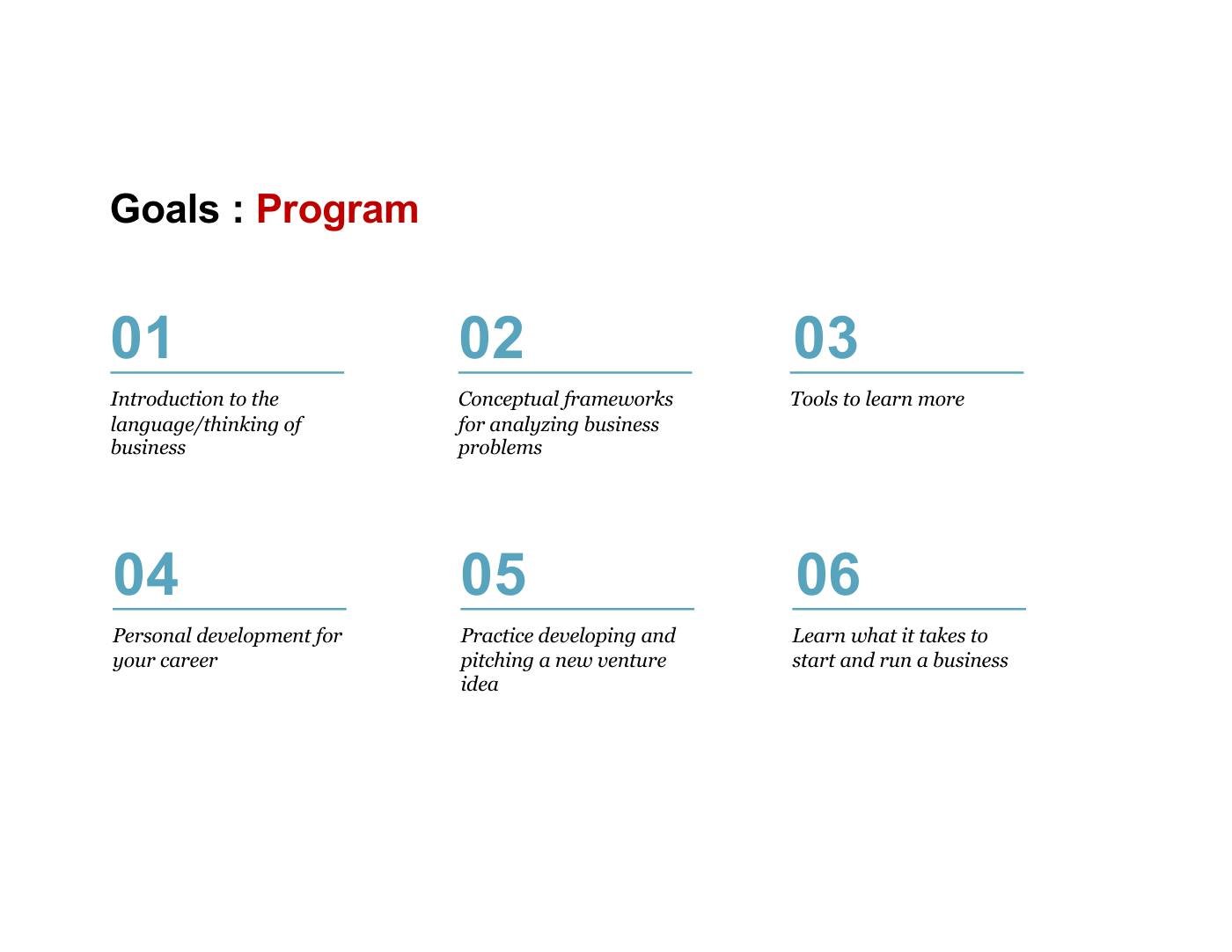
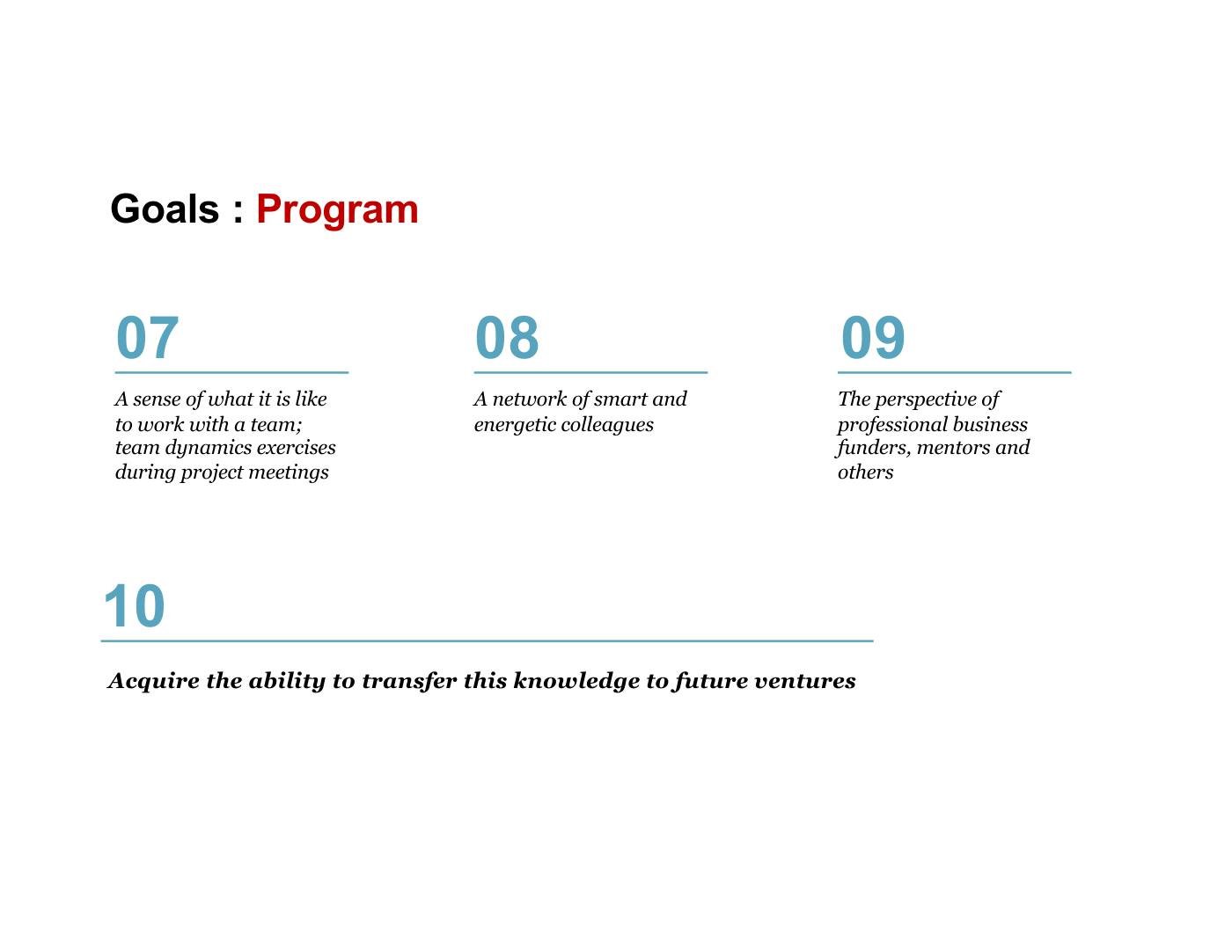
  • Separate a promising idea from a viable opportunity
  • Identify the venture stage and its biggest unresolved uncertainty
  • Distinguish evidence about outcomes from personal preferences
90-minute workshopOpening 5 minConcepts and original examples 35 minPractice 25 minDebrief 15 minReview 10 min
2
01 / Module caseEntrepreneurial judgment & the venture life cycle

Humane Ai Pin: a funded idea that never became an opportunity (2024-2025)

Humane, founded by former Apple designers Imran Chaudhri and Bethany Bongiorno, raised $230 million before shipping its first product. The Ai Pin went on sale in April 2024 at $699 plus a $24 monthly subscription, as a screenless, voice-driven wearable meant to reduce phone use. Reviews were harsh: slow and unreliable answers, short battery life, a projector that was hard to control, and a device that grew warm. In May 2024, about a month after launch, Bloomberg reported the company was seeking a buyer at $750 million to $1 billion. By August 2024 reports put sales near 10,000 units against a goal of 100,000, with daily returns exceeding sales and roughly 7,000 devices still in customers' hands; the company had spent more than $200 million over about six years. In February 2025 HP agreed to buy most of Humane's assets, including its software platform and about 300 patents and applications, for $116 million. The Pin stopped working on February 28, 2025, and only recent buyers received refunds. A celebrated team, a large vision and ample capital did not substitute for evidence that a specific customer had a recurring problem the product solved better than the phone already in their pocket.

Sources: TechCrunch: Humane's $699 Ai Pin is now available (April 11, 2024) · Engadget: Wearable Ai Pin maker Humane is reportedly seeking a buyer (May 2024) · 9to5Mac: Humane Ai Pin woes worsen as recent returns exceed sales (August 7, 2024) · Android Central: Humane will disable Ai Pins after $116 million HP buyout (February 2025)

Map Humane onto the venture life cycle. Which assumption in the chain customer-problem-alternative-adoption-payment was weakest, when could it have been tested cheaply, and why might a well-funded team with investors seeking a very large outcome have postponed that test?

Module 01 case3 / 37
3
01 / TheoryEntrepreneurial judgment & the venture life cycle

An opportunity is a set of connected assumptions

A customer can want a product that still fails as a business. The customer must experience a problem, recognize the proposed benefit and have a workable way to obtain the solution. Someone must also pay enough to cover the activities required to deliver it. Each connection needs evidence.

The venture life cycle changes which uncertainty deserves attention. A prototype can address feasibility. An actual purchase tests more than a statement of interest. Repeated purchases begin to test whether the company can retain customers and deliver consistently. Funding a later stage before resolving an earlier uncertainty increases the cost of being wrong.

4
01 / TheoryEntrepreneurial judgment & the venture life cycle

Evidence and preferences play different roles

A probability describes what a person expects to happen. A preference describes how much that outcome matters to them. Two decision makers can agree on the probability of success and choose different actions because they face different consequences.

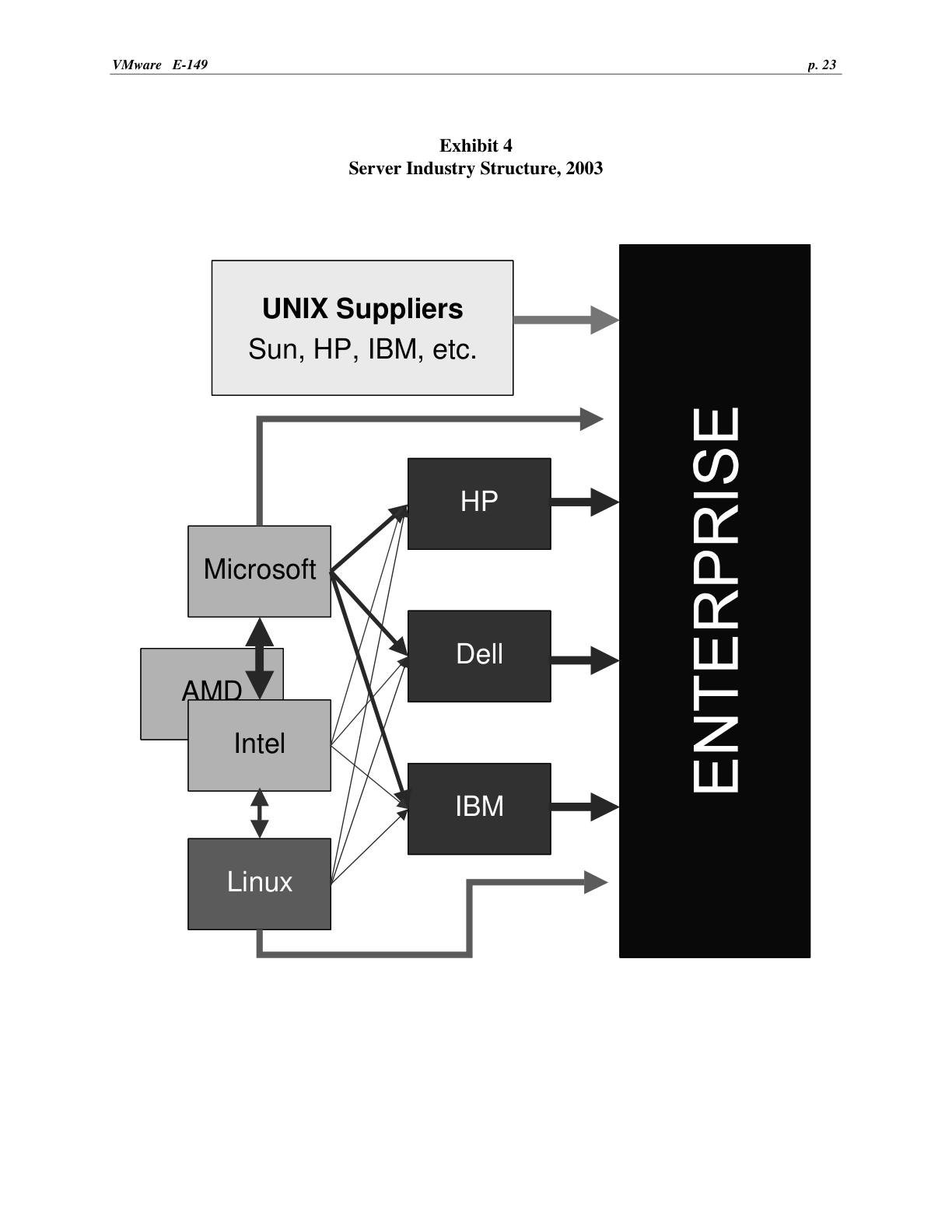
A founder may have personal savings and several years of work concentrated in one company. A fund can spread exposure across investments and may need a very large outcome to affect its overall return. The VMware discussion uses this difference to examine market choice and investor incentives. An apparent disagreement about strategy may conceal a disagreement about objectives.

5
01 / TheoryEntrepreneurial judgment & the venture life cycle

The venture life cycle

Use this sequence to locate the uncertainty that deserves attention before the next commitment. A venture can move backward when new evidence challenges an earlier assumption.

01

Opportunity

Identify a person, a recurring difficulty and the alternative used today. Example: clinic staff repeatedly re-enter appointment details. The proposed app is a possible response, not yet a demonstrated business.

02

Evaluation

Check whether the need, adoption process and economics fit together. Observe the work, test a prototype and ask who can authorize payment. Interest alone leaves several of these questions unresolved.

03

Resources

Assemble the people, cash, rights and partners required for the next test or delivery milestone. Hire against a specific capability gap rather than treating headcount as evidence of progress.

04

Execution & growth

Deliver the promised result repeatedly and examine retention, capacity and cash. A successful first customer does not establish that acquisition and service can be repeated economically.

The next slide distinguishes an attractive idea from an opportunity. That distinction determines what the evaluation stage must actually test.

6
01 / TheoryEntrepreneurial judgment & the venture life cycle

An idea and an opportunity

Use this distinction when deciding what to investigate. A proposed product names a possible response; an opportunity connects a need to adoption and viable delivery.

Idea

A possible solution: “an application that automates reports.”

Opportunity

A customer has a recurring problem, an alternative is inadequate, and an organization can deliver value economically.

Worked application

Illustrative application: “automate reports” leaves the buyer, task and economics open. Observing clinic managers spend an hour reconciling appointment changes identifies a specific situation. Testing whether they will adopt and pay for a workable alternative investigates the opportunity.

Keep the solution provisional while checking the need, purchase process and delivery cost.

7
01 / TheoryEntrepreneurial judgment & the venture life cycle

A value proposition has a recipient

  • Customer: identify the person or organization with the problem.
  • Change: explain what becomes easier, cheaper, safer or more effective.
  • Reason to choose: compare the offer with what the customer does today.
8
01 / TheoryEntrepreneurial judgment & the venture life cycle

Evidence, assumptions and preferences

CategoryExampleHow to handle it
EvidenceThree buyers abandoned a trial after setup.Check what happened and why.
AssumptionA shorter setup will increase adoption.Test the causal claim.
PreferenceThe founder prefers an independent company.Discuss it; do not disguise it as evidence.
9
01 / Source pageEntrepreneurial judgment & the venture life cycle

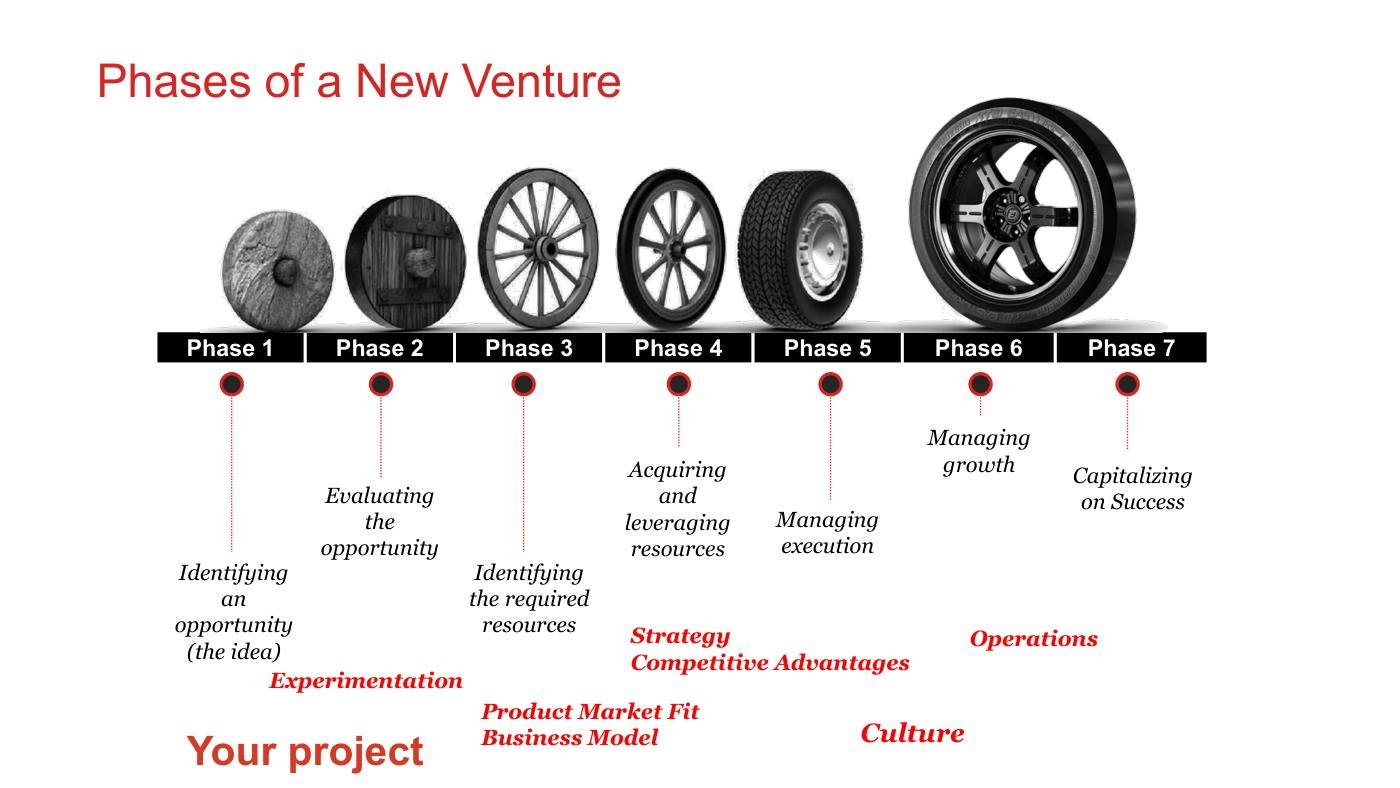
Seven phases of a new venture and the management problem each creates

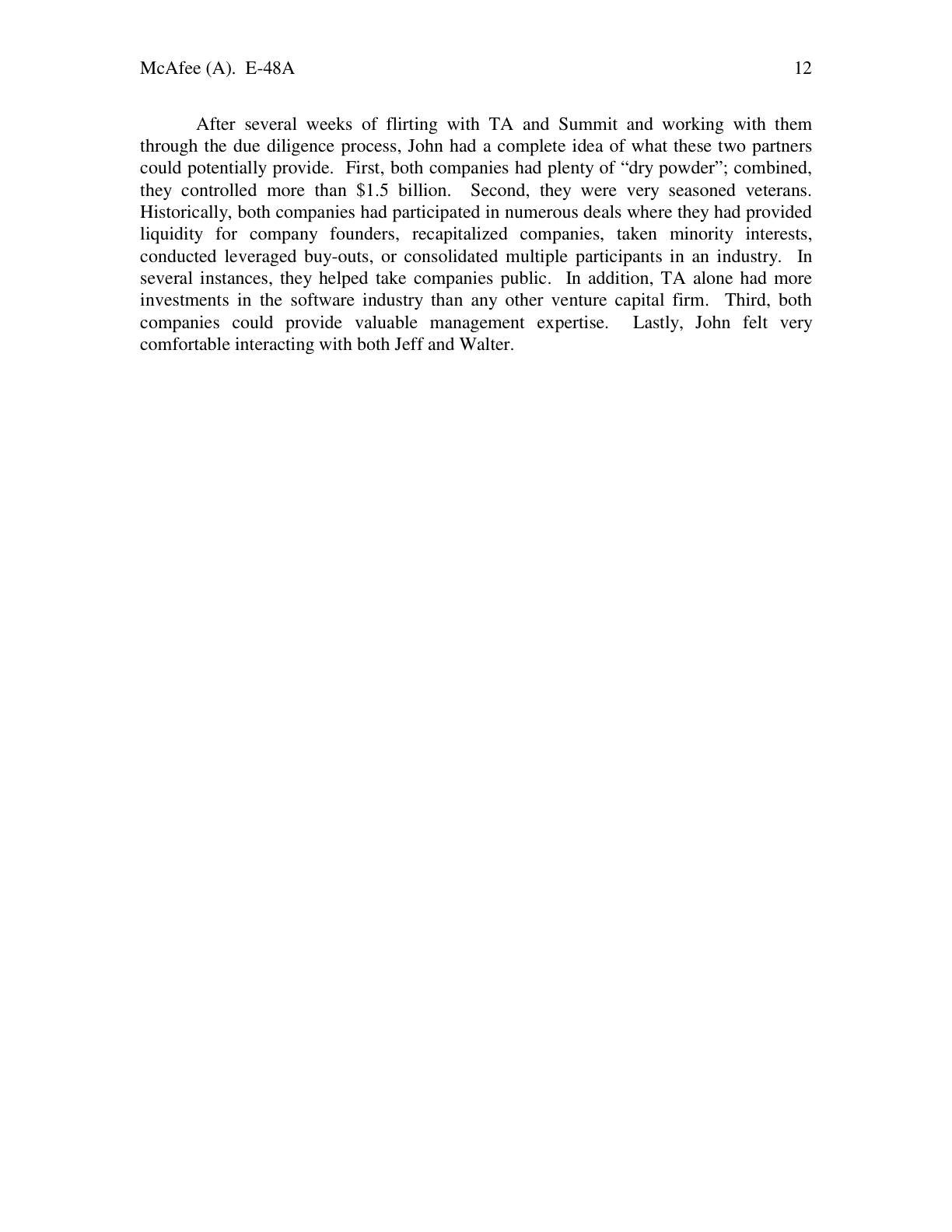
Seven phases of a new venture and the management problem each creates; Feinberg - Entrepreneurship Slides PDF page 2
Original page · S03 · PDF page 210 / 37
10
01 / Source pageEntrepreneurial judgment & the venture life cycle

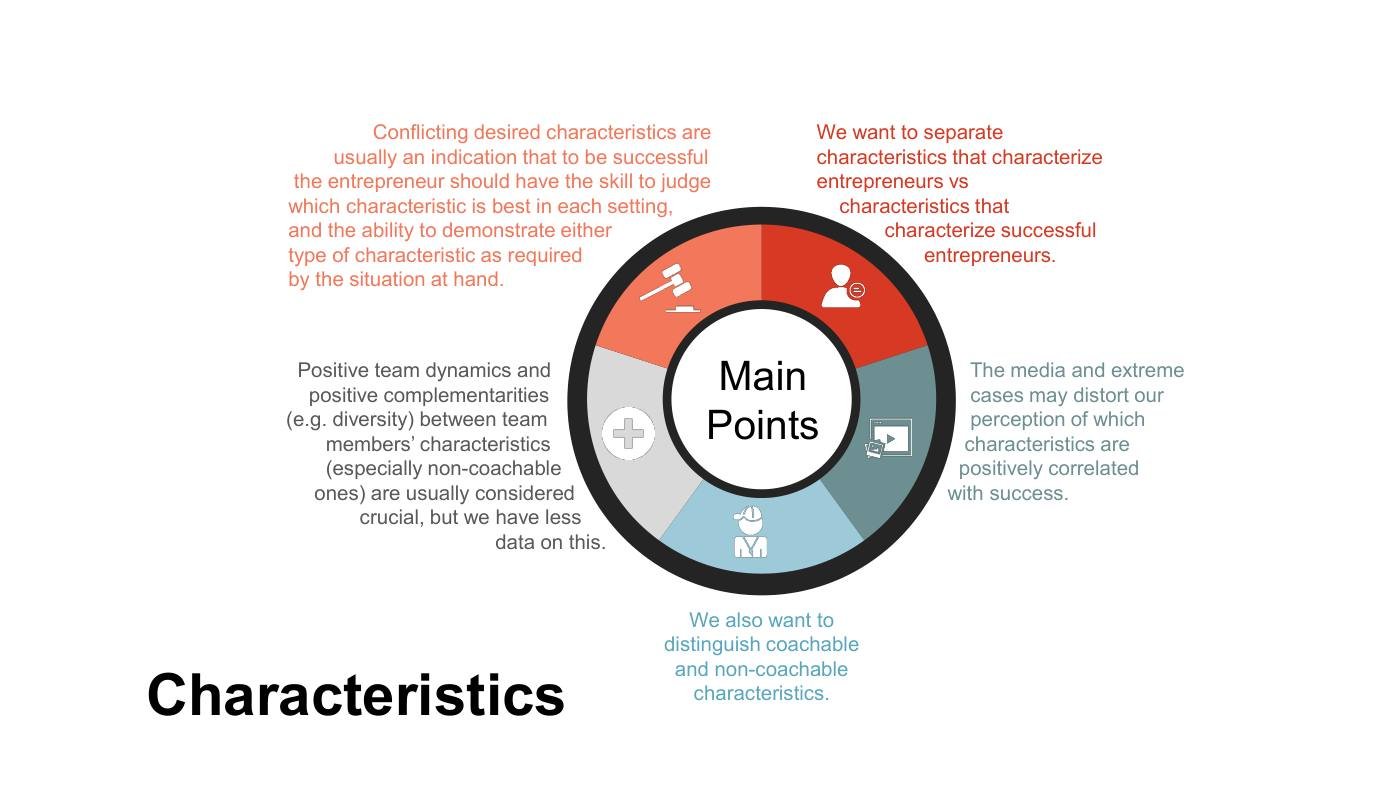
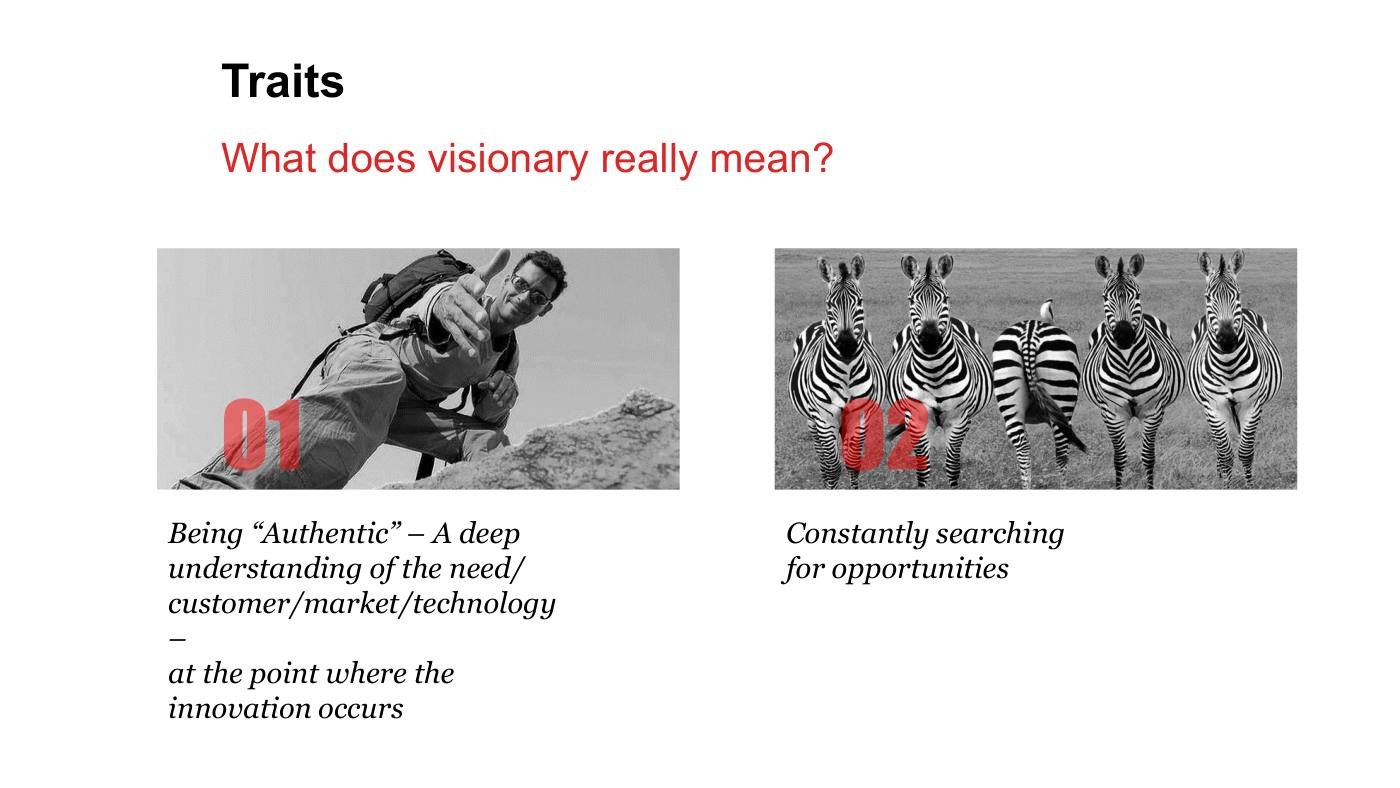
Traits of entrepreneurs versus traits of successful entrepreneurs

Traits of entrepreneurs versus traits of successful entrepreneurs; Feinberg - Entrepreneurship Slides PDF page 4
Original page · S03 · PDF page 411 / 37
11
01 / Source pageEntrepreneurial judgment & the venture life cycle

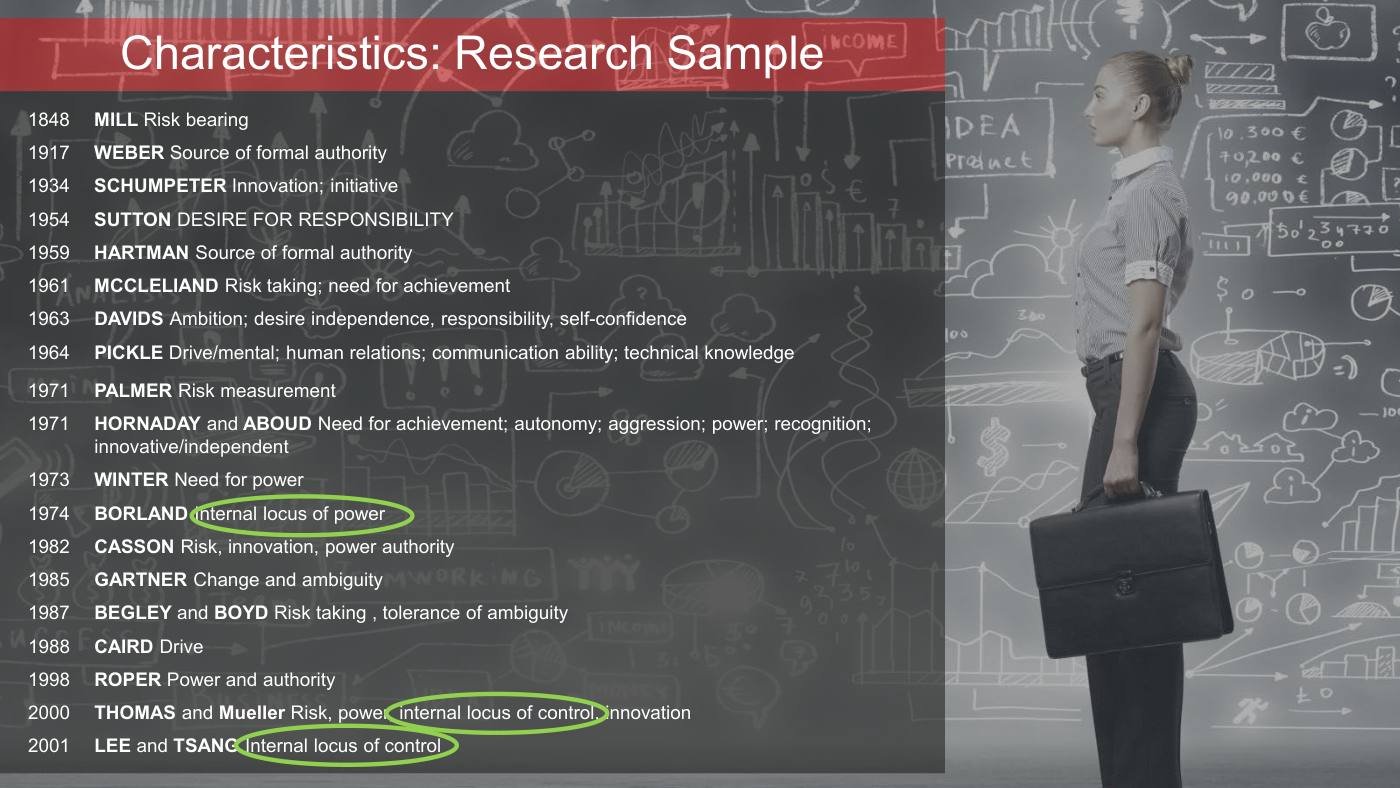
A century of research on entrepreneurial characteristics

A century of research on entrepreneurial characteristics; Feinberg - Entrepreneurship Slides PDF page 5
Original page · S03 · PDF page 512 / 37
12
01 / Source pageEntrepreneurial judgment & the venture life cycle

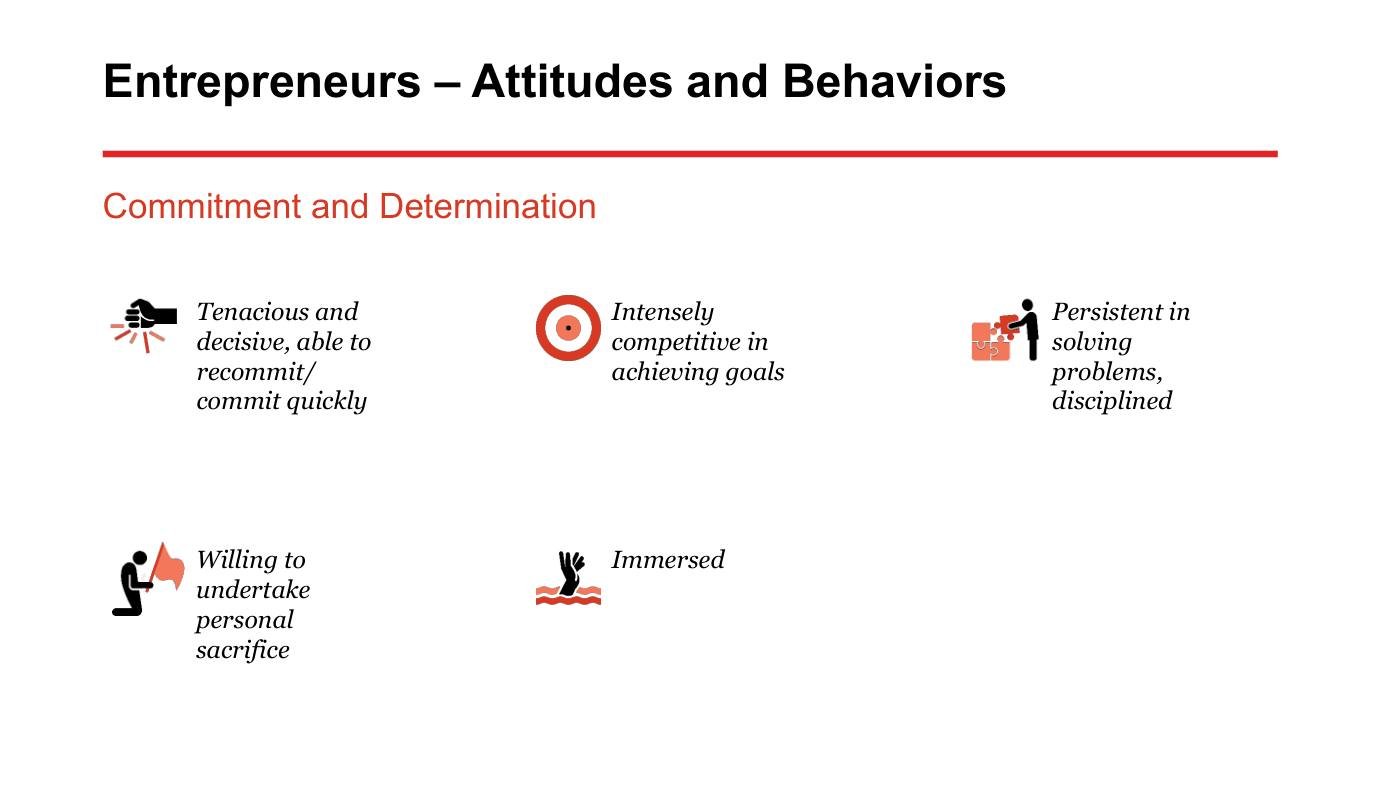
Commitment and determination: what the behavior looks like

Commitment and determination: what the behavior looks like; Feinberg - Entrepreneurship Slides PDF page 6
Original page · S03 · PDF page 613 / 37
13
01 / Source pageEntrepreneurial judgment & the venture life cycle

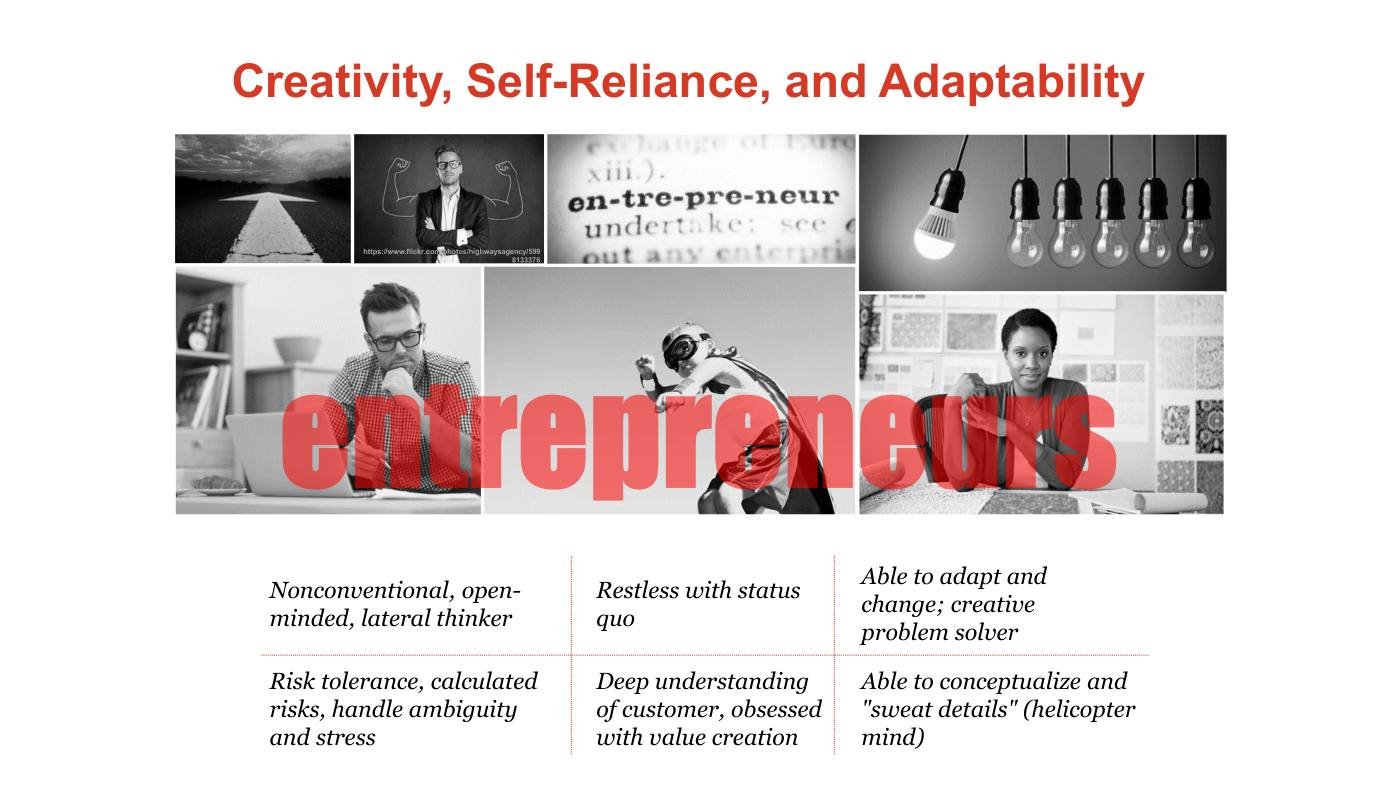
Creativity, self-reliance and adaptability

Creativity, self-reliance and adaptability; Feinberg - Entrepreneurship Slides PDF page 8
Original page · S03 · PDF page 814 / 37
14
01 / Deep diveEntrepreneurial judgment & the venture life cycle

Seven phases, four stages: what each must establish

The source's seven phases and this course's four stages describe the same progression at different resolution.

Use the stage to name the uncertainty that the next commitment depends on. Relay is at Opportunity moving into Evaluation: the problem is credible from Maya's experience, but patient acceptance and payment are untested.

Course stageSource phasesDominant problemRelay evidence needed
Opportunity1 Identifying an opportunityExperimentationObserved lost slots and front-desk calling time at real clinics
Evaluation2 Evaluating the opportunityProduct-market fit, business modelPilot fill rate; owners paying $399 a month
Resources3 Identifying resources; 4 Acquiring and leveraging themStrategy, competitive advantageEHR API access, HIPAA program, pre-seed capital
Execution and growth5 Managing execution; 6 Managing growth; 7 Capitalizing on successOperations, cultureRetention near or below 3% monthly churn; repeatable onboarding
15
01 / TheoryEntrepreneurial judgment & the venture life cycle

Learning milestones and operating milestones

An operating milestone records an accomplishment, such as a completed prototype or a new sales hire. A learning milestone resolves a question important enough to change the next decision. The two can coincide, but activity by itself does not reduce uncertainty.

A useful test states an assumption, a method of observing it and an action for different outcomes. The response should be specified before the result arrives. This reduces the temptation to reinterpret every outcome as encouraging. A test also needs a limit on time and resources so that learning does not become an indefinite reason to postpone a decision.

16
01 / TheoryEntrepreneurial judgment & the venture life cycle

The relationship between control and useful advice

A director, an investor and an advisor can all contribute expertise, but they occupy different relationships with the company. Advice may influence a decision without carrying formal authority. Equity may provide economic rights without giving its holder sole control over operating decisions.

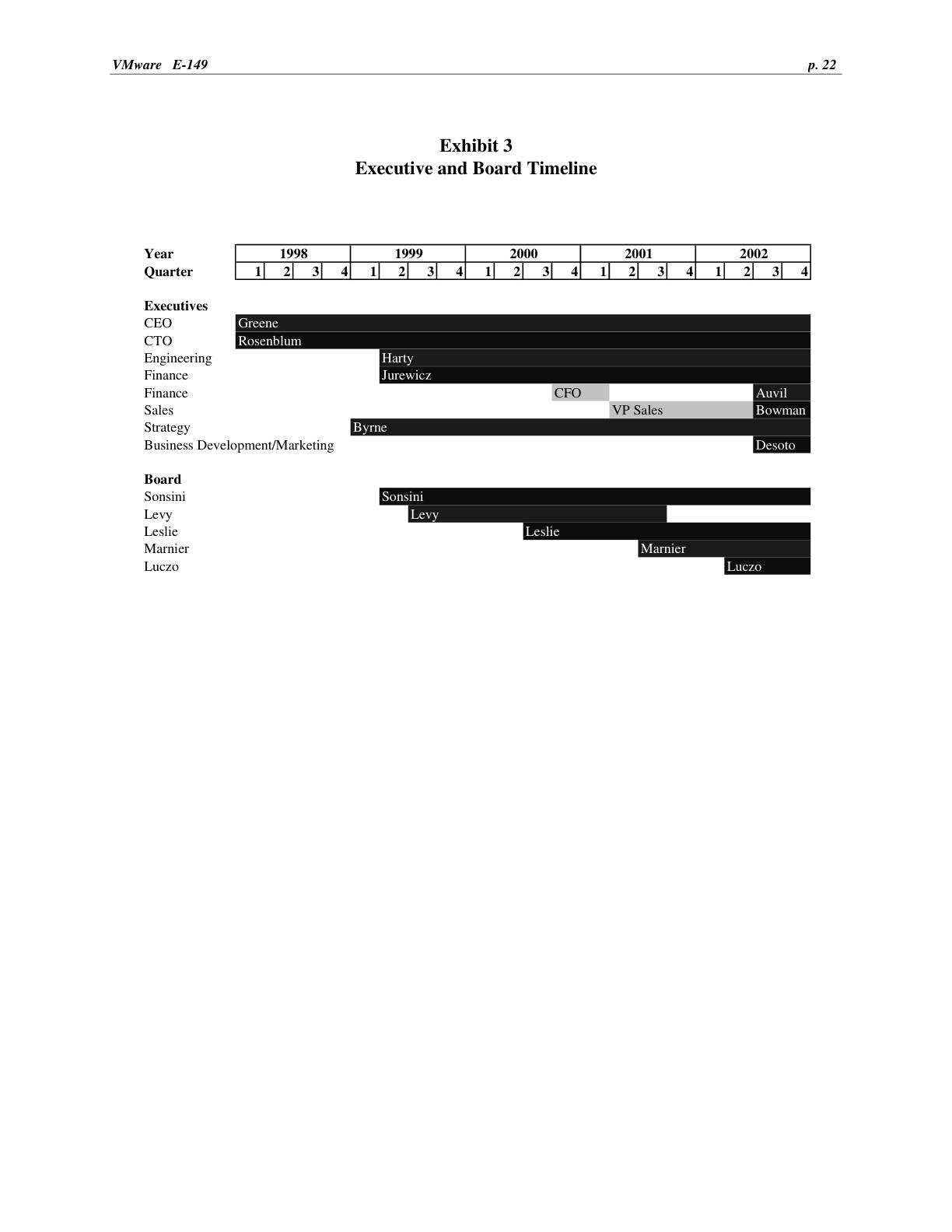
The entrepreneurship material asks who is at the table because incentives and authority shape the advice a founder receives. A founder should understand the person’s role, the decisions they can approve and the outcomes they prefer. This also helps identify a missing capability: operational experience, customer access and governance oversight are different contributions.

17
01 / TheoryEntrepreneurial judgment & the venture life cycle

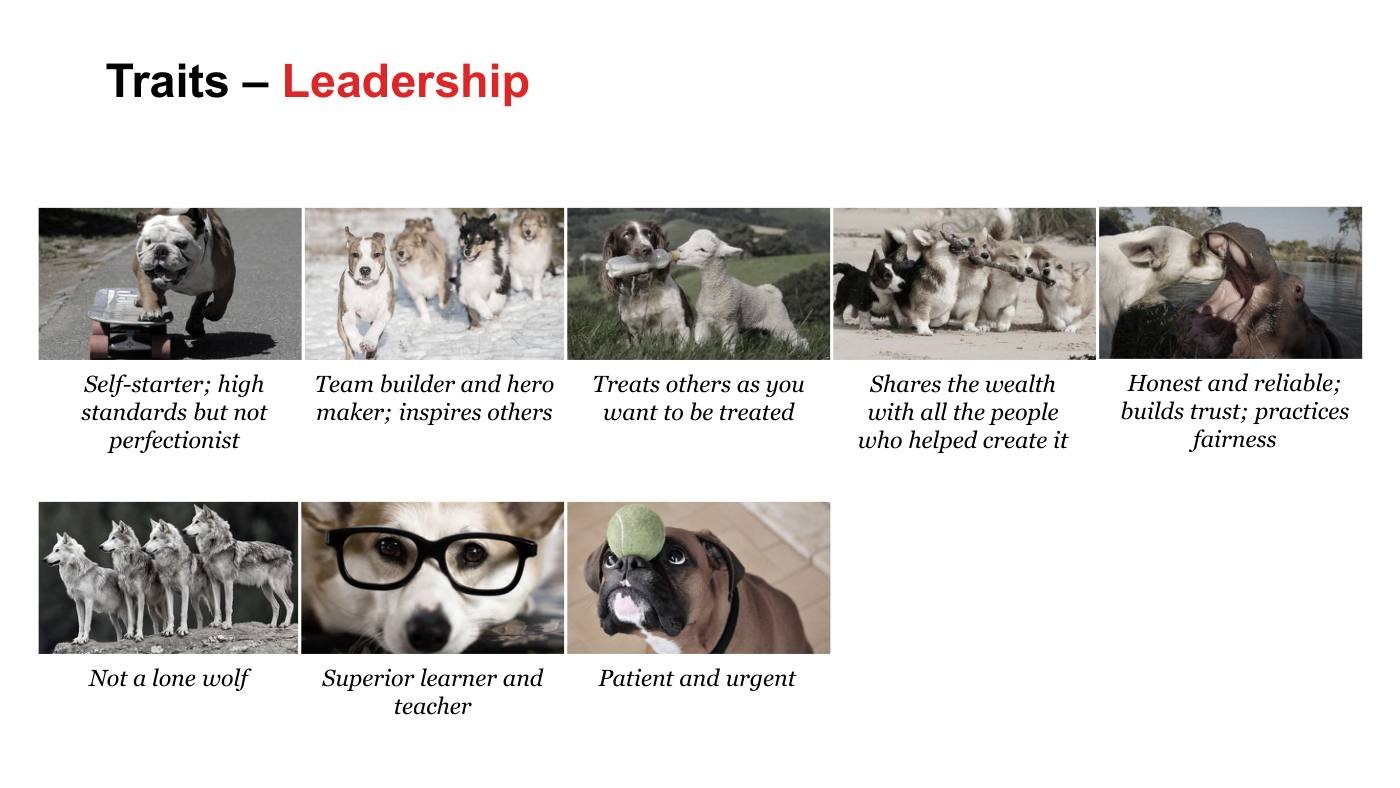
Founder traits depend on the situation

The source separates traits associated with entrepreneurs from traits associated with successful outcomes.

  • Persistence helps when a problem is tractable; it can hurt when evidence rejects the premise.
  • Confidence can mobilize a team; it should not substitute for customer evidence.
  • Complementary people can supply capabilities one founder lacks.
18
01 / TheoryEntrepreneurial judgment & the venture life cycle

A decision under uncertainty

A useful decision process connects a choice to a belief that could be wrong. The goal is to identify which uncertainty could change the action.

01

Name the choice

Specify feasible alternatives and the immediate commitment. Example: spend $5,000 recruiting pilot customers now, or spend one week investigating the onboarding problem first.

02

State the belief

Write the causal assumption behind each alternative. Here the team believes poor onboarding, rather than weak demand, explains why interested customers do not start using the product.

03

Find a discriminator

Choose an observation that separates explanations. Watch target customers attempt setup unaided and ask why they stop. A general satisfaction survey would reveal less about this particular disagreement.

04

Commit or learn

Decide what to do for different findings, name the owner and set a review date. If customers finish setup but still decline the offer, revisit the demand assumption.

A test becomes useful when its possible results lead to different actions. More information without a decision consequence may not justify its cost.

19
01 / TheoryEntrepreneurial judgment & the venture life cycle

Roles around a venture

The same person can offer useful expertise and hold formal rights, but those contributions must be distinguished when interpreting advice.

Board

A formal governance role with decision and oversight responsibilities.

Advisor or mentor

Expertise and support within an agreed scope; a useful opinion does not automatically carry formal authority.

Worked application

Illustrative application: an adviser recommends a cautious pilot because installation is uncertain. A director may have a formal vote over financing. An investor may prefer faster growth. Ask about evidence, objectives and authority separately before deciding how each view should affect the choice.

Role clarity explains both whose approval is needed and why well-informed people may recommend different actions.

20
01 / TheoryEntrepreneurial judgment & the venture life cycle

Investor and founder objectives can differ

  • A fund may need an opportunity large enough to affect its portfolio return.
  • A founder may prefer a smaller opportunity with more predictable adoption.
  • Agreement about probabilities does not guarantee agreement about the choice.
21
01 / Source pageEntrepreneurial judgment & the venture life cycle

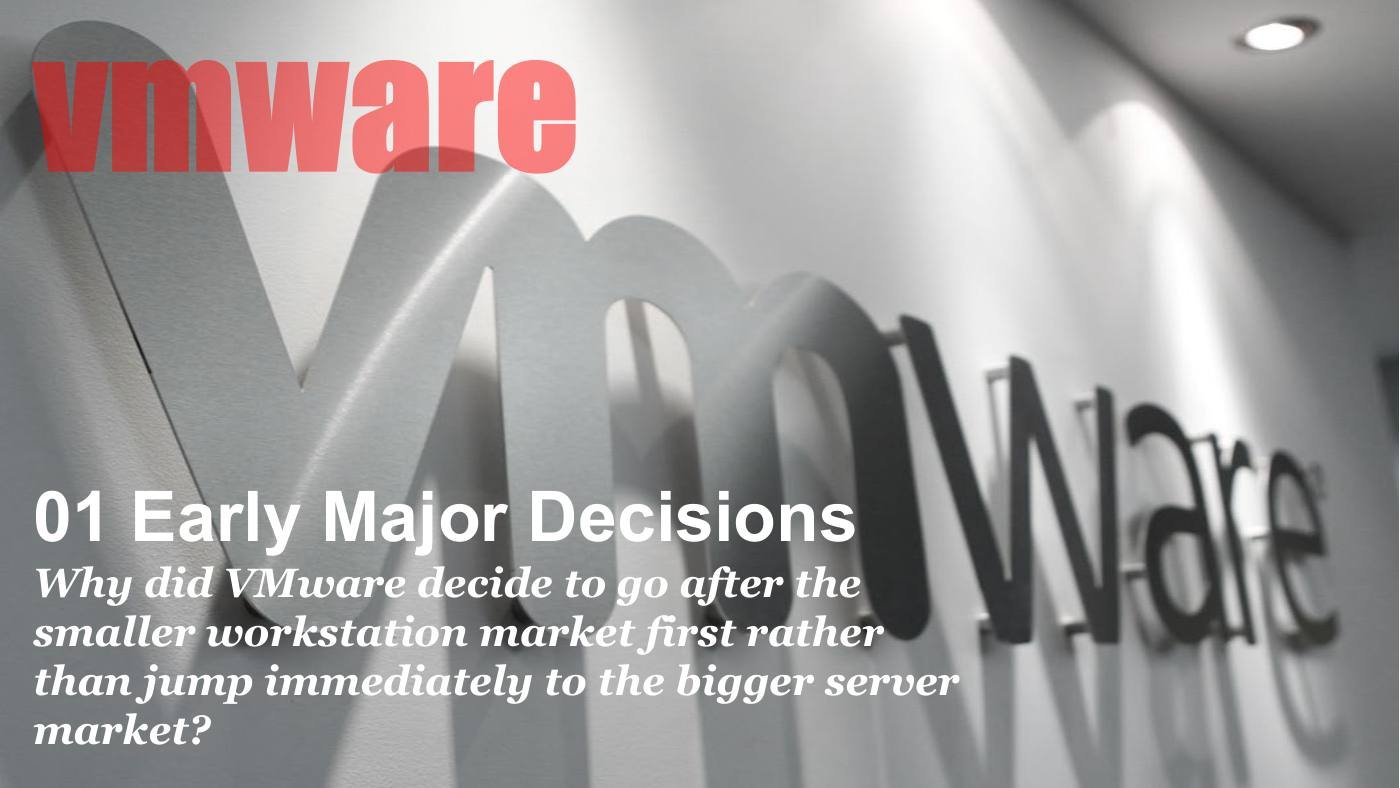
VMware's first major decision: workstation before server

VMware's first major decision: workstation before server; Feinberg - Entrepreneurship Slides PDF page 15
Original page · S03 · PDF page 1522 / 37
22
01 / Source pageEntrepreneurial judgment & the venture life cycle

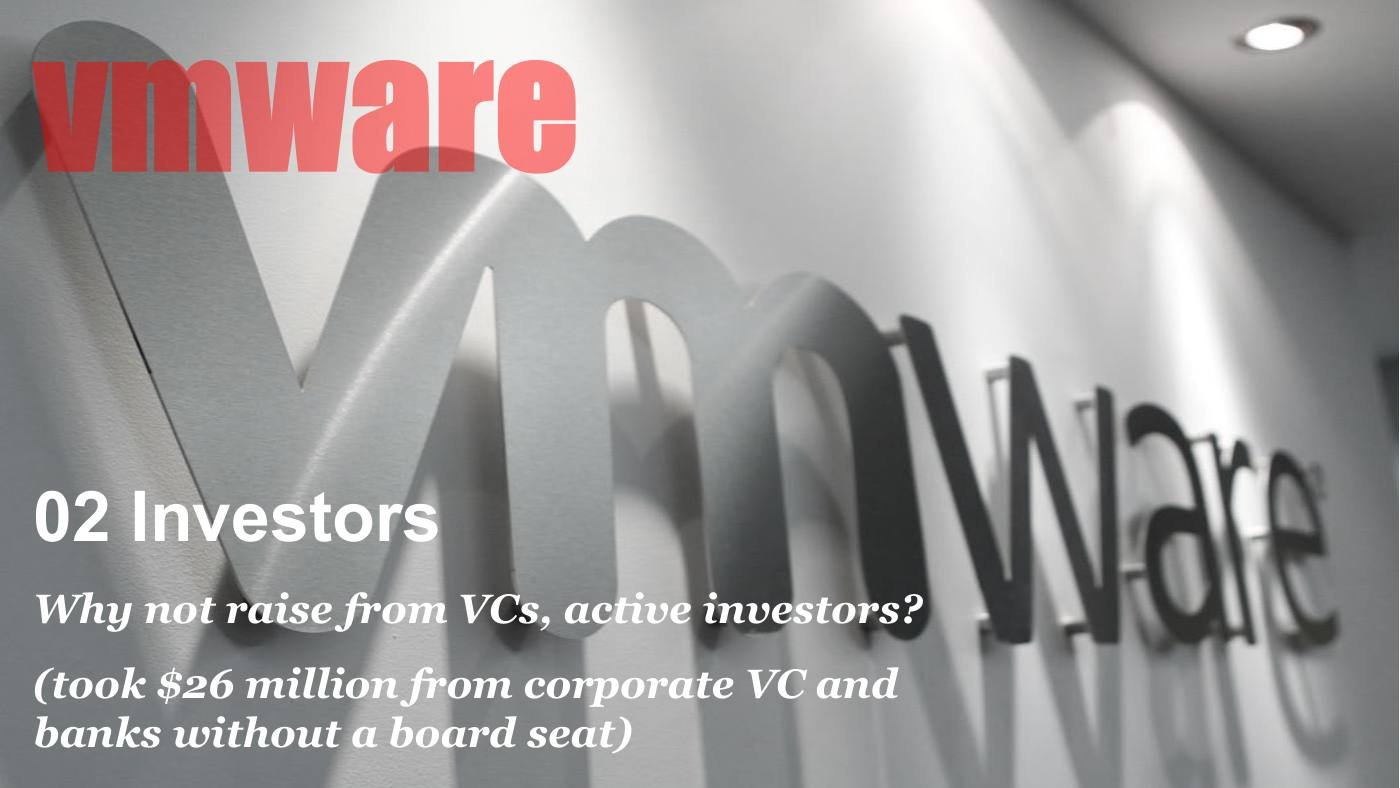
VMware's financing choice: capital without a board seat

VMware's financing choice: capital without a board seat; Feinberg - Entrepreneurship Slides PDF page 16
Original page · S03 · PDF page 1623 / 37
23
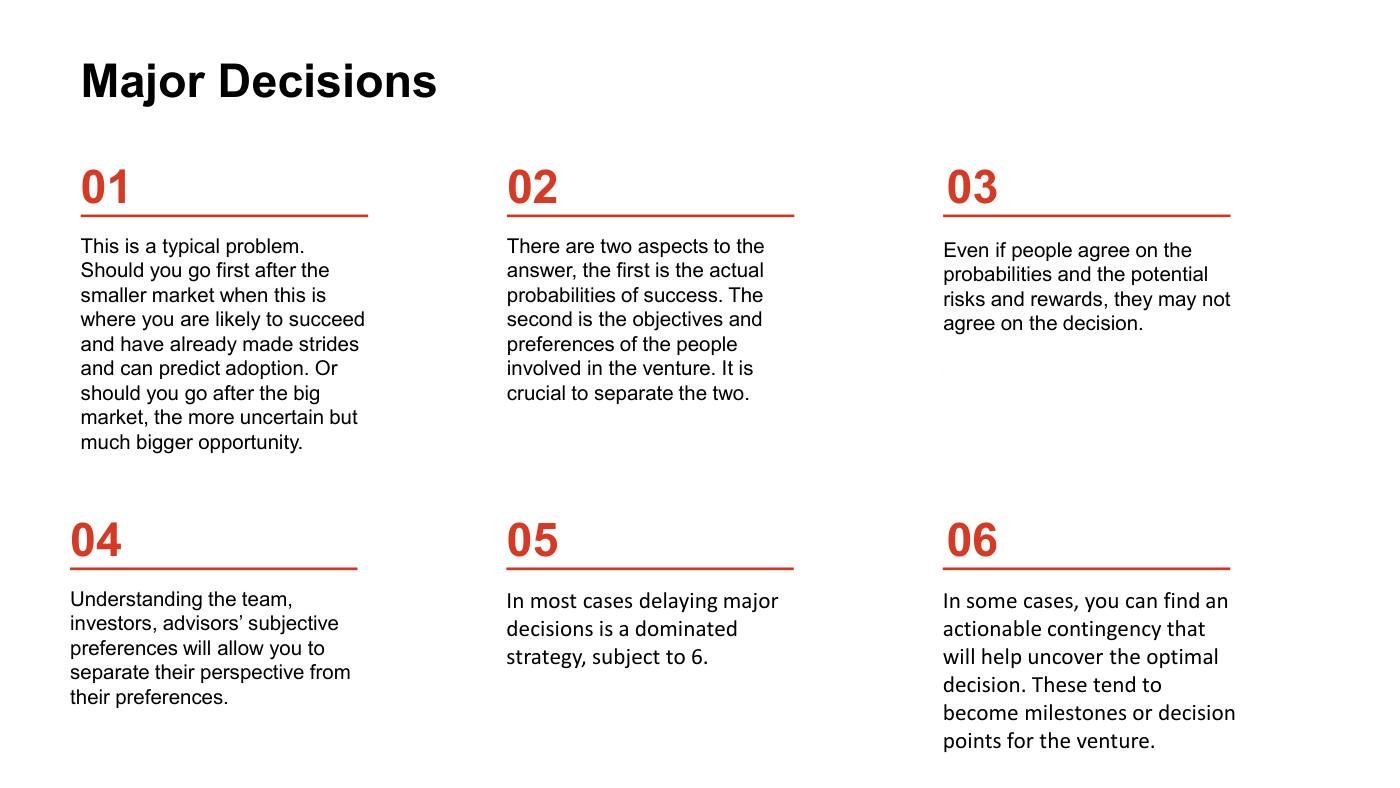
01 / Source pageEntrepreneurial judgment & the venture life cycle

Major decisions: probabilities, preferences and contingencies

Major decisions: probabilities, preferences and contingencies; Feinberg - Entrepreneurship Slides PDF page 17
Original page · S03 · PDF page 1724 / 37
24
01 / Source pageEntrepreneurial judgment & the venture life cycle

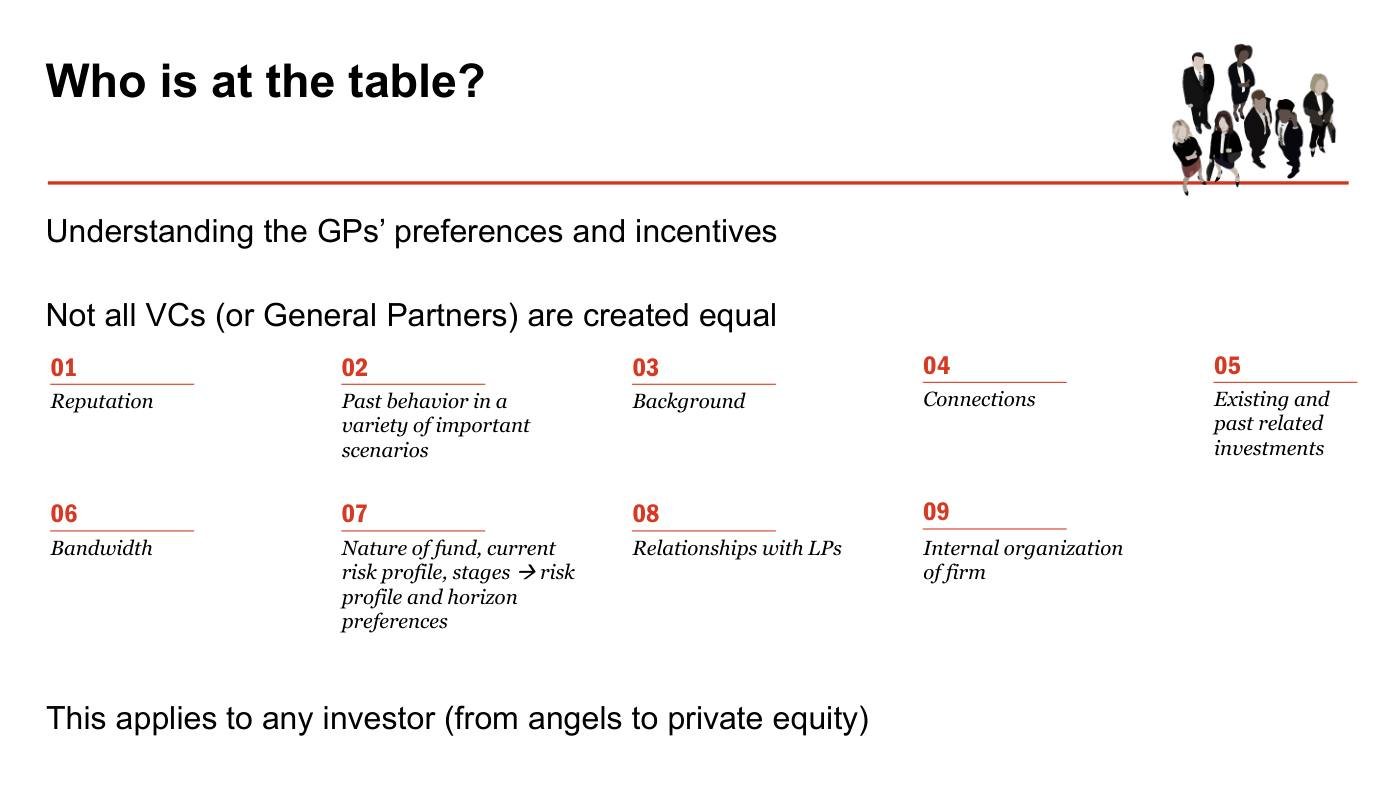
Who is at the table: what differs among investors

Who is at the table: what differs among investors; Feinberg - Entrepreneurship Slides PDF page 18
Original page · S03 · PDF page 1825 / 37
25
01 / Source pageEntrepreneurial judgment & the venture life cycle

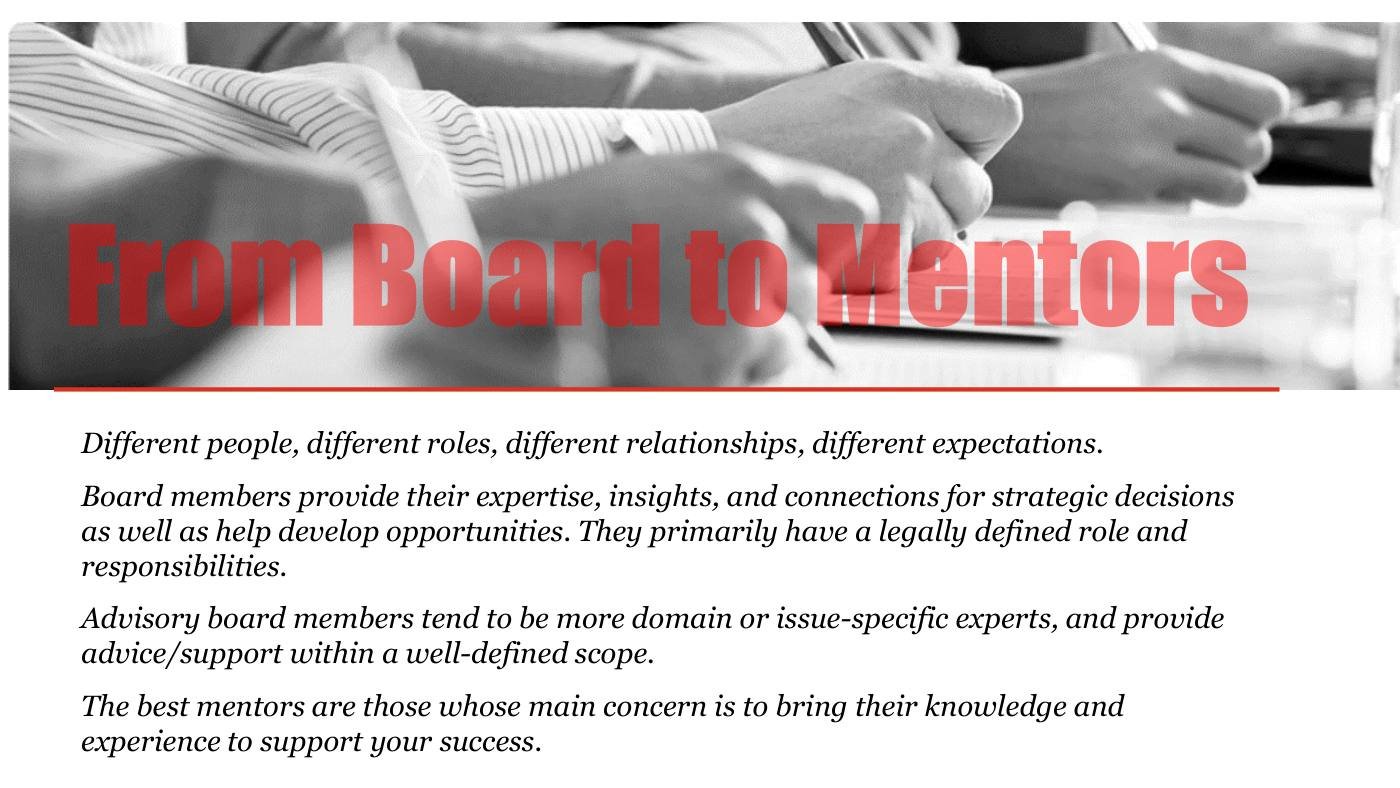
Board members, advisors and mentors play different roles

Board members, advisors and mentors play different roles; Feinberg - Entrepreneurship Slides PDF page 19
Original page · S03 · PDF page 1926 / 37
26
01 / Original readingEntrepreneurial judgment & the venture life cycle

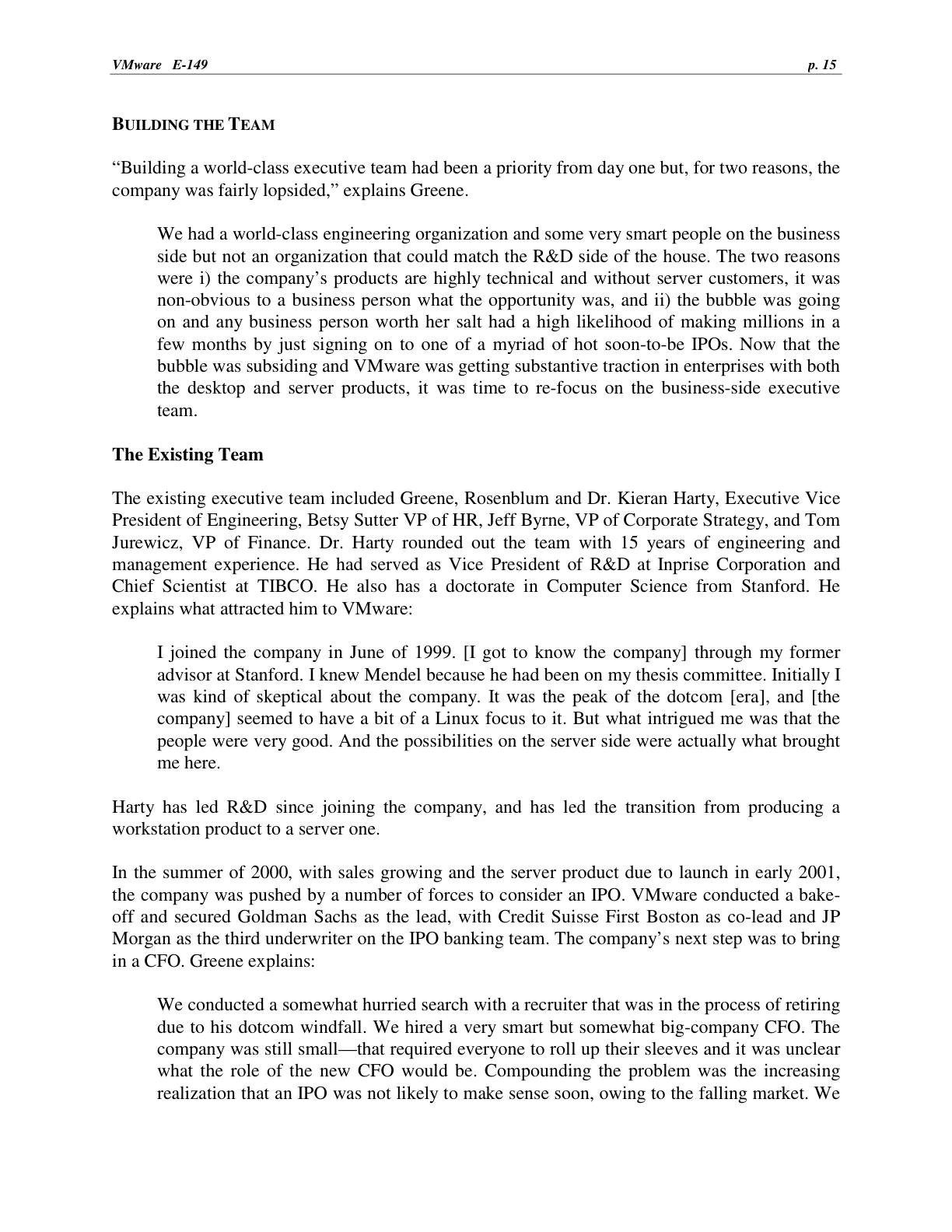
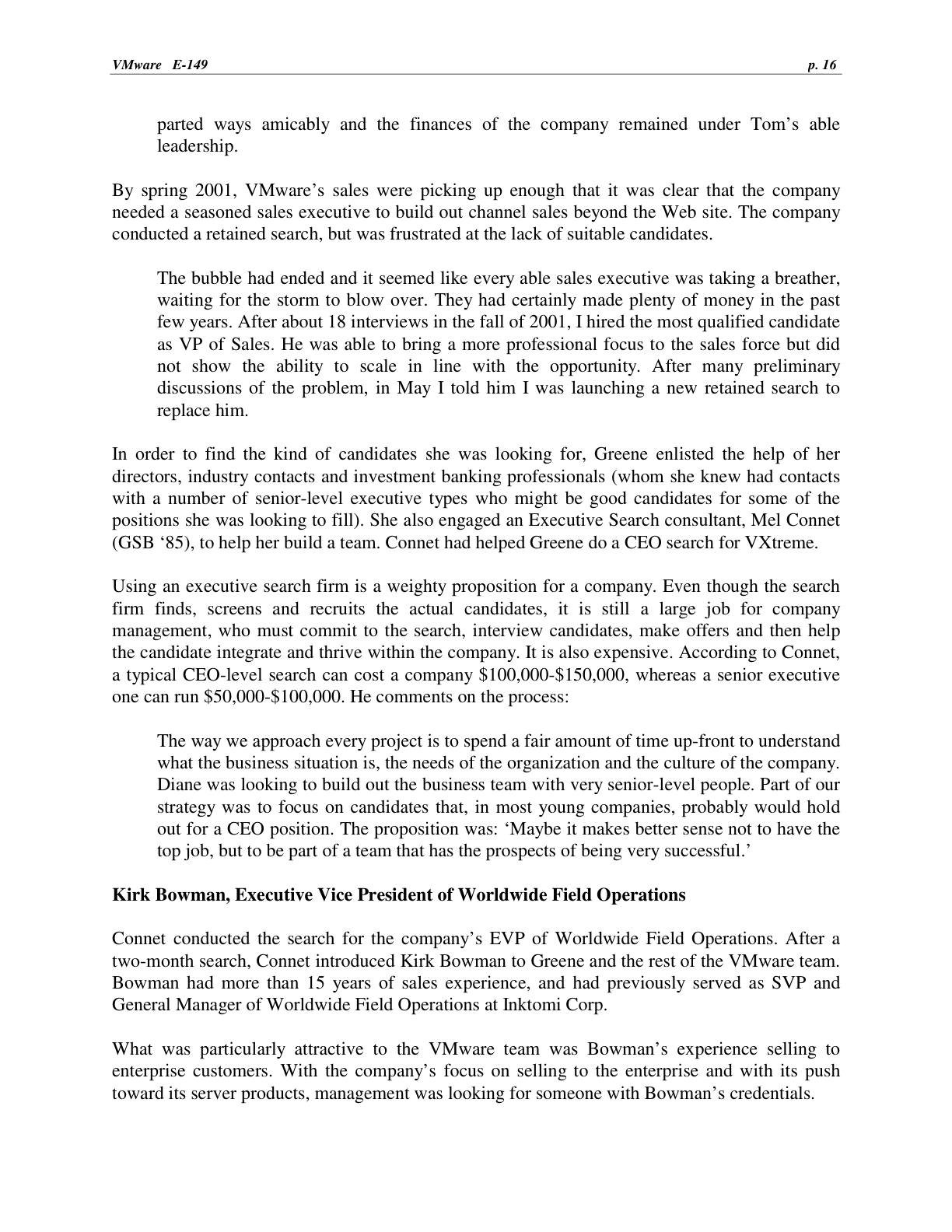
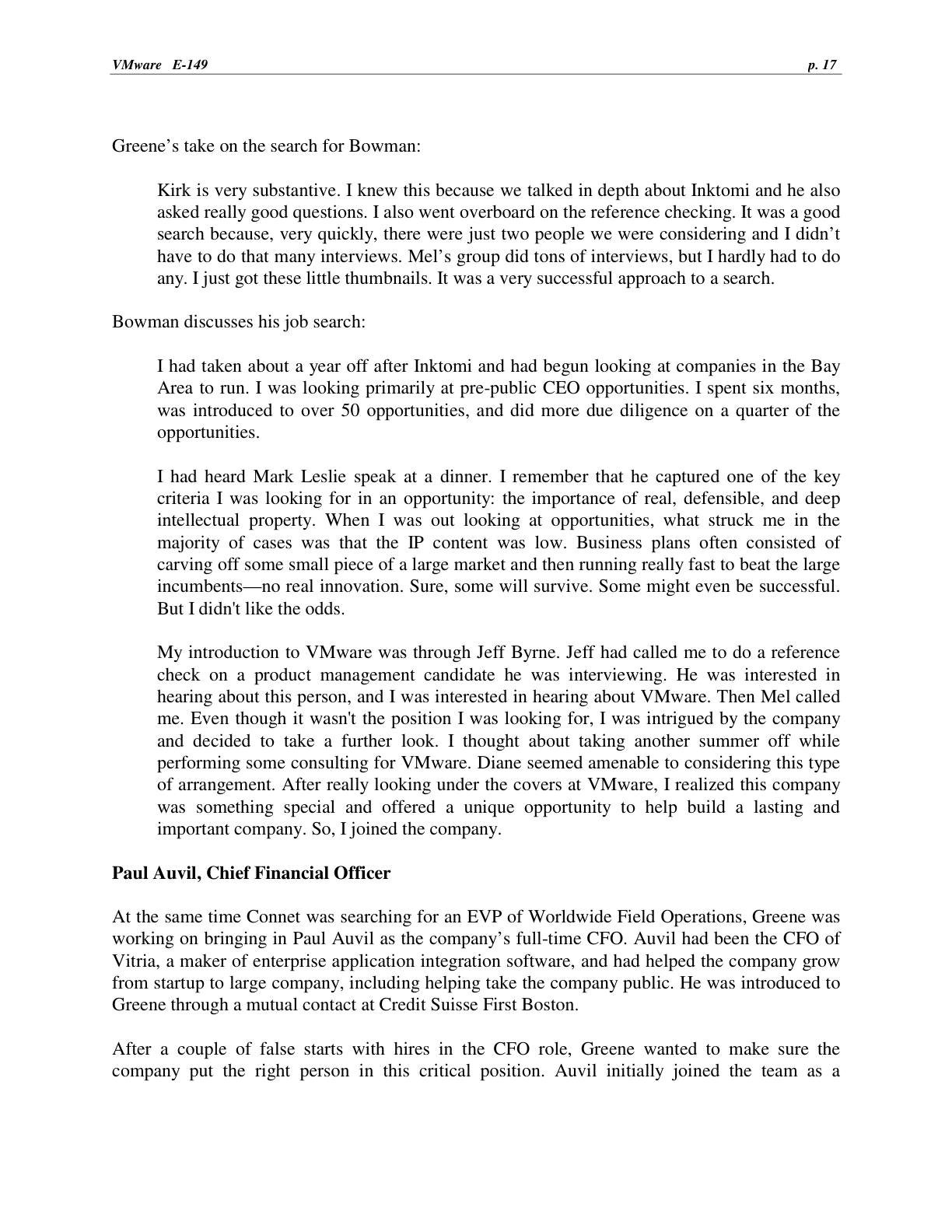
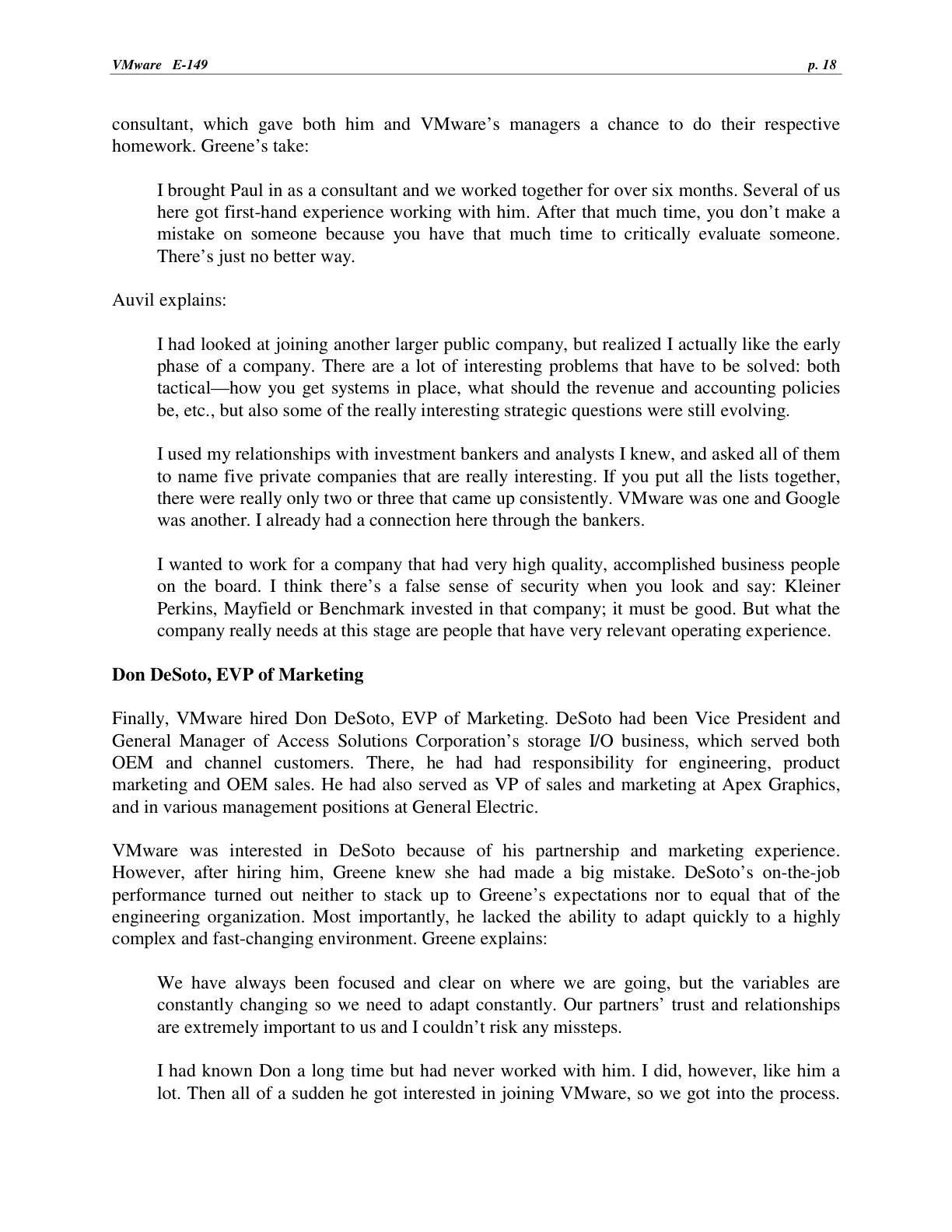
Feinberg - VMware (2)

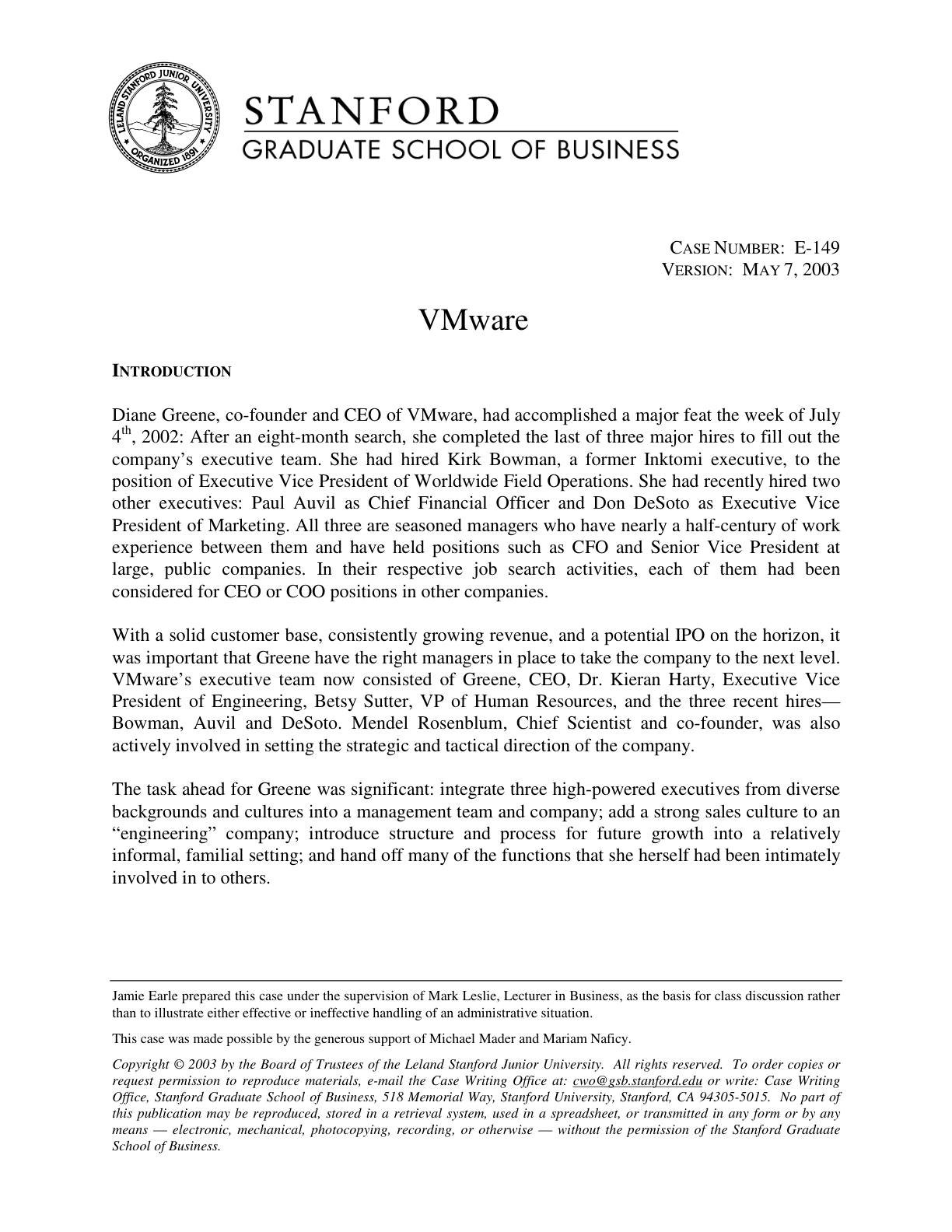
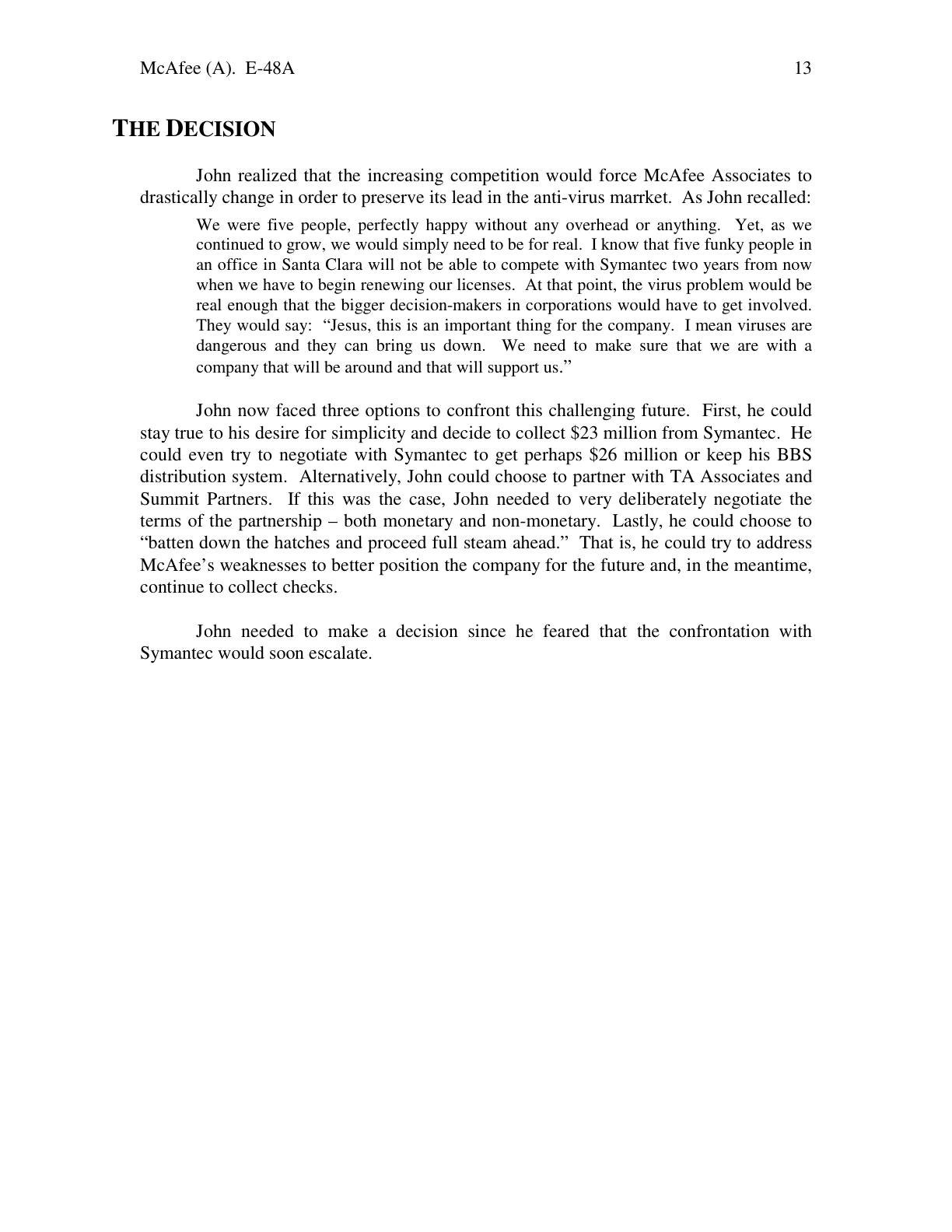
PDF page 1
Feinberg - VMware (2); PDF page 1
PDF page 2
Feinberg - VMware (2); PDF page 2

Click either page to read it at full size. In the reader, use ← → to switch between these two pages.

Original archive · S17 · PDF pages 1 & 227 / 37
27
01 / Reading debriefEntrepreneurial judgment & the venture life cycle

VMware: the management challenge / summary

Selected reading: PDF pages 1, 2

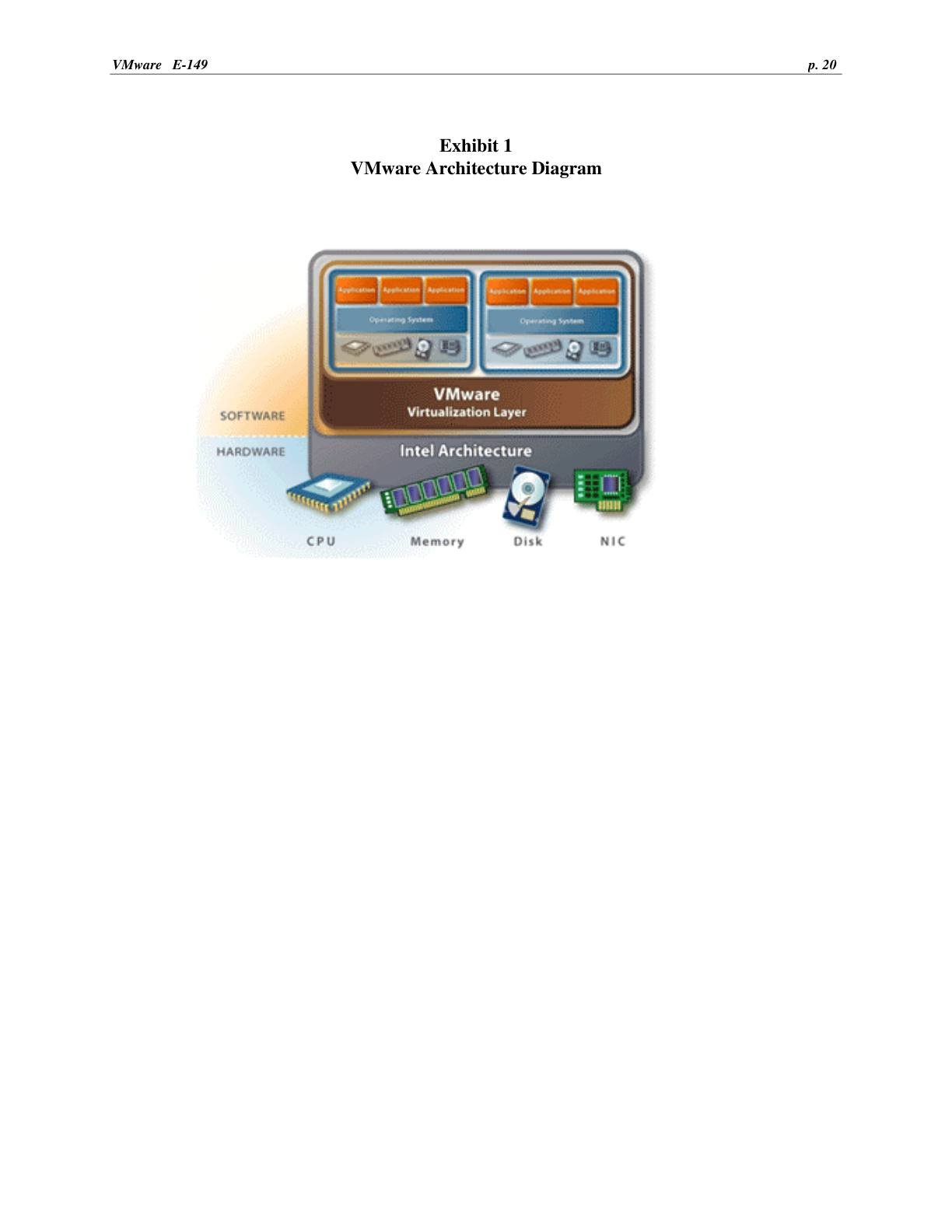
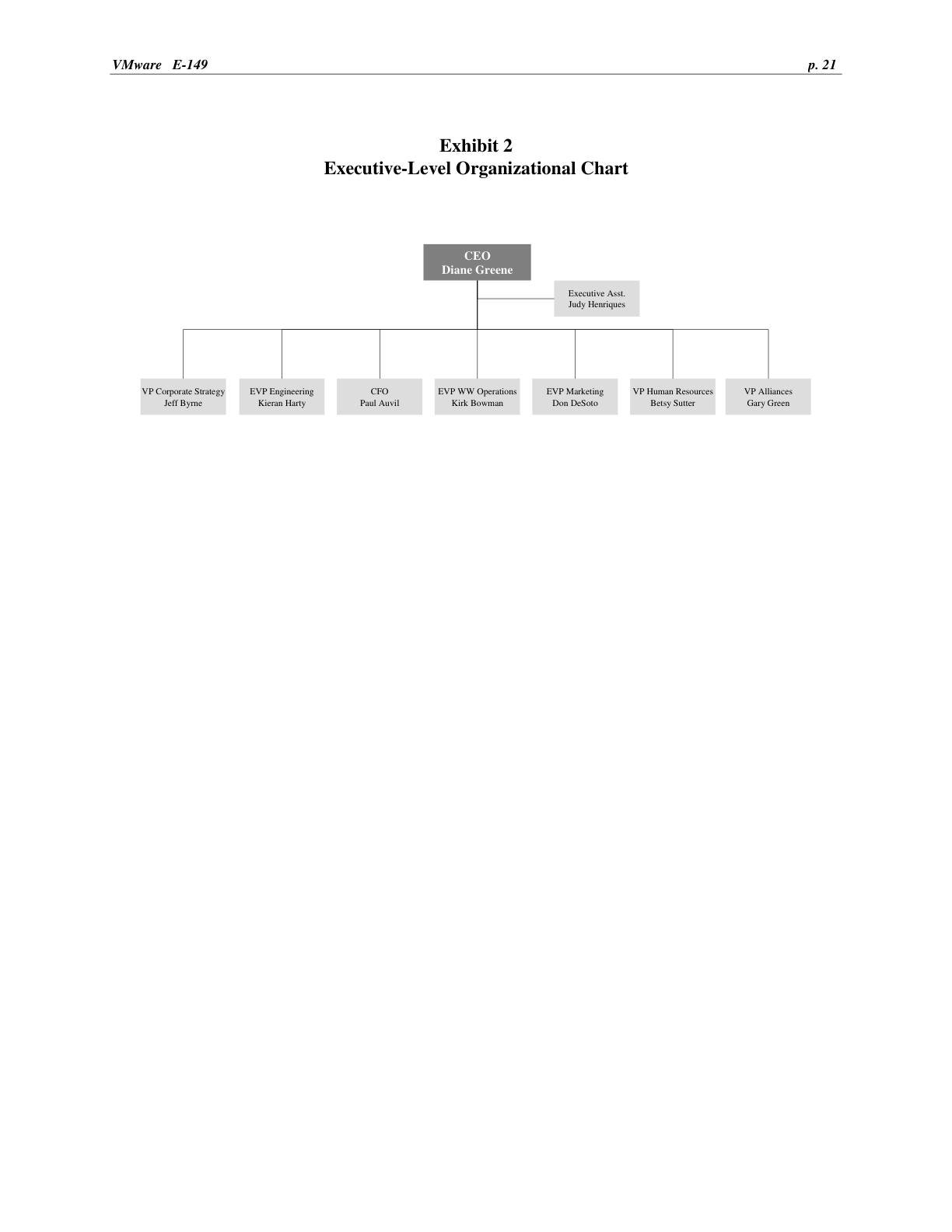
The opening case places Diane Greene at a transition: VMware has customers, growing revenue and new senior executives. Its next challenge is to create a management system capable of supporting growth.

  • A change in the work

    Greene must integrate experienced executives, strengthen sales and introduce processes into an engineering-centered company.

  • A change in the founder’s role

    Delegation transfers functions that Greene previously handled personally. New capability also creates a need for clear authority and coordination.

  • A complete business context

    The excerpt describes products, enterprise revenue components and several channels. Product expertise operates within that wider commercial system.

  • A consequential transition

    A profitable, growing business can still face organizational uncertainty. Success at one stage changes the problem management must solve next.

Reading debrief · S17 · PDF pages 1, 228 / 37
28
01 / Reading debriefEntrepreneurial judgment & the venture life cycle

VMware: the management challenge / discussion

Selected reading: PDF pages 1, 2

Critical points

Scope of the evidence

These opening pages establish the situation. They do not report whether the new management team ultimately solved the integration problem.

Capability and fit

A senior executive’s prior achievements do not establish how that person will work in this company’s stage, culture and decision process.

A connected intervention

Adding a sales leader changes more than headcount. Responsibilities, information flows and relationships with engineering need explicit attention.

Reading debrief · S17 · PDF pages 1, 229 / 37
29
01 / ApplicationEntrepreneurial judgment & the venture life cycle

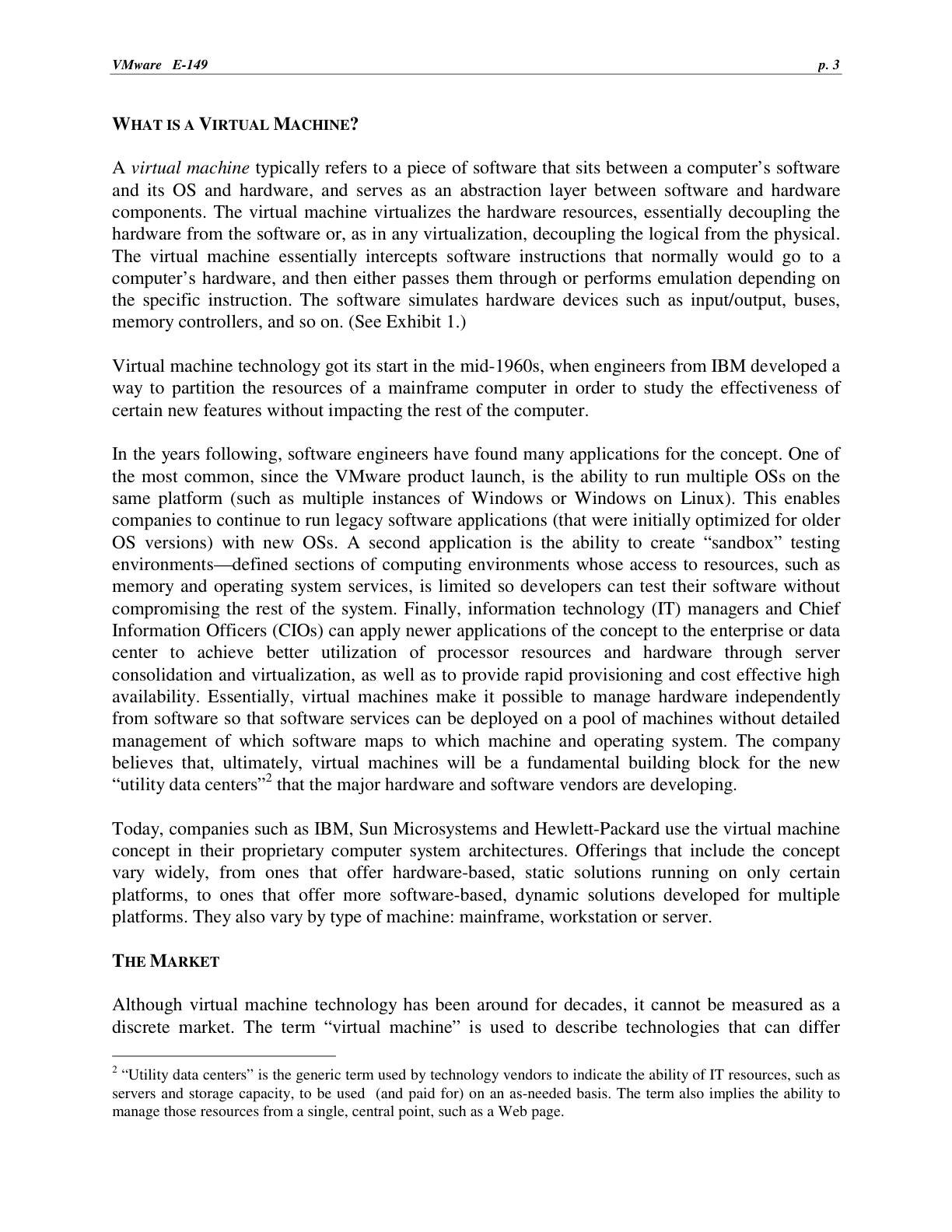
VMware: choosing an initial market

The archived entrepreneurship discussion compares entering a smaller workstation market with pursuing the larger, more uncertain server market. Existing progress and adoption evidence favor one path; scale and investor objectives may favor another.

Which evidence would help choose, and whose objectives should be made explicit?
30
01 / Current practiceEntrepreneurial judgment & the venture life cycle

Current practice: when building is cheap, demand becomes the binding uncertainty

AI has cut the cost of a working prototype

In March 2025 Y Combinator managing partner Jared Friedman said about a quarter of its Winter 2025 batch had codebases roughly 95% generated by AI, while stressing the founders were highly technical. A small team can now produce a convincing demo in days.

A demo now proves less

When feasibility is cheap to show, a working product is weaker evidence that the venture is an opportunity. The assumptions that remain expensive to resolve are adoption, willingness to pay, distribution and trust, which is where Relay's first test belongs.

Capital does not substitute for the test

Humane raised $230 million and sold about 10,000 devices against a 100,000 goal before selling its assets for $116 million. Abundant funding can postpone, not replace, the evidence that customers want the product over their current alternative.

Sources: TechCrunch: A quarter of startups in YC's current cohort have codebases that are almost entirely AI-generated (March 6, 2025) · 9to5Mac: Humane Ai Pin woes worsen as recent returns exceed sales · Android Central: Humane will disable Ai Pins after $116 million buyout

31
01 / PracticeEntrepreneurial judgment & the venture life cycle

A market-entry decision

Fictional exercise: a team can launch a narrow product in 3 months or a broad product in 9 months. It has 6 months of cash. Two narrow-market buyers have agreed to a pilot; broad-market demand is untested. The founder values independence and a potential investor values scale.

Your task

Write the decision, separate known facts from beliefs and preferences, and propose one useful test before committing.

32
01 / DebriefEntrepreneurial judgment & the venture life cycle

Worked answer and reasoning

  • A narrow launch is defensible because it creates evidence before cash runs out; it is not automatically the best long-term market.
  • Treat the two pilot commitments as evidence of interest, not proof of repeatable demand.
  • Test whether the narrow product creates a credible path to a larger market, and discuss the founder–investor objective mismatch.
33
01 / Venture stepEntrepreneurial judgment & the venture life cycle

Venture step: Relay opportunity and uncertainty brief

Relay · venture step 01

Maya Chen ran operations for a 6-location PT group in Austin and watched front-desk staff spend about an hour a day phoning patients to fill cancellations. Daniel Okafor can build SMS and scheduling software. Their illustrative clinic: 4 therapists, about 280 visits a week, 15% late cancellations and no-shows, about 42 empty slots, $110 average reimbursement. If Relay refills 40% of those slots, a clinic recovers about $96,000 a year of gross revenue for a $399 monthly fee. None of these figures has been observed in a pilot yet, and three clinics have agreed to try a manual version.

Your task

Write a one-page brief: the chain of assumptions that must hold for Relay to be an opportunity, the evidence for each, the single uncertainty that most deserves the next dollar, and a time-boxed test with a decision rule set before results arrive.

Relay · illustrative venture34 / 37
34
01 / Venture stepEntrepreneurial judgment & the venture life cycle

Venture step: worked reasoning

  • Chain of assumptions: (1) clinics lose about 15% of visits to late cancellations; (2) waitlisted patients accept a short-notice slot by text; (3) front-desk staff will act on Relay's offers instead of phoning; (4) the owner pays $399 a month; (5) Relay can connect to the clinic's EHR and handle PHI under HIPAA at acceptable cost.
  • Value against the real alternative, not zero: 42 slots x 40% = 16.8 visits x $110 = about $1,850 a week, or $96,000 a year. That is gross recovered revenue. The phone list already fills 10-15% (12.5% midpoint), so Relay's incremental value is 27.5 points of fill rate: 42 x 0.275 x $110 x 52 = about $66,000 a year. That increment, not the $96,000, is the figure to use in value claims and pricing; it is still about 14 times the $4,788 annual list price.
  • Most important uncertainty: assumption 2, patient acceptance. It drives the entire value estimate, Maya's experience does not establish it, and it can be tested without software. EHR integration (assumption 5) matters later and costs far more to resolve.
  • Test: Wizard-of-Oz pilot. For 4 weeks Maya texts waitlisted patients for 3 clinics from a shared phone and logs every offer. Decision rule (illustrative): fill rate of 30% or more with response within 20 minutes, build v1; 15-30%, revise the message and patient selection and rerun once; under 15%, revisit the problem. Cost: Maya's time, no engineering.
  • Preferences, named separately: a pre-seed investor will ask whether roughly 38,000 US outpatient PT locations (illustrative) can support a large outcome; Maya and Daniel must decide whether they share that objective before arguing about the forecast.
Relay · illustrative venture35 / 37
35
01 / DebriefEntrepreneurial judgment & the venture life cycle

Reasoning traps

Valuing against zero

Relay's $96,000 figure assumes the clinic fills nothing today. The front desk already fills 10-15% by phone, so the defensible claim is the increment over that alternative: about $66,000 a year.

Building to find out whether anyone wants it

Engineering the EHR integration before testing whether patients accept texted slots spends the most expensive resource on the least informative question. Test the cheapest decisive assumption first.

Market size as evidence

Roughly 38,000 US PT locations (illustrative) times $4,788 a year describes a ceiling, not a demand signal. It says nothing about who will buy first, through which channel, or at what acquisition cost.

36
01 / ReviewEntrepreneurial judgment & the venture life cycle

What you can now explain

A one-page Relay opportunity-and-uncertainty brief: assumption chain, incremental value over the phone list (about $66,000 a year; $96,000 gross), the patient-acceptance test design and its decision thresholds.

  • An opportunity is a chain of assumptions, problem, alternative, adoption, payment and delivery, and the weakest link sets the next test.
  • A learning milestone is defined by the decision its result changes, with the decision rule written before the data arrive.
  • Founders, investors and advisors can agree on probabilities and still disagree on action because their objectives, exposure and authority differ.

Next lesson: Clear business communication & audience engagement

37